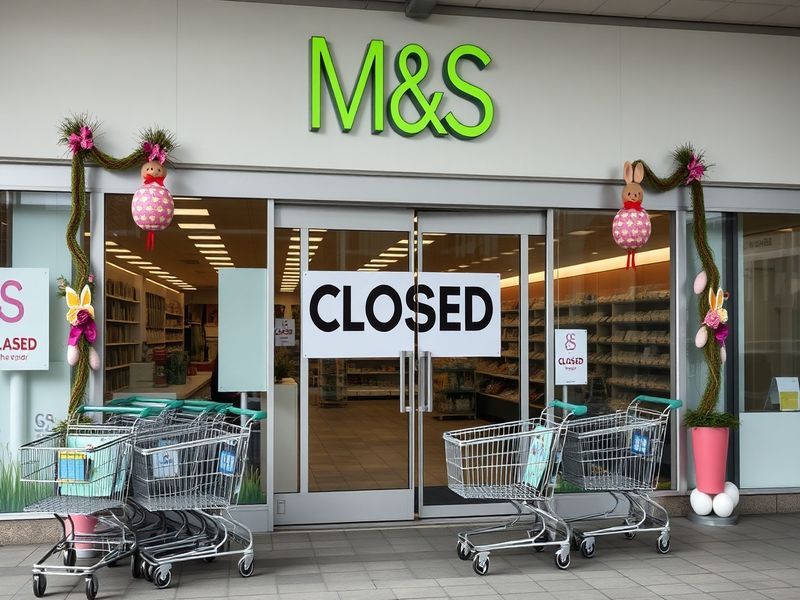
Marks & Spencer Closes Stores on Easter Sunday: What It Means for Retail
Marks & Spencer’s Decision to Close on Easter Sunday: A Global Retail Shift
Marks & Spencer’s announcement that it will close all UK stores on Easter Sunday has sparked discussions about the evolving role of retail in modern society. The decision, effective from 2024, reflects broader changes in consumer behavior, labor practices, and cultural expectations surrounding holidays. While the move may seem straightforward, it intersects with global retail trends, religious observances, and the balance between commerce and tradition.
The closure is not an isolated event. Major retailers across Europe and North America have been reevaluating their holiday policies in response to shifting consumer habits and labor regulations. In countries like Germany and Sweden, where Sunday trading restrictions are stricter, retailers have long adapted by closing on weekends. Meanwhile, in the United States, where retail operations often extend into holidays like Thanksgiving and Christmas, the trend toward closure is less common but growing.
The Cultural Significance of Easter and Retail
Easter holds deep religious and cultural significance in many parts of the world, particularly in predominantly Christian countries. For centuries, it has been a time for family gatherings, church services, and traditional meals—often centered around lamb, eggs, and springtime produce. The decision to close stores on Easter Sunday aligns with these traditions, reinforcing the idea that certain days should remain sacred.
However, the shift also reflects a broader secularization of society. As religious observance declines in some regions, retailers face pressure to balance tradition with profitability. In countries like the UK, where church attendance has dropped significantly over the past few decades, the move may resonate more with employees seeking better work-life balance than with devout consumers.
Contrast this with markets like Poland or Italy, where Easter remains a deeply ingrained cultural and religious event. In such places, store closures on Easter Sunday are not just a business decision but a recognition of societal values. Retailers in these regions often close for multiple days during Holy Week, reflecting the importance of the holiday in daily life.
Economic and Labor Considerations
The economic implications of Marks & Spencer’s decision are multifaceted. On one hand, closing stores on Easter Sunday means lost sales, particularly for high-traffic items like food, clothing, and home goods. The company’s food division, which relies heavily on holiday demand, may see a temporary dip in revenue.
On the other hand, the move could improve employee satisfaction and retention. Retail workers, who often face grueling schedules, may appreciate the additional time off. This aligns with growing labor movements advocating for fairer treatment in the retail sector. In countries like France, where laws mandate employee rest periods, such policies are already standard.
Internationally, the trend toward holiday closures is uneven. Some retailers, particularly in the luxury and high-end sectors, have embraced the shift as a way to differentiate themselves. Others, especially discount chains, continue to operate seven days a week to maximize sales. The divergence highlights the fragmented nature of global retail strategies.
For Marks & Spencer, the decision may also be a response to changing consumer preferences. Younger shoppers, in particular, are increasingly prioritizing ethical labor practices and work-life balance over round-the-clock convenience. By closing on Easter Sunday, the company positions itself as an employer of choice while appealing to values-driven consumers.
A Ripple Effect in Global Retail
The closure of Marks & Spencer stores on Easter Sunday could influence other retailers, both in the UK and abroad. Competitors like Tesco, Sainsbury’s, and John Lewis may face pressure to follow suit, especially if employee unions or consumer advocacy groups champion the move. In the long term, this could lead to industry-wide changes in holiday trading policies.
Globally, the trend is not uniform. In Japan, for example, retail closures are rare, and convenience stores operate 24/7. Similarly, in parts of the United States, retailers like Costco and Whole Foods have experimented with closing on major holidays, only to reopen due to customer demand. The success of such policies often depends on regional consumer behavior and cultural norms.
For investors, the shift raises questions about long-term profitability. While a holiday closure may enhance a company’s reputation, it could also reduce foot traffic and sales. Retailers must weigh these trade-offs carefully, particularly in competitive markets where every sale counts.
The decision also intersects with broader discussions about sustainability. By encouraging employees to take time off, Marks & Spencer aligns with growing corporate responsibility initiatives. However, the environmental impact of reduced shopping hours remains a topic of debate—some argue that fewer operational hours could lower energy consumption, while others worry about increased demand on alternative shopping days.
What’s Next for Retail and Holidays?
As retail continues to evolve, the role of holidays in shopping culture will likely remain a point of contention. Some experts predict a hybrid model, where essential services remain open while non-essential stores close. Others foresee a return to more traditional retail hours, driven by labor shortages or regulatory changes.
For consumers, the shift may lead to a reassessment of their shopping habits. Those who prioritize convenience might turn to online shopping or smaller local retailers that remain open. Meanwhile, shoppers who value ethical business practices may reward stores like Marks & Spencer for their commitment to work-life balance.
The closure of Marks & Spencer on Easter Sunday is more than a policy change—it’s a reflection of how retail is adapting to cultural, economic, and labor shifts. As global markets continue to evolve, the decisions made by major retailers will shape not only their own futures but also the broader relationship between commerce and tradition.
How This Change Affects Consumers
For shoppers, the closure means adjusting to new routines. Those who typically visit Marks & Spencer on Easter Sunday will need to plan their purchases around the holiday. However, the company has emphasized that online services will remain available, ensuring that customers can still access essential items.
Some consumers may see this as a positive step, aligning with their personal values or religious observances. Others might view it as an inconvenience, particularly if they rely on in-store shopping for last-minute needs. The shift could also drive more people toward local markets or smaller retailers that remain open on Sundays.
Ultimately, the success of this policy will depend on how well Marks & Spencer communicates with its customer base. Clear messaging about alternative shopping options, extended online hours, and employee benefits will be key to maintaining trust and loyalty.
The Broader Retail Landscape
Marks & Spencer’s decision fits into a larger conversation about the future of retail. As e-commerce continues to dominate, physical stores must find new ways to justify their existence. For some, that means prioritizing customer experience over sheer sales volume. For others, it means aligning with cultural or ethical values to stand out in a crowded market.
Retailers in other sectors, such as sports and fashion, are also rethinking their holiday policies. Brands that once operated around the clock are now experimenting with shorter hours or targeted closures. The goal is to create a sustainable model that balances profitability with employee well-being and consumer expectations.
As this trend develops, consumers will play a crucial role in shaping the outcome. Their shopping habits, preferences, and values will determine whether holiday closures become the norm or remain an exception. For now, Marks & Spencer’s move serves as a case study in how retail can adapt to an ever-changing world.