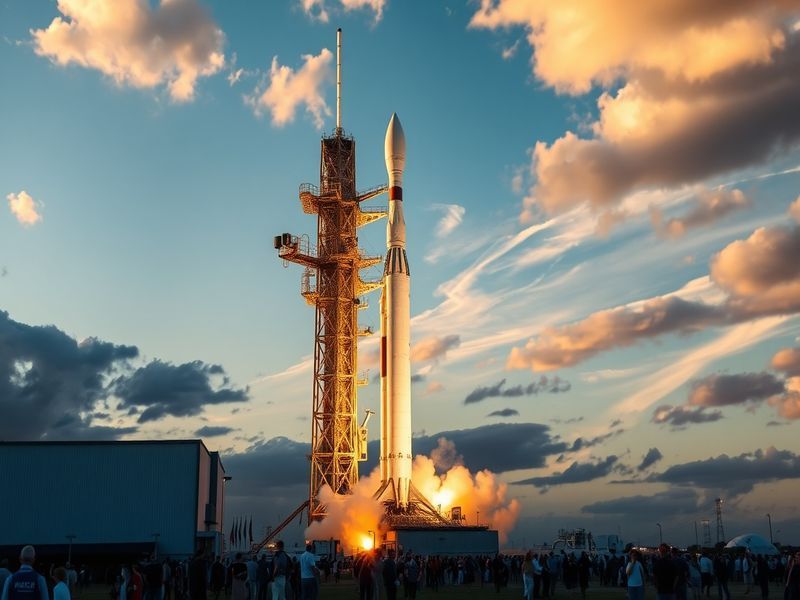
NASA Artemis II Launch: A New Era in Space Exploration
The upcoming NASA Artemis II mission marks a significant milestone in humanity’s quest to return to the Moon and explore beyond. Set to launch in the near future, this mission will carry astronauts aboard the Orion spacecraft to test key systems and prepare for future lunar missions. The Artemis program aims not only to return humans to the lunar surface but also to establish a sustainable presence on the Moon, ultimately paving the way for future Mars exploration.
What to Expect from Artemis II
Artemis II will be an uncrewed mission designed to evaluate the spacecraft’s performance during a journey around the Moon. This mission is crucial for ensuring that all systems function as intended before astronauts embark on Artemis III, which aims to land humans on the lunar surface.
Key objectives of the Artemis II mission include:
- Testing the Orion spacecraft’s life support and crew systems.
- Demonstrating the spacecraft’s navigation and communication capabilities.
- Collecting data to inform future missions.
The mission will also involve a flyby of the Moon, providing valuable data on the spacecraft’s performance in deep space. This phase of the Artemis program is particularly exciting, as it represents the first time since the Apollo missions that humans will have the opportunity to venture beyond low Earth orbit.
The Broader Implications of Artemis II
The Artemis II mission holds implications that extend far beyond its immediate objectives. By establishing a sustainable human presence on the Moon, NASA aims to create a platform for further exploration of Mars and other celestial bodies. This initiative will likely foster international cooperation in space exploration, as various countries may collaborate on future lunar missions and share technological advancements.
Moreover, the Artemis program encourages innovation in aerospace technology. As NASA develops new systems and capabilities, private companies are also likely to contribute, leading to advancements that can benefit other sectors. The collaboration between government and private industry has the potential to accelerate progress in various fields, including telecommunications, materials science, and robotics.
Challenges Ahead
Despite the excitement surrounding the Artemis II launch, several challenges remain. The complexity of the mission requires meticulous planning and execution. Engineers and scientists must ensure that every component of the Orion spacecraft is fully functional and capable of withstanding the rigors of space travel.
Funding also poses a significant challenge. The Artemis program relies on consistent financial support from the U.S. government, which can be influenced by changing political landscapes. Securing ongoing investment is crucial for the program’s success, as delays or budget cuts could hinder progress.
Additionally, public interest and support are vital. Engaging the public through educational initiatives and outreach programs can help maintain enthusiasm for space exploration. The Artemis II mission provides an opportunity to inspire a new generation of scientists, engineers, and explorers.
Conclusion
The Artemis II launch represents a pivotal step in humanity’s journey back to the Moon and beyond. As NASA embarks on this mission, the implications for science, technology, and international collaboration are profound. While challenges exist, the potential rewards are immense. With the support of the public and continued investment in innovation, the Artemis program could redefine our understanding of space and our place within it.
For more information on NASA’s Artemis program and related space exploration initiatives, visit our Science category. Stay updated on the latest developments by exploring our News section.