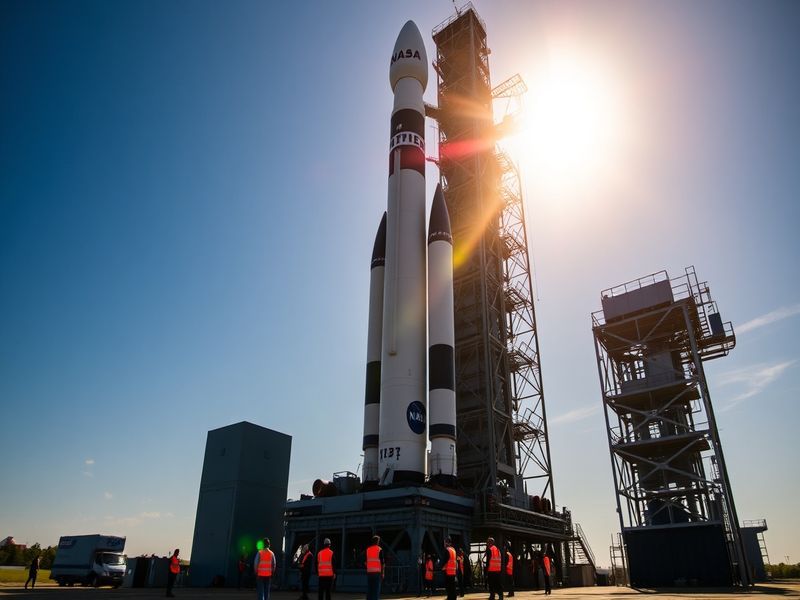
NASA’s Artemis II Launch: Pioneering a New Era in Space Exploration
NASA’s Artemis II Launch: A New Era in Space Exploration
The upcoming launch of NASA’s Artemis II mission represents a significant milestone in humanity’s quest to explore the cosmos. Scheduled for 2024, this mission aims to take astronauts around the Moon and back, marking the first crewed flight of the Artemis program. Building on the success of Artemis I, which successfully tested the Space Launch System (SLS) and the Orion spacecraft, Artemis II is set to pave the way for future lunar exploration and potential human missions to Mars.
Context and Objectives of Artemis II
The Artemis program is NASA’s response to the growing interest in lunar exploration. With the return to the Moon, NASA aims to establish a sustainable human presence on the lunar surface by the end of the decade. Artemis II’s primary objectives include:
- Testing the Orion spacecraft’s life support systems with a crew on board.
- Gathering data on the mission’s trajectory and performance during a lunar flyby.
- Preparing for Artemis III, which aims to land astronauts on the Moon.
This mission will not only advance our understanding of deep space travel but also serve as a proving ground for technologies and systems that will be essential for future missions, including those to Mars.
Broader Implications of the Artemis Program
The Artemis program goes beyond the technical achievements of space travel. It embodies a vision for international collaboration and scientific advancement. The mission is expected to:
- Encourage partnerships with other nations and private companies, fostering a cooperative approach to space exploration.
- Inspire a new generation of scientists, engineers, and explorers, igniting interest in STEM fields.
- Advance our knowledge of the Moon’s resources, which could be vital for future space missions.
Moreover, the Artemis missions aim to establish a sustainable presence on the Moon, which could serve as a stepping stone for Mars exploration. The lessons learned from Artemis II will inform strategies for long-duration space missions, including life support systems, radiation protection, and the psychological effects of isolation on astronauts.
Challenges and Considerations Ahead of the Launch
Despite the excitement surrounding Artemis II, several challenges remain before the mission can proceed. Technical hurdles, funding uncertainties, and evolving international partnerships all play crucial roles in the program’s success. NASA must ensure the Orion spacecraft is fully prepared for the rigors of space travel, which includes extensive testing of its systems and components.
Additionally, the timeline for Artemis II has already experienced delays due to various factors, including the COVID-19 pandemic and technical issues. As the launch date approaches, NASA will need to maintain transparency and communication with the public, providing updates on progress and addressing any concerns that may arise.
Conclusion
The Artemis II launch is more than just another mission; it represents a bold step into a new chapter of space exploration. With its focus on crewed lunar missions and the potential for Mars exploration, Artemis II stands to reshape our understanding of space travel. As we look forward to this historic launch, the implications of the Artemis program extend beyond scientific achievements, impacting international collaboration, technological innovation, and education in the fields of science and engineering.
For more information about ongoing developments in space exploration, visit our Science and Technology categories.