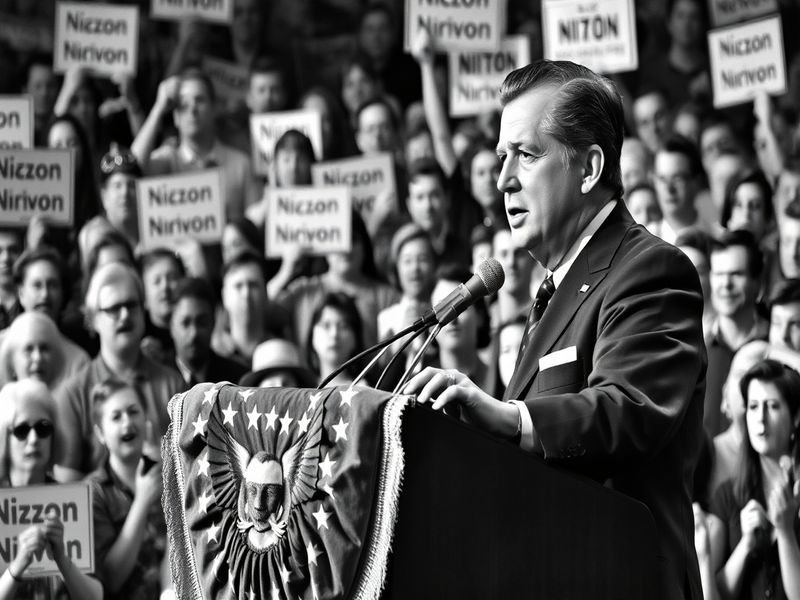
The Complex Legacy of Richard Nixon: Achievements and Scandals
Richard Nixon: A Complex Legacy
Richard Nixon, the 37th President of the United States, remains one of the most controversial figures in American political history. Serving from 1969 until his resignation in 1974, Nixon’s presidency was marked by significant achievements as well as profound scandals. His legacy is a mix of foreign policy successes, domestic challenges, and an unprecedented political crisis that led to his downfall.
Early Life and Political Rise
Nixon was born on January 9, 1913, in Yorba Linda, California. He grew up in a modest family, which instilled in him a strong work ethic and a desire for success. After graduating from Whittier College and Duke University School of Law, Nixon’s political career began in the late 1940s. He gained national attention as a member of the House of Representatives and later as a Senator from California.
In 1952, Nixon was selected as Dwight D. Eisenhower’s running mate, serving as Vice President for two terms. During this time, he became known for his staunch anti-communism stance, which would later shape his foreign policy decisions as president.
Presidency: Achievements and Controversies
Nixon’s presidency is often viewed through the lens of two significant aspects: his foreign policy achievements and the Watergate scandal. On the international stage, Nixon made historic strides, most notably his visit to China in 1972. This trip marked the first time a sitting U.S. president visited the People’s Republic of China, initiating a new era of diplomatic relations.
Furthermore, Nixon’s administration played a crucial role in the détente policy with the Soviet Union, leading to the Strategic Arms Limitation Talks (SALT) and the Anti-Ballistic Missile Treaty. These efforts contributed to a thaw in Cold War tensions.
However, Nixon’s presidency was severely tarnished by the Watergate scandal, which began with a break-in at the Democratic National Committee headquarters in 1972. The subsequent cover-up, coupled with revelations of misconduct, led to an investigation that ultimately uncovered widespread abuses of power within his administration.
Key Points of Nixon’s Presidency
- Established diplomatic relations with China.
- Initiated the policy of détente with the Soviet Union.
- Implemented significant domestic policies, including the Environmental Protection Agency (EPA).
- Faced the Watergate scandal, leading to his resignation.
- Left a lasting impact on American politics and public trust in government.
Broader Implications of Nixon’s Legacy
The implications of Nixon’s presidency extend far beyond his time in office. The Watergate scandal fundamentally altered the relationship between the American public and its government. Trust in political leaders was shaken, leading to increased skepticism and a demand for greater transparency and accountability.
Moreover, Nixon’s foreign policy achievements reshaped global diplomacy. His strategies regarding China and the Soviet Union set precedents for future administrations, influencing how the U.S. engages with other countries. The balance of power dynamics established during his tenure continue to be relevant in today’s geopolitical climate.
In terms of domestic policy, Nixon’s creation of the EPA and his focus on environmental issues laid the groundwork for environmentalism in American politics. While his motivations may have been politically motivated, the consequences of his actions have had lasting effects on environmental legislation.
Conclusion: A Legacy of Contradictions
Richard Nixon’s legacy is a study in contradictions. He was both a skilled politician who achieved significant milestones and a leader who succumbed to the pressures of scandal and corruption. His presidency serves as a cautionary tale about the fragility of trust in government and the complexities of political power.
As historians continue to analyze Nixon’s impact, his story remains relevant in understanding the dynamics of American politics. The lessons learned from his presidency are crucial for current and future leaders navigating the intricate landscape of governance.
For more insights into political history and analysis, visit Dave’s Locker Politics and explore our extensive archives.