Williams F1: History, Challenges, and Comeback Story in 2024
Williams Racing stands as one of Formula 1’s most storied and resilient teams. Founded in 1977 by Frank Williams and Patrick Head, the team quickly established itself as a force in motorsport through innovation, determination, and a relentless pursuit of excellence. Over four decades later, Williams remains a fixture in F1, celebrated for its technical ingenuity and the raw speed of its cars.
Despite facing financial challenges and ownership changes in recent years, the team continues to field competitive machinery and nurture young talent. Its history is rich with victories, heartbreaks, and moments that have shaped the very fabric of modern Formula 1. From Grove, England, Williams has built a reputation not just on wins, but on resilience—a quality that defines its identity.
The Origins and Founding Vision
Frank Williams began his motorsport journey in the early 1960s as a driver and mechanic. After limited success behind the wheel, he pivoted to team management, forming Frank Williams Racing Cars in 1966. The team competed in Formula 2 and Formula 3, but financial instability plagued its early years. By the mid-1970s, Williams sought a fresh start and, with the support of engineer Patrick Head, founded Williams Grand Prix Engineering in 1977.
The new team debuted in Formula 1 in 1978 with the Williams FW06, a customer car powered by a Ford Cosworth engine. Though the season was modest, it marked the beginning of something greater. The breakthrough came in 1979 with the introduction of the FW07, designed by Head. The car featured ground-effect aerodynamics, a revolutionary concept that generated immense downforce. Driven by Alan Jones, the FW07 delivered Williams’ first Grand Prix victory at the 1979 British Grand Prix and set the tone for a decade of dominance.
The founding partnership between Frank Williams and Patrick Head proved pivotal. Head’s engineering genius combined with Williams’ relentless business acumen created a team that could compete at the highest level. Their shared philosophy—prioritizing performance over profit—allowed Williams to innovate when others hesitated.
Peak Years: The 1980s and 1990s Dominance
The 1980s represented the golden era of Williams Grand Prix Engineering. The team secured its first Constructors’ Championship in 1980, with Jones capturing the Drivers’ title. The following year, Carlos Reutemann joined the squad, and Williams claimed back-to-back titles. The FW14B, introduced in 1992, became one of the most technologically advanced F1 cars of its time. Equipped with semi-automatic transmission, active suspension, and traction control, it dominated the season under Nigel Mansell, who won nine races and the championship.
Williams’ rivalry with McLaren and later Benetton fueled some of F1’s most memorable battles. The team’s driver lineup during this period read like a who’s who of motorsport legends: Mansell, Alain Prost, Ayrton Senna, and Damon Hill. Senna’s tragic death at the 1994 San Marino Grand Prix cast a long shadow over the season, but Williams rebounded to win the Constructors’ Championship that year with Hill at the wheel.
Despite the tragic loss of Senna, Williams continued to push boundaries. The team was an early adopter of electronic driver aids and advanced aerodynamics, often leading the technical evolution of the sport. This willingness to innovate, however, also led to controversy. In 1994, the FIA banned several technologies Williams had pioneered, including active suspension and traction control, citing safety concerns. The ban coincided with a shift in regulations that reshaped the competitive landscape.
Notable Achievements from the Era
- 9 Constructors’ Championships (1980, 1981, 1986, 1987, 1992, 1993, 1994, 1996, 1997)
- 7 Drivers’ Championships (Jones, Keke Rosberg, Mansell, Prost, Senna, Hill, Jacques Villeneuve)
- 114 Grand Prix victories
- Pioneered active suspension, semi-automatic gearboxes, and advanced aerodynamics
Challenges and Transformation: The 2000s to 2020s
The turn of the millennium brought significant change. Williams struggled to adapt as F1 shifted toward standardized engines and tighter budgets. The team’s independent spirit clashed with the new era of manufacturer-backed squads like Ferrari, Mercedes, and Renault. Despite flashes of brilliance—such as the 2002 season, when Juan Pablo Montoya challenged for the title—Williams began to slip down the order.
Financial difficulties mounted, exacerbated by the global financial crisis of 2008. In 2012, the team was forced to abandon its historic Grove factory and relocate to a smaller facility. A partnership with Renault in 2012 temporarily revived competitiveness, culminating in Pastor Maldonado’s improbable win at the 2012 Spanish Grand Prix. It was the team’s first victory in nearly eight years.
In 2018, Williams became the last privately owned team on the grid when it was acquired by a consortium led by investment firm Dorilton Capital. The change brought much-needed stability, though the team continued to struggle for pace. The 2020 season was particularly difficult, with the FW43 proving uncompetitive and the team finishing last in the Constructors’ Championship.
Yet, beneath the surface, Williams was rebuilding. The appointment of James Vowles as team principal in 2023 marked a new chapter. A former strategist with Mercedes, Vowles brought a data-driven approach and a focus on long-term development. The 2023 car, the FW45, showed tangible progress, with drivers Alex Albon and Logan Sargeant securing points finishes.
The Human Spirit Behind the Machine
More than just a racing team, Williams is a story of human resilience. The personal tragedies endured by Frank Williams are well-documented: a near-fatal car accident in 1986 left him paralyzed, yet he continued to lead the team from a wheelchair. His determination became a symbol of Williams’ ethos—overcoming adversity through sheer willpower.
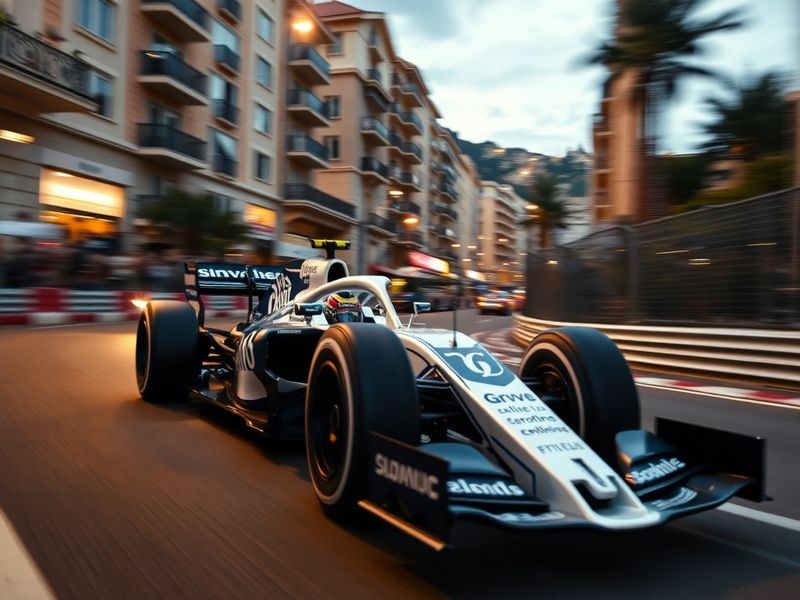
The team’s connection to fans is equally powerful. Williams’ blue-and-white livery has become iconic, evoking nostalgia for a bygone era of racing. The team’s ability to survive and thrive despite limited resources has earned it a loyal following, especially among those who value underdog stories in motorsport.
Williams has also played a crucial role in nurturing young talent. Drivers like Mansell, Hill, and more recently Albon, all began their F1 journeys with the team. The Williams Driver Academy, launched in 2022, reflects a renewed commitment to developing future stars in a sport increasingly dominated by junior programs tied to top teams.
Key Figures in Williams History
- Frank Williams – Founder and team principal until 2020; a visionary leader who built a racing dynasty from humble beginnings.
- Patrick Head – Chief engineer and co-founder; the technical mind behind many of Williams’ most successful cars.
- Sir Frank Williams – A racing legend whose personal resilience mirrored the team’s spirit.
- James Vowles – Current team principal; tasked with steering Williams back to the front of the grid.
Looking ahead, Williams is focused on sustainable growth. The team has invested in modern facilities, including a new wind tunnel and simulator complex, to enhance its technical capabilities. A rumored partnership with a major automotive manufacturer has been a topic of speculation, though nothing has been confirmed. Regardless of its future ownership, Williams’ commitment to innovation and driver development remains unwavering.
As Formula 1 evolves, with a strong emphasis on cost control and sustainability, Williams finds itself at a crossroads. Can it reclaim its place among the elite? History suggests yes. The team has repeatedly defied expectations, proving that in Formula 1, legacy is built not just on speed, but on perseverance.
For fans of motorsport, Williams represents more than a team—it’s a testament to the power of belief, ingenuity, and grit. In an era where success is often measured in fractions of a second, Williams continues to remind us that the greatest victories are sometimes the ones that take decades to achieve.
Explore more on Sports or dive into Automotive coverage for related content.