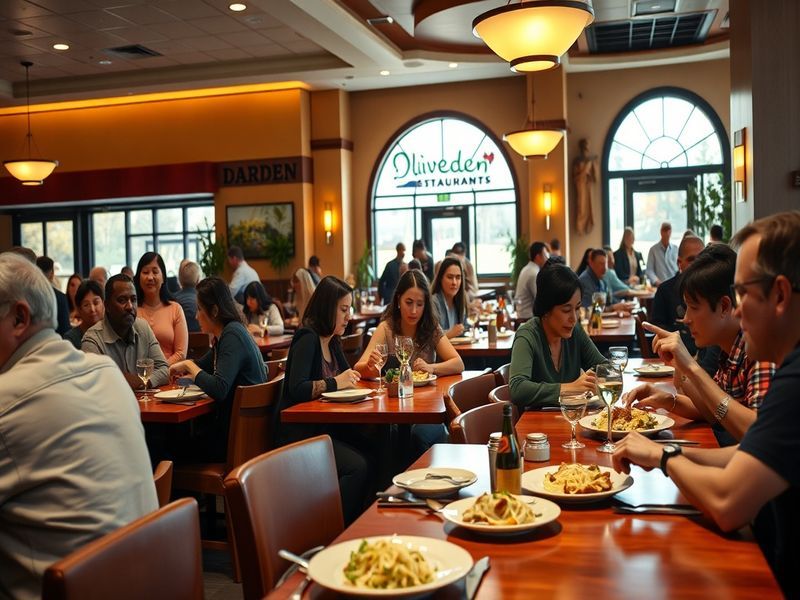
Darden Restaurants stands as a titan in the casual dining sector, operating a portfolio of well-known brands that collectively serve millions of customers each year. With a history stretching back to the 1960s, the company has evolved from a single restaurant in Florida to a publicly traded entity managing over 1,800 locations across the United States and Canada. Unlike many competitors that rely heavily on franchising, Darden maintains strict control over its operations, ensuring consistency in quality and guest experience.
The Growth and Evolution of a Dining Giant
Founded by Bill Darden in 1938 as a single seafood restaurant in Georgia, the company’s first major brand, Red Lobster, debuted in 1968. This milestone marked the beginning of a deliberate expansion strategy focused on full-service dining. By the 1980s, Darden had introduced Olive Garden, which quickly became a household name and a cornerstone of the company’s growth. Unlike fast-casual chains that emphasize speed and convenience, Darden’s brands prioritize ambiance, table service, and a curated menu designed to encourage repeat visits.
The company went public in 1995 under the name Darden Restaurants, Inc., and has since expanded its portfolio to include brands such as LongHorn Steakhouse, Cheddar’s Scratch Kitchen, Yard House, The Capital Grille, Seasons 52, Bahama Breeze, and Eddie V’s. Each brand targets a distinct segment of the market, from affordable family dining to upscale steakhouse experiences. This diversification allows Darden to capture a broad audience without diluting the identity of its individual concepts.
Key Milestones in Darden’s Expansion
- 1968: Launch of Red Lobster, the company’s first major brand.
- 1982: Introduction of Olive Garden, which would become its most profitable concept.
- 1995: Darden goes public, enabling accelerated growth and acquisitions.
- 2007: Acquisition of Rare Hospitality International, adding The Capital Grille and LongHorn Steakhouse to the portfolio.
- 2017: Purchase of Cheddar’s Scratch Kitchen, expanding Darden’s reach into the mid-scale casual dining space.
- 2021: Introduction of Olive Garden’s “Never Ending Pasta Bowl” promotion, which went viral and drove significant foot traffic.
Operational Strategy: Control, Consistency, and Adaptation
One of Darden’s defining characteristics is its commitment to company-owned restaurants. While many in the industry rely on franchisees to drive expansion, Darden owns and operates nearly all of its locations. This approach allows the company to maintain strict standards for food quality, service, and ambiance. It also enables faster implementation of operational changes, such as menu updates or technology upgrades, without the delays often associated with franchise negotiations.
However, this model comes with challenges. Operating hundreds of restaurants across multiple brands requires robust supply chain management and labor coordination. Darden has invested heavily in its supply chain, including the creation of a dedicated seafood sourcing team and partnerships with sustainable fisheries. The company also emphasizes employee development, offering training programs and career advancement opportunities within its brands.
The COVID-19 pandemic tested Darden’s resilience. Like many full-service restaurants, the company faced temporary closures, reduced capacity, and shifts in consumer behavior. Darden responded by accelerating its digital initiatives, including online ordering, curbside pickup, and expanded delivery options. The company also introduced new safety protocols and menu innovations to adapt to changing preferences. Despite these challenges, Darden reported a strong recovery in 2022, with same-store sales exceeding pre-pandemic levels.
The Broader Impact of Darden’s Business Model
Darden’s success reflects broader trends in the restaurant industry, particularly the enduring appeal of full-service dining. While fast-casual and quick-service restaurants have dominated headlines in recent years, Darden has proven that there remains a significant market for sit-down meals with a focus on hospitality. The company’s ability to balance tradition with innovation—such as introducing plant-based menu options or enhancing digital ordering—demonstrates how legacy brands can stay relevant in a rapidly evolving landscape.
Moreover, Darden’s approach to employee retention and development has broader implications for the labor market. The company has been recognized for its efforts to provide competitive wages and benefits, including health insurance and tuition assistance. In an industry often criticized for high turnover, Darden’s focus on career growth has helped it build a more stable and skilled workforce.
From an economic perspective, Darden’s scale contributes significantly to local economies. Each of its restaurants supports jobs in food service, management, and supply chain roles, while also driving traffic to nearby businesses. The company’s commitment to sourcing ingredients from American farms and fisheries further strengthens its ties to regional economies.
Looking Ahead: Challenges and Opportunities
As Darden continues to grow, it faces several challenges. Rising food and labor costs pressure profit margins, while labor shortages in the hospitality industry remain a persistent issue. The company must also navigate evolving consumer preferences, such as the demand for healthier menu options and greater transparency in sourcing. Additionally, competition from both traditional sit-down restaurants and emerging fast-casual concepts requires constant innovation.
Yet, Darden’s diversified portfolio positions it well to weather these challenges. By catering to different dining occasions and price points, the company can adapt to shifting market conditions. Its strong brand recognition and loyal customer base provide a solid foundation for future expansion, both domestically and internationally. In 2023, Darden announced plans to open its first Olive Garden in Mexico, signaling its ambitions to grow beyond North America.
For investors, Darden represents a compelling opportunity in the restaurant sector. Its consistent performance and dividend payments have made it a favorite among income-focused investors. The company’s long-term growth strategy, which includes both organic expansion and strategic acquisitions, aligns with broader trends in the industry toward consolidation and scale.
Ultimately, Darden Restaurants exemplifies how a well-managed, customer-focused company can thrive in a competitive industry. By prioritizing quality, consistency, and innovation, it has built an empire that serves as both a model for aspiring restaurateurs and a testament to the enduring appeal of full-service dining.
For those interested in exploring the broader trends in the restaurant industry, Dave’s Locker Food offers insightful analysis and commentary on dining trends and business strategies. Additionally, Dave’s Locker Business provides deeper coverage of the economic forces shaping the food service sector.