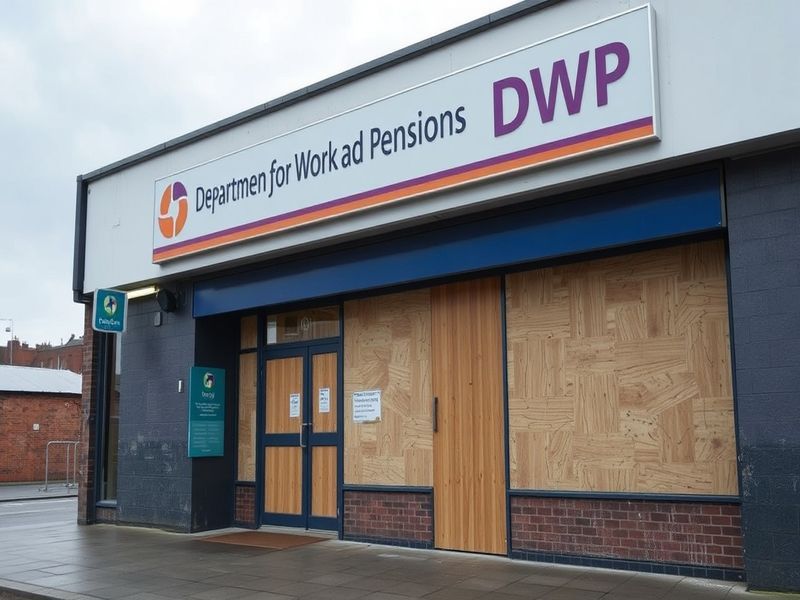
DWP Benefits Closure: UK Cuts and Global Welfare Trends Explained
“`html
The Closure of DWP Benefits: Consequences and Global Parallels
The closure of Department for Work and Pensions (DWP) benefits in the United Kingdom has sent ripples through communities, leaving many to grapple with financial uncertainty. This policy shift isn’t isolated; similar measures are reshaping welfare systems worldwide, reflecting broader debates about government support, economic resilience, and societal priorities. While the UK faces immediate challenges, the implications of such closures extend far beyond its borders, offering a lens through which to examine global trends in social safety nets.
The UK’s DWP Benefits Closure: What’s Changing and Who’s Affected
The DWP’s recent decisions to reduce or entirely cut certain benefits—particularly those tied to disability, unemployment, and housing support—have sparked widespread concern. At the heart of these changes is a push toward “work-first” policies, where financial aid is increasingly conditional on employment status or job-seeking efforts. For many recipients, this means navigating stricter eligibility criteria, more frequent reassessments, and a shrinking pool of accessible support.
The most visibly impacted groups include:
- Disabled individuals: Those relying on Personal Independence Payment (PIP) or Employment and Support Allowance (ESA) face heightened scrutiny, with reports of benefits being revoked after reassessments.
- Unemployed workers: Jobseeker’s Allowance (JSA) and Universal Credit claimants are now subject to tighter work-search requirements, often under threat of sanctions for perceived non-compliance.
- Low-income families: Housing Benefit reductions and the freeze on certain allowances have exacerbated housing insecurity, pushing more households into precarious living situations.
Critics argue that these reforms disproportionately target vulnerable populations, while proponents claim they are necessary to reduce dependency and encourage workforce participation. The reality, however, is more complex—balancing fiscal responsibility with social equity proves increasingly difficult as economic pressures mount.
Global Trends: How Other Countries Are Reimagining Welfare Systems
The UK’s approach to welfare reform isn’t unique. Across the globe, nations are recalibrating their social safety nets, often in response to similar pressures: aging populations, budget constraints, and ideological shifts toward individual responsibility. A closer look at comparable systems reveals a spectrum of strategies—some expanding support, while others, like the UK, are tightening it.
Case Study: The Netherlands’ Shift Toward Universal Basic Income
The Netherlands has taken a divergent path, experimenting with universal basic income (UBI) pilots in cities like Utrecht and Groningen. These programs provide unconditional cash transfers to residents, aiming to reduce bureaucratic hurdles and empower individuals to pursue education, entrepreneurship, or caregiving roles without financial penalty. Early results suggest improved mental well-being and financial stability among participants, challenging the assumption that welfare disincentivizes work.
Case Study: Sweden’s Focus on Active Labor Market Policies
In contrast, Sweden has doubled down on active labor market policies (ALMPs), which combine generous unemployment benefits with robust job training and placement programs. Unlike the UK’s punitive approach, Sweden’s model emphasizes upskilling and support, reducing long-term unemployment by focusing on reintegration rather than sanctions. This strategy has kept unemployment rates low and fostered a culture of lifelong learning.
Case Study: Australia’s Tightened Eligibility for Disability Support
Australia’s recent reforms to its Disability Support Pension (DSP) mirror the UK’s tightening of criteria, though with a more gradual implementation. The changes aim to reduce reliance on disability benefits by encouraging recipients to re-enter the workforce where possible. However, advocacy groups warn that the reforms risk leaving many without adequate support, particularly those with chronic or severe conditions.
The contrast between these approaches underscores a fundamental question: Should welfare systems prioritize strict conditionality to “incentivize” work, or should they prioritize unconditional support to foster independence and dignity? The UK’s current trajectory leans heavily toward the former, while nations like the Netherlands and Sweden explore alternatives that blend flexibility with security.
Cultural and Economic Implications: The Human Cost of Benefit Closures
Beyond policy debates, the closure of DWP benefits carries profound cultural and economic consequences. In the UK, the shift reflects a broader ideological pivot—one that values self-sufficiency over collective responsibility. This change resonates with narratives of personal resilience and entrepreneurship, but it also risks marginalizing those who cannot meet the new demands of the labor market.
Economically, the closure of benefits can have a paradoxical effect. While reducing welfare spending may ease short-term budget pressures, the long-term costs—such as increased homelessness, mental health crises, and reliance on informal support networks—can strain public services even further. A study by the Joseph Rowntree Foundation estimated that poverty-related costs to the UK economy exceed £78 billion annually, highlighting the false economy of austerity.
Culturally, the narrative around welfare is evolving. Where once disability and unemployment were viewed through a lens of compassion, they are increasingly framed as moral failings or personal shortcomings. This shift is particularly evident in media portrayals, where claimants are often depicted as either “strivers” or “skivers”—a binary that obscures the complexities of poverty and disability.
Globally, the cultural implications vary widely. In Nordic countries, where welfare is deeply embedded in national identity, reforms are met with fierce resistance. In contrast, the UK’s changes align with a longer tradition of skepticism toward state support, rooted in Victorian-era Poor Laws and reinforced by decades of neoliberal economic policies.
The Road Ahead: What’s Next for DWP Benefits and Global Welfare?
The closure of DWP benefits is not an endpoint but a critical juncture in the evolution of social welfare. For policymakers, the challenge lies in balancing fiscal constraints with the moral imperative to protect the most vulnerable. Short-term fixes—such as increased funding for job centers or mental health services—may alleviate some immediate pressures, but systemic change requires a rethinking of how society values and supports its citizens.
Looking ahead, several trends could shape the future of welfare systems worldwide:
- Digital transformation: The rise of AI and data analytics in benefit administration could streamline processes but also risk depersonalizing support, further alienating claimants.
- Universal Basic Income experiments: As seen in the Netherlands and Finland, UBI pilots are testing whether unconditional support can break the cycle of poverty without reducing employment.
- Cross-sector collaboration: Partnerships between governments, NGOs, and private sectors could create hybrid models of support, blending public welfare with community-based initiatives.
- Public advocacy and legal challenges: Legal battles over benefit cuts, such as those led by disability rights groups in the UK, may force governments to reconsider their approaches.
The path forward is fraught with tension, but it also presents an opportunity to redefine what welfare means in the 21st century. Will societies prioritize efficiency and conditionality, or will they embrace models that prioritize dignity and security? The UK’s current trajectory suggests the former, but global examples prove that alternatives exist—and they can work.
For those affected by the closure of DWP benefits, the immediate priority is survival. Yet their struggles also serve as a reminder that welfare systems are not just economic tools; they are reflections of a society’s values. As debates rage on, the human stories behind the policies must not be forgotten.