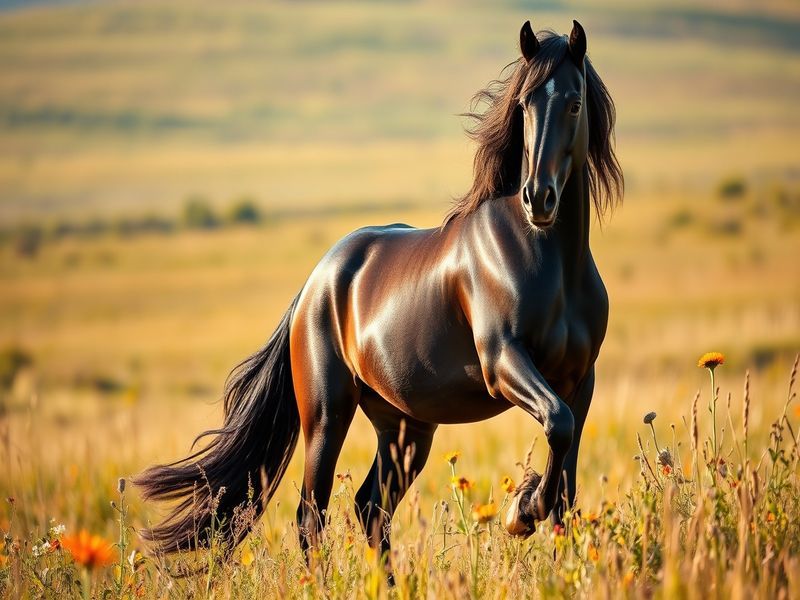
The stallion represents the pinnacle of equine strength, discipline, and lineage in the horse world. Unlike mares or geldings, stallions carry the dual responsibility of genetic legacy and athletic performance. Their presence commands attention on farms, racetracks, and competitive arenas worldwide. More than just male horses, stallions embody centuries of selective breeding, training methodologies, and cultural symbolism that extend far beyond the stable.
Understanding the role of the stallion requires examining its biological, historical, and economic dimensions. From the warhorses of medieval Europe to the Thoroughbred champions of the Kentucky Derby, these animals have shaped human history in ways both visible and subtle. Their influence persists today in modern equestrian sports, breeding programs, and even popular culture.
The Biology and Behavior of Stallions
Stallions differ from other horses primarily through their reproductive anatomy and hormonal profiles. Testosterone drives not only their physical development but also behavioral traits that can range from protective to aggressive depending on training and environment. A healthy stallion typically stands between 14.2 and 17.2 hands high, with muscular builds optimized for power rather than speed.
Behaviorally, stallions exhibit complex social structures. In the wild, they often lead herds of mares and young horses, using posturing, vocalizations, and physical confrontations to maintain dominance. Domestic stallions, however, rarely display such behaviors due to controlled environments and professional handling. Their intelligence and sensitivity make them responsive to positive reinforcement training, though poor handling can lead to dangerous habits like biting or rearing.
Reproductive capacity remains the stallion’s most valuable trait. A single ejaculate can contain billions of sperm, and modern artificial insemination techniques have expanded their breeding potential beyond natural limits. Top breeding stallions generate millions in stud fees annually, with some Thoroughbred sires commanding fees exceeding $300,000 per live foal.
The Role of Stallions in Equestrian Sports
In competitive disciplines, stallions bring unique advantages and challenges. In show jumping, their strength and agility make them formidable over technical courses. The legendary show jumper Milton, for instance, was a stallion whose competitive career spanned two decades and earned him a place in the Show Jumping Hall of Fame.
Dressage presents a different set of demands where stallions often excel due to their natural presence and athleticism. The stallion Totilas, considered one of the greatest dressage horses in history, dominated international competition in the late 2000s with scores that remain unmatched in some categories. His success demonstrated how stallions could combine power with precision in ways geldings sometimes struggle to replicate.
Racing represents the most financially significant arena for stallions. The Thoroughbred racing industry relies almost entirely on stallions for siring champions. American Pharoah, the first Triple Crown winner in 37 years, retired to stud where his 2023 season generated over $2.4 million in stud fees alone. This economic reality underscores why stallions occupy such a critical position in the sport’s infrastructure.
Challenges in Stallion Management
Managing a stallion requires specialized knowledge and infrastructure. Their housing needs differ significantly from mares or geldings due to their territorial nature. Many farms use separate paddocks with high fencing and visual barriers to prevent stallions from seeing each other, which can reduce stress and aggressive behavior.
Health management presents another layer of complexity. Stallions are prone to reproductive tract issues, including testicular tumors and infections. Regular veterinary checkups and semen analysis are essential to maintain breeding viability. Additionally, their high energy levels necessitate carefully balanced diets to prevent obesity or metabolic disorders.
Behavioral challenges often prove the most difficult aspect of stallion management. Even well-trained stallions can develop vices like cribbing, weaving, or stall walking when bored or stressed. Enrichment activities, regular turnout, and consistent handling routines help mitigate these issues, though some behaviors may persist despite best efforts.
Cultural Symbolism and Historical Significance
Throughout history, stallions have symbolized power, freedom, and nobility. The Greek god Poseidon often appeared with a chariot pulled by stallions, representing the untamed forces of nature. In medieval Europe, war stallions like the destrier carried knights into battle, their strength and courage becoming legendary.
Literature and art frequently feature stallions as central characters. Shakespeare’s Richard III famously opens with the line “Now is the winter of our discontent / Made glorious summer by this sun of York,” referring metaphorically to the stallion’s power. Meanwhile, the Lipizzaner stallions of Vienna’s Spanish Riding School have performed classical dressage for over 450 years, becoming cultural ambassadors for Austria.
Modern media continues this tradition. The stallion Shadowfax from The Lord of the Rings embodies wisdom and nobility, while the animated stallion Spirit represents the untamed spirit of the American West. These portrayals reflect enduring human fascination with the stallion’s combination of wildness and domestication.
The Future of Stallions in Modern Equine Industry
The stallion’s role faces both challenges and opportunities in the 21st century. Genetic technologies now allow for precise selection of desirable traits through DNA testing and embryo transfer. The stallion Justify, who won the 2018 Triple Crown, became the first horse born through artificial insemination to achieve this feat, demonstrating how technology is reshaping traditional breeding paradigms.
However, ethical concerns about overbreeding and the fate of surplus stallions persist. Many retired racehorses end up in slaughter pipelines due to lack of rehoming options. The industry has responded with initiatives like the Retired Racehorse Project, which works to transition Thoroughbreds into second careers after racing.
Sustainability represents another emerging concern. Climate change affects pasture quality and breeding cycles, forcing farms to adapt with alternative forage sources and breeding schedules. Some progressive operations now use regenerative agriculture techniques to maintain healthy stallion nutrition while reducing environmental impact.
Emerging Trends in Stallion Management
The intersection of technology and tradition is creating new possibilities for stallion care:
- Wearable Technology: GPS trackers and heart rate monitors help trainers assess stallion fitness and stress levels in real time.
- Cryopreservation: Advances in semen freezing allow stallions to sire offspring decades after their competitive careers end.
- Genomic Selection: DNA analysis identifies genetic markers for performance traits, enabling more precise breeding decisions.
- Virtual Reality Training: Some facilities use VR simulations to expose stallions to competition environments before actual events.
These innovations promise to enhance both the welfare and productivity of stallions while addressing longstanding industry challenges.
Conclusion: The Enduring Legacy of the Stallion
The stallion occupies a unique position at the intersection of nature and culture, biology and economics, tradition and innovation. Its physical prowess and genetic potential have shaped human history while its symbolic power continues to inspire art and literature. As technology advances, the methods of managing and utilizing stallions will evolve, but their fundamental role remains unchanged.
For breeders, competitors, and enthusiasts alike, the stallion represents both a challenge to master and an opportunity to preserve centuries of equine excellence. Whether standing in a paddock in Kentucky or performing in a dressage arena in Vienna, these magnificent animals continue to embody the ideals of strength, nobility, and partnership that have defined their relationship with humans for millennia.
The future of the stallion will depend on balancing innovation with tradition, productivity with welfare, and commerce with compassion. As long as humans continue to value speed, power, and genetic legacy, the stallion will remain essential to our shared story.