In the landscape of European tennis, few names have ascended as rapidly as Alex Molčan. The 24-year-old Slovak player has carved a niche for himself in a sport dominated by established powerhouses from Spain, Serbia, and Switzerland. His journey from a promising junior to a top-50 ATP-ranked player is a testament to perseverance, tactical evolution, and the growing influence of Eastern European talent in global tennis.
Molčan’s rise is particularly significant within the context of Slovak tennis, a nation with a proud sporting tradition but limited recent success in the sport of racquets. While the country has produced notable footballers and ice hockey players, tennis has remained a secondary focus. Molčan’s achievements are helping shift that narrative, drawing attention to Slovakia’s emerging tennis infrastructure and the potential for future talent development.
The Path to Professionalism: From Bratislava to the ATP Tour
Alex Molčan was born on December 1, 1997, in Bratislava, Slovakia. His introduction to tennis came at a young age, influenced by the country’s strong club culture and the success of earlier Slovak players like Dominik Hrbatý and Karol Kučera. Unlike many of his peers who trained in Western Europe from an early age, Molčan developed his game in his home country, a decision that shaped his playing style and mental resilience.
Molčan turned professional in 2014 and quickly made his mark on the ITF Futures circuit. His progress was steady but unhurried, reflecting a methodical approach to his career. By 2018, he had broken into the top 200, a milestone that opened doors to ATP Challenger events across Europe and South America. His breakthrough came in 2021, when he won his first ATP Challenger title in Biella, Italy, and reached the third round of the French Open as a qualifier—a run that announced his arrival on the sport’s biggest stages.
That same year, Molčan also made his Olympic debut at the Tokyo Games, representing Slovakia in both singles and doubles. While his Olympic journey ended in the first round, the experience provided invaluable exposure and motivation. By the end of 2021, he had cracked the top 100 for the first time, a clear indicator of his upward trajectory.
Playing Style and Strengths
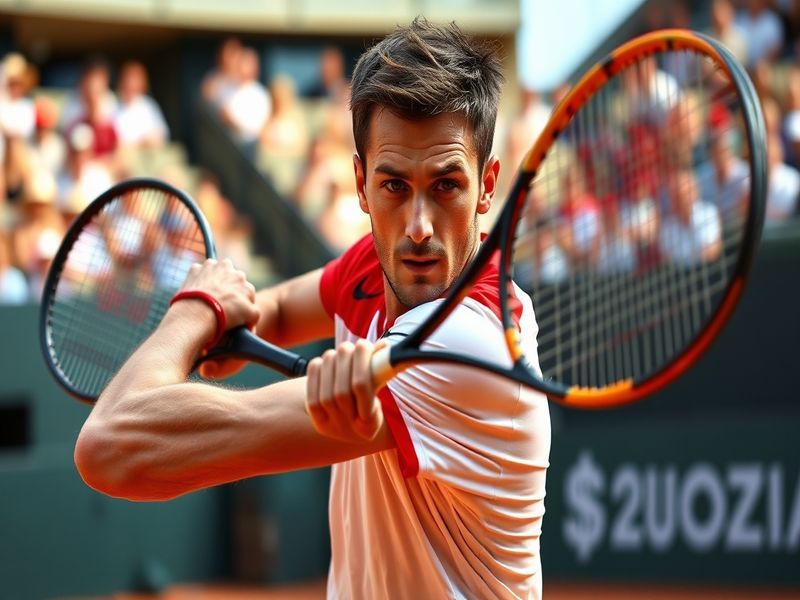
Molčan is often described as a “complete player,” a label that reflects his ability to adapt to various court surfaces and playing conditions. Standing at 1.88 meters, he combines a powerful serve with a deep, penetrating forehand and a reliable two-handed backhand. His game is built on consistency and tactical intelligence, allowing him to outlast opponents in long rallies while capitalizing on key points.
One of Molčan’s most notable strengths is his mental fortitude. Unlike players who rely solely on raw power or speed, Molčan thrives in high-pressure situations, often turning matches in his favor during critical moments. His 2022 season, which included victories over top-20 players like Roberto Bautista Agut and Fabio Fognini, underscored his ability to perform when it matters most.
Off the court, Molčan is known for his disciplined lifestyle. He maintains a rigorous training regimen and has surrounded himself with a close-knit team that prioritizes long-term development over short-term gains. This approach has earned him respect within the ATP Tour locker room, where younger players often seek his advice on navigating the challenges of professional tennis.
Global Context: The Rise of Eastern European Tennis
Molčan’s success is part of a broader trend reshaping European tennis. In recent years, players from Eastern Europe—including Serbia’s Miomir Kecmanović, Croatia’s Borna Gojo, and Hungary’s Márton Fucsovics—have risen through the ranks, challenging the traditional dominance of Western European and Latin American players. This shift reflects improvements in tennis infrastructure, coaching, and financial support in countries that were once on the periphery of the sport.
Slovakia, in particular, has seen a resurgence in tennis investment. The government and private sponsors have begun funding regional training centers and junior development programs, inspired by the success of players like Molčan and his compatriot Lukáš Lacko. This grassroots movement is slowly changing the narrative around Slovak tennis, which had previously been overshadowed by the country’s winter sports and football programs.
Molčan’s achievements have also sparked conversations about the role of Eastern European players in redefining modern tennis tactics. Unlike the aggressive baseline play favored by many Western European players, Molčan and his peers often employ a more varied style, incorporating serve-and-volley tactics and slice shots to disrupt opponents’ rhythm. This tactical diversity adds a new dimension to the sport, making matches less predictable and more engaging for fans.
- Improved infrastructure: Countries like Slovakia, Hungary, and Croatia are investing in indoor courts and high-performance training facilities.
- Coaching evolution: Former professionals from the region are returning to coach, bringing firsthand experience to the next generation.
- Financial incentives: National federations are offering grants and sponsorships to top juniors, reducing the financial burden of early professional careers.
- Cultural pride: Local success stories like Molčan’s inspire younger players to take up the sport seriously.
Challenges and Future Aspirations
Despite his progress, Molčan faces the same challenges as any player aiming to break into tennis’s elite tier. Injuries, travel fatigue, and the mental toll of constant competition are ever-present threats. In 2023, a minor wrist injury sidelined him for several weeks, forcing him to adapt his training schedule and rethink his approach to match preparation. However, his ability to return stronger highlighted his resilience and professionalism.
Looking ahead, Molčan’s ambitions are clear: break into the top 30 and secure his place in the ATP Finals. To achieve this, he will need to refine his serve, improve his net play, and continue developing his drop shot—a weapon that has become a signature of his recent matches. His coach, Miloslav Mečíř Jr., a former Slovak professional and Olympic bronze medalist, has been instrumental in fine-tuning these aspects of his game.
Molčan’s ultimate goal extends beyond personal accolades. He has expressed a desire to contribute to Slovakia’s Davis Cup team, aiming to lift the trophy and bring international recognition to his country’s tennis program. Such a victory would not only cement his legacy but also inspire a new generation of Slovak tennis players to dream bigger.
Legacy and Influence
As Alex Molčan continues to climb the ATP rankings, his impact on Slovak and Eastern European tennis grows. He represents more than just a successful athlete; he embodies the potential of a region that has long been overlooked in the global tennis conversation. His story is a reminder that success in sports is not confined to traditional powerhouses and that talent, when nurtured, can emerge from unexpected places.
For fans of sports and aspiring athletes in Slovakia and beyond, Molčan’s journey offers a blueprint for perseverance and adaptability. His ability to compete at the highest level while maintaining a grounded demeanor has made him a role model, particularly among young players who see in him a reflection of their own dreams.
As the 2024 tennis season unfolds, all eyes will be on Molčan and his peers. With each match, they are not only chasing personal milestones but also reshaping the future of Eastern European tennis. In doing so, they are proving that the sport’s next chapter may be written in a language other than Spanish or English—and that the racquet is being swung with renewed purpose from Bratislava to Belgrade.