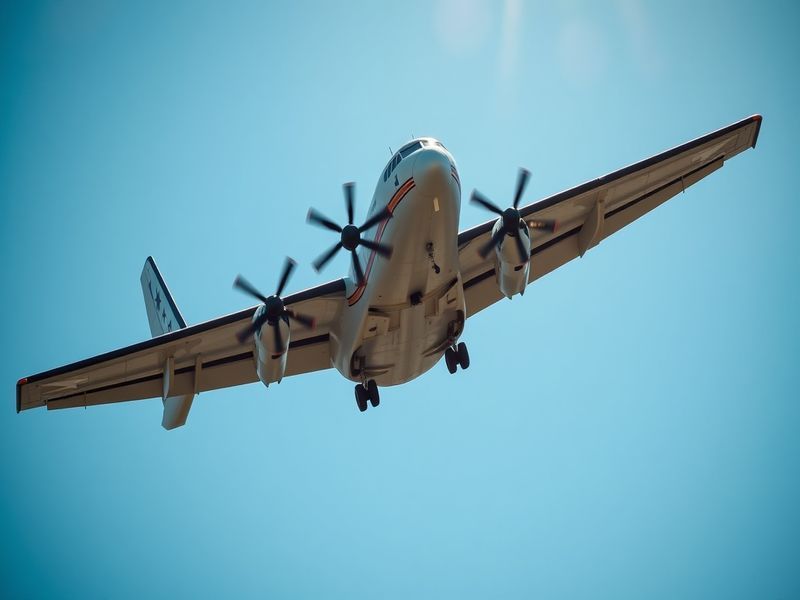
Antonov AN-26B: Why This Soviet Transport Plane Still Flies After 50 Years
The Antonov AN-26B remains one of aviation’s most enduring turboprop transports, a testament to Soviet engineering from the Cold War era. First introduced in the late 1960s, this rugged twin-engine aircraft was designed to replace the piston-engined Antonov An-24 in military and civilian roles. More than five decades later, it continues to serve across continents, proving its durability in rugged conditions where newer aircraft might falter. Its longevity reflects not just robust design, but also a global demand for reliable, low-cost transport solutions in remote regions.
The AN-26B’s operational lifespan spans military airlifts, humanitarian missions, cargo deliveries, and even firefighting. Unlike many contemporaries retired decades ago, this aircraft has adapted—surviving geopolitical shifts, sanctions, and the rise of modern jetliners. Its story is one of quiet resilience, a machine built for utility, not spectacle, yet quietly shaping air transport in Africa, Asia, Latin America, and beyond.
The Origins and Design of the AN-26B
Developed by the Antonov Design Bureau in Kyiv, Ukraine (then part of the USSR), the AN-26 entered service in 1969 as an upgraded version of the An-24RT. The “B” variant, introduced in 1981, featured improved avionics and increased payload capacity. Its most distinctive feature was the rear cargo ramp, enabling direct loading of vehicles, pallets, or even paratroopers. This design choice made it uniquely versatile in tactical and logistical operations.
Powered by two Ivchenko AI-24VT turboprop engines and a Tumansky RU-19A-300 auxiliary power unit (APU), the AN-26B could operate from unprepared airstrips, a critical advantage in regions with limited infrastructure. Its high-wing configuration provided excellent ground clearance, reducing the risk of foreign object damage—a common issue in rough terrain. The aircraft could carry up to 40 passengers or 5,500 kg (12,100 lbs) of cargo, making it ideal for both military and civilian missions.
The cockpit reflected 1960s Soviet design philosophy: functional, analog, and built for durability. While modern aircraft rely on digital fly-by-wire systems, the AN-26B’s simplicity allowed for easier maintenance and repair, especially in areas where advanced avionics support was unavailable. This practical approach ensured its continued relevance long after more sophisticated jets entered service.
Global Service: Where the AN-26B Still Flies
The AN-26B’s global footprint is as diverse as it is enduring. In Africa, airlines like Air Djibouti and Trans Air Congo have operated the type for decades, using it to connect remote mining outposts and rural communities. Its ability to land on short, unpaved strips makes it invaluable in countries with limited road networks. In Southeast Asia, the aircraft has supported disaster relief efforts, delivering medical supplies and food aid to areas hit by typhoons or floods.
Military operators, including those in Angola, Cuba, and Vietnam, have relied on the AN-26B for troop transport and tactical airlift. Even NATO-aligned nations such as Poland and Romania have used the aircraft for training and logistical support. The versatility of the AN-26B has allowed it to transcend geopolitical boundaries, serving governments, NGOs, and commercial carriers alike.
One of its most notable roles has been in humanitarian missions. Organizations like the United Nations and Red Cross have deployed the AN-26B to deliver aid in conflict zones and post-disaster areas, where the risk of operating larger jets is prohibitive. Its slow flight speed and ability to loiter over drop zones make it particularly effective for airdrops.
Notable Operators of the AN-26B
- Military: Russian Air Force, Ukrainian Air Force, Cuban Revolutionary Air and Air Defense Force
- Commercial: Air Koryo (North Korea), Trans Air Congo, Air Djibouti
- Humanitarian: United Nations Humanitarian Air Service (UNHAS), Red Cross
The AN-26B in the Modern Era: Challenges and Adaptations
The AN-26B’s continued operation is not without challenges. Age-related wear, lack of spare parts, and tightening aviation regulations have led to a gradual decline in active fleets. The European Union Aviation Safety Agency (EASA) has restricted operations of some older models due to safety concerns, pushing operators to seek replacements. Yet, the aircraft’s low acquisition and operational costs keep it in demand where budgets are tight.
In response, several operators have undertaken upgrades to extend the AN-26B’s service life. Modernization programs have included the installation of glass cockpits, improved navigation systems, and more efficient engines. For example, Ukrainian firm Antonov itself has offered retrofit packages that integrate digital avionics while retaining the aircraft’s original airframe. These adaptations allow the AN-26B to meet modern flight standards without losing its core strengths.
The aircraft’s role is also evolving. While it once dominated military transport roles, newer platforms like the Airbus A400M and Lockheed Martin C-130J have taken over in many Western-aligned forces. However, in regions where defense budgets are limited, the AN-26B remains a cost-effective solution. Its continued use underscores a broader trend in global aviation: the persistence of older, proven platforms in niche roles where newer technology is either unaffordable or unnecessary.
Broader Implications: Why the AN-26B Still Matters
The story of the AN-26B is more than a tale of engineering endurance—it reflects deeper trends in global aviation and logistics. First, it highlights the enduring value of simplicity in aircraft design. In an era obsessed with digital innovation, the AN-26B’s analog systems and robust construction offer a counterpoint: sometimes, less is more. Its success proves that reliability often outweighs cutting-edge features in real-world operations.
Second, the AN-26B illustrates the adaptability of legacy platforms. Rather than being consigned to museums, the aircraft has been repurposed, upgraded, and reintegrated into modern supply chains. This challenges the assumption that older aircraft are obsolete. Instead, they can be revitalized through targeted improvements, ensuring they remain relevant for decades.
Finally, the AN-26B’s global service reveals the uneven distribution of aviation resources. While commercial aviation in the West focuses on speed and passenger comfort, much of the world still relies on workhorses like the AN-26B to connect isolated communities and deliver critical supplies. This disparity underscores the need for a diverse aviation ecosystem—one that values both innovation and practicality.
The Antonov AN-26B may never grace the covers of glossy aviation magazines, but its quiet contributions to global transport are undeniable. From war zones to humanitarian corridors, this Soviet-era design continues to fulfill a role that few modern aircraft can match. Its longevity is not just a technical achievement; it is a reminder that in aviation, as in life, utility often outweighs spectacle.
As we look to the future of air transport, the AN-26B serves as a case study in resilience. It challenges us to reconsider what makes an aircraft truly valuable—not its speed or glamour, but its ability to endure, adapt, and serve where others cannot.
Explore more about aviation history and modern aircraft on Dave’s Locker.
Read analysis on military transport aircraft and their evolving roles.