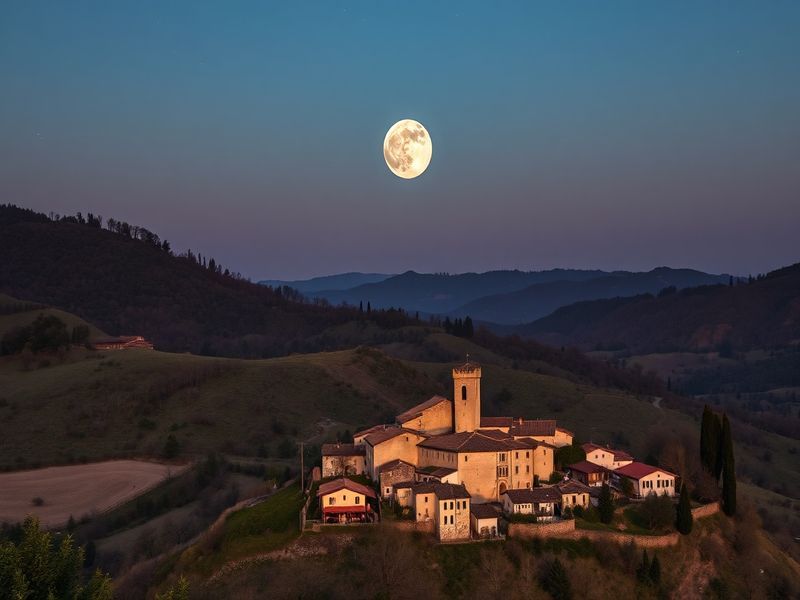
April 2026 Supermoon: How to See the Brightest Moon of the Year
“`html
Full Moon April 2026: A Rare Supermoon & Celestial Spectacle
The full moon of April 2026 promises to be one of the most visually striking lunar events of the year. On April 3, 2026, at precisely 5:18 AM UTC, the moon will reach its full phase while positioned near its closest orbital point to Earth. This alignment—known as a perigee full moon or “supermoon”—will make the lunar surface appear up to 14% larger and 30% brighter than an average full moon.
For stargazers and casual observers alike, this event offers a rare opportunity to witness the moon in its most dramatic form. Unlike more fleeting celestial phenomena, a supermoon is visible across wide swaths of the globe, provided skies are clear. The April 2026 full moon will be particularly noteworthy, as it coincides with the spring season in the Northern Hemisphere, adding a seasonal charm to the viewing experience.
The Science Behind the Supermoon Phenomenon
A supermoon occurs when the moon’s elliptical orbit brings it within 90% of its closest distance to Earth—approximately 221,500 miles. The term itself was popularized in 1979 by astrologer Richard Nolle, though astronomers often refer to the phenomenon as a perigee-syzygy, emphasizing the alignment of the Earth, moon, and sun.
The gravitational pull of the moon during a supermoon also influences ocean tides. Coastal regions can expect higher-than-normal high tides, known as “spring tides,” though the effect is typically subtle for most observers. Scientists note that while a supermoon does not cause natural disasters, it offers a unique chance to study the moon’s surface in greater detail using telescopes and amateur equipment.
For those interested in lunar photography, the supermoon’s brightness and size make it an ideal subject. Astrophotographers often use this opportunity to capture detailed images of lunar craters and maria, the dark plains formed by ancient volcanic activity. The contrast between the illuminated surface and the surrounding darkness creates striking visuals, especially when paired with foreground elements like trees or buildings.
Best Viewing Times and Locations
The full moon in April 2026 will be visible from nearly every time zone, though the exact timing will vary by location. In North America, the moon will reach its peak fullness during the predawn hours, while in Europe and Asia, it will be visible in the evening sky. The best viewing conditions typically occur when the moon is near the horizon, as atmospheric distortion can enhance its perceived size.
For optimal viewing, consider the following locations and times:
- North America (East Coast): April 3, 2026, around 1:18 AM EDT. The moon will be low on the horizon, offering a dramatic backdrop against urban skylines or natural landscapes.
- Europe (Western): April 3, 2026, around 6:18 AM BST. Early risers in the UK and Western Europe can catch the moon before sunrise.
- Asia (East/Southeast): April 3, 2026, around 2:18 PM SGT. The moon will rise in the evening, providing a clear view for observers in cities like Tokyo or Singapore.
- Australia & New Zealand: April 3, 2026, around 3:18 PM AEST. The moon will be high in the sky, offering a brilliant spectacle for Southern Hemisphere viewers.
To enhance the viewing experience, avoid areas with heavy light pollution. Rural locations, national parks, or high-altitude vantage points provide the clearest skies. If you’re unable to travel, many observatories and planetariums will host special events or live streams for the occasion.
Cultural and Historical Significance of April’s Full Moon
The full moon of April has long held symbolic meaning in various cultures. In many Indigenous traditions, it is known as the “Pink Moon,” a reference to the blooming of wild ground phlox, one of the earliest spring flowers. Other names include the “Sprouting Grass Moon” and the “Egg Moon,” reflecting themes of renewal and growth associated with the season.
In Hindu and Buddhist traditions, full moons are considered auspicious for meditation and spiritual practices. The April full moon often aligns with festivals such as Hanuman Jayanti, which celebrates the birth of the Hindu deity Hanuman. Meanwhile, in Western astrology, the full moon in Libra—where the moon will be positioned in 2026—is associated with themes of balance, relationships, and introspection.
Historically, full moons have been used to mark time in agricultural calendars. Ancient civilizations, such as the Babylonians and Chinese, relied on lunar cycles to determine planting and harvesting seasons. Even today, some farmers use the full moon as a guide for certain agricultural activities, though modern technology has largely replaced these methods.
How to Photograph the Supermoon Like a Pro
Capturing the supermoon requires some preparation, as its brightness can overwhelm standard camera settings. For best results, use a tripod to stabilize your shot and a telephoto lens to magnify the moon’s details. A DSLR or mirrorless camera with manual controls will allow you to adjust aperture, shutter speed, and ISO for optimal clarity.
Here are a few tips to elevate your lunar photography:
- Use a low ISO (100-400) to reduce noise in your images.
- Set a fast shutter speed (1/125s or faster) to avoid overexposure.
- Adjust the aperture to f/8 or higher for sharper focus across the moon’s surface.
- Shoot in RAW format to preserve details for post-processing.
- Include foreground elements, such as silhouettes of trees or buildings, to add depth to your composition.
If you’re new to astrophotography, consider using a smartphone with a dedicated night mode or a lunar photography app. These tools can help compensate for the moon’s brightness and stabilize your shot. For those looking to share their work, social media platforms like Instagram and Flickr often feature communities dedicated to lunar photography, where enthusiasts can exchange tips and showcase their images.
For more insights into capturing celestial events, check out our guide on astrophotography techniques. Whether you’re a seasoned photographer or a curious beginner, the April 2026 supermoon offers a perfect opportunity to explore the night sky.
Conclusion: Don’t Miss This Celestial Event
The full moon of April 2026 is more than just a routine astronomical event—it’s a chance to reconnect with the cosmos and witness the moon in its most spectacular form. Whether you’re an astronomer, a photographer, or simply someone who appreciates the beauty of the night sky, this supermoon is not to be missed.
Mark your calendars for April 3, 2026, and prepare to experience one of the year’s most breathtaking lunar displays. Clear skies and the right equipment will ensure an unforgettable viewing experience, while a bit of cultural and historical context can deepen your appreciation for the event.
As always, share your photos and experiences with us. Tag your social media posts with #Supermoon2026 and join the conversation about one of the sky’s most mesmerizing spectacles.