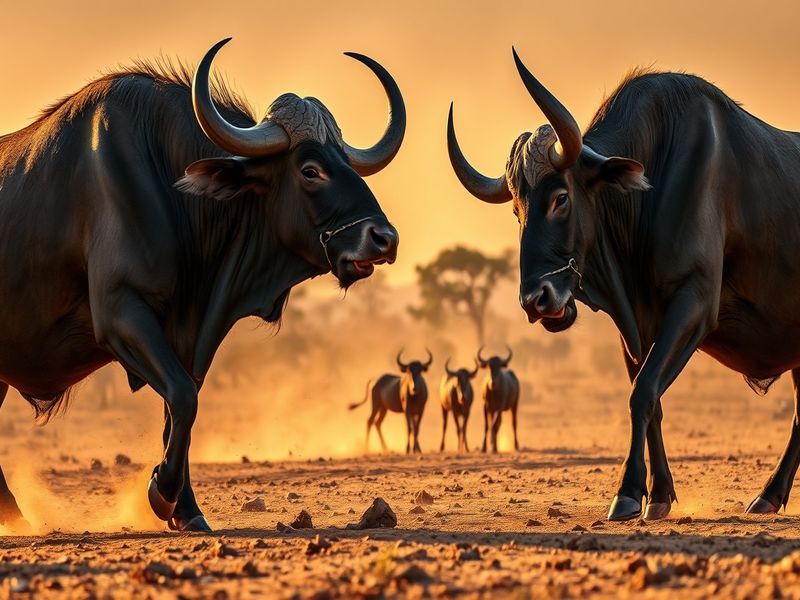
Bulls vs Rhinos: Who Would Win in a Fight and Why It Matters
“`html
Bulls vs Rhinos: Strength, Strategy, and Survival in the Wild
The African savanna and American plains are home to two of the most formidable creatures on Earth: the African buffalo and the rhinoceros. While both are herbivores, their physical attributes, social structures, and survival tactics paint a vivid picture of evolutionary adaptation. Comparing bulls (specifically African buffalo) with rhinos reveals a clash of raw power, intelligence, and sheer resilience.
These animals are often celebrated for their strength, but their differences tell a deeper story about nature’s diversity. One charges with horns, the other with horns and brute force. One lives in tight-knit herds, while the other often prefers solitude. Understanding their distinctions offers insight into how different species thrive in similar landscapes.
The Physical Showdown: Size, Weaponry, and Defense
When considering bulls versus rhinos, size and weaponry immediately stand out. An adult African buffalo, often called a Cape buffalo, can weigh up to 1,500 pounds and stand nearly five feet tall at the shoulder. Its curved, inward-facing horns—known as “bosses”—form a deadly shield capable of goring predators or rivals with precision. These horns are fused to the skull, making them nearly unremovable in combat.
Rhinos, on the other hand, are built like armored tanks. The white rhino, the larger of the two African species, can weigh over 5,000 pounds and reach six feet in height. Its most striking feature is its horn, which can grow up to five feet long in some individuals. Unlike the buffalo’s curved horns, the rhino’s horn is a solid mass of keratin, the same material as human hair and fingernails. While not fused to the skull, it is a formidable weapon capable of delivering devastating blows.
In a hypothetical face-off, the rhino’s sheer mass and horn length would likely give it an advantage in a frontal charge. However, the buffalo’s agility and ability to pivot quickly could allow it to evade or counterattack. Both animals possess thick skin—up to two inches thick in some areas—which acts as natural armor against bites and claws. Yet, where the buffalo relies on group defense, the rhino often stands alone, trusting its size and horn to deter threats.
Behavior and Social Structure: Herd Mentality vs Solitary Power
The social lives of bulls and rhinos reveal another layer of contrast. African buffalo are highly social animals, living in herds that can number in the hundreds. These groups are structured around dominance hierarchies, with older females often leading the way. Bulls, particularly older males, may form bachelor groups or challenge dominant bulls for mating rights. When threatened, buffalo herds exhibit remarkable coordination, forming defensive circles to protect calves and vulnerable members.
Rhinos, conversely, are far more solitary. White rhinos, for example, are often seen in small groups of females and calves, while males are territorial and prefer to roam alone. Adult males patrol large areas, marking territory with dung piles and urine. This solitary nature reduces competition but also limits their ability to defend against coordinated threats like human poachers or packs of lions. Rhinos lack the communal defense strategies of buffalo, relying instead on stealth and their intimidating presence to avoid conflict.
This behavioral difference extends to their interactions with predators. Buffalo herds actively confront lions, often chasing them down if they attack. Rhinos, while capable of fighting back, are more likely to flee or use their horns defensively. The buffalo’s herd mentality fosters a culture of mutual protection, while the rhino’s independence demands self-reliance.
Key Traits of Bulls and Rhinos
- African Buffalo: Highly social, lives in herds, strong group defense, curved horns, aggressive when threatened.
- White Rhino: Mostly solitary, massive size, long frontal horn, territorial, relies on size and horn for defense.
- Behavior: Buffaloes cooperate; rhinos prioritize individual space.
- Mating Strategies: Buffalo bulls compete within herds; rhino bulls defend territories to attract females.
Survival in the Wild: Adaptation and Human Impact
Both species have evolved to dominate their ecosystems, but their survival faces modern threats. African buffalo, while not currently endangered, face habitat loss due to agriculture and human expansion. Their aggressive nature makes them less likely to flee from danger, increasing human-wildlife conflict. In some regions, buffalo are targeted by poachers for meat and trophies, though they are not as heavily hunted as rhinos.
Rhinos are in far greater peril. Poaching for their horns has driven species like the black rhino to critically endangered status. Despite bans on international horn trade, illegal hunting persists due to demand in some Asian markets, where horn is falsely believed to possess medicinal properties. Conservation efforts, including anti-poaching patrols and horn dehorning, have provided some relief, but the rhino’s solitary nature makes protection more challenging.
The buffalo’s herd behavior, ironically, has helped its conservation. Their numbers remain stable in many protected areas, and their aggressive reputation deters some poachers. Rhinos, however, cannot rely on numbers for safety. Their survival depends on human intervention, whether through legal protection, habitat preservation, or anti-poaching measures.
Beyond the Battlefield: What These Animals Teach Us
The comparison between bulls and rhinos extends beyond biology—it speaks to broader themes of adaptation, resilience, and human impact. The buffalo’s communal strength highlights the power of cooperation, while the rhino’s solitary endurance reflects the challenges of self-reliance. Both species embody the raw power of nature, yet their struggles underscore the fragility of that power in the face of human activity.
For wildlife enthusiasts and conservationists, these animals serve as symbols of the wild’s untamed beauty. They remind us that survival is not just about size or strength, but strategy, community, and adaptability. As habitats shrink and poaching persists, their stories become calls to action—protecting not just individual species, but the ecosystems they represent.
Whether observed in the wild or studied in documentaries, bulls and rhinos captivate with their presence. They challenge our perceptions of power, showing that nature’s most formidable creatures are not always the largest or most aggressive, but those best suited to their environment. In a world where human influence reshapes every landscape, their survival may depend on our willingness to share the planet responsibly.
For those interested in exploring more about wildlife, conservation efforts, or the animals of the savanna, visit Dave’s Locker Nature for in-depth articles and resources. Additionally, Dave’s Locker Travel offers guides to the best destinations for wildlife viewing, where encounters with these majestic animals can be experienced firsthand.