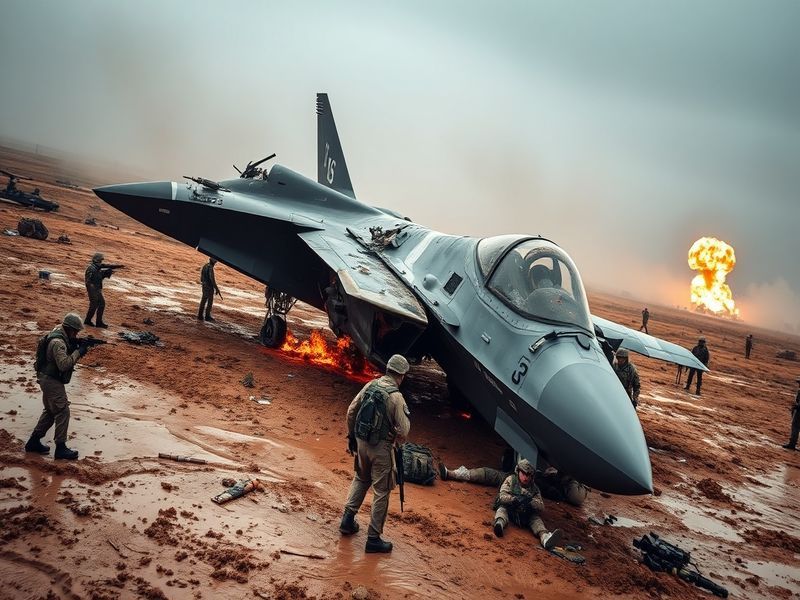
The recent downing of an F-35 stealth fighter has sent ripples through military and defense circles worldwide. The incident, which occurred during a routine training mission, raises critical questions about the vulnerabilities of fifth-generation aircraft and the evolving nature of aerial warfare. While official details remain sparse, the implications are far-reaching, touching on technology, geopolitics, and military strategy.
How Did the F-35 Get Shot Down?
Preliminary reports suggest the F-35 was targeted by an advanced surface-to-air missile system. The jet, designed to evade radar detection, appears to have been caught by an unexpected threat vector. Military analysts speculate that electronic warfare tactics or a sophisticated missile lock may have compromised its stealth capabilities. The exact location and circumstances remain classified, but the incident occurred in a contested airspace where multiple nations operate advanced air defense systems.
Key details from defense sources include:
- The pilot ejected safely and was recovered by allied forces.
- The aircraft was part of a multinational exercise involving NATO allies.
- Initial assessments rule out mechanical failure or pilot error.
The Broader Implications for Stealth Technology
The F-35 has long been marketed as nearly undetectable to enemy radar, a cornerstone of its $1.7 trillion development cost. If this downing confirms vulnerabilities, it could force a reevaluation of stealth doctrine. Military strategists have long debated whether stealth alone is sufficient in modern warfare, where electronic countermeasures and AI-driven targeting systems are becoming increasingly prevalent.
Some experts argue that the incident highlights the need for a layered defense approach. This could include:
- Enhanced electronic warfare suites to disrupt missile locks.
- Greater integration of unmanned drones for reconnaissance and decoy roles.
- Development of next-generation stealth materials and coatings.
Defense contractors like Lockheed Martin have yet to comment on potential design changes. However, the incident may accelerate investments in AI-driven threat detection systems, which could predict and neutralize incoming missile threats before they reach their target.
Geopolitical Reactions and Military Posturing
The downing of the F-35 comes at a tense time in global military relations. Nations like Russia and China have invested heavily in air defense systems designed to counter stealth aircraft. If this incident is confirmed as a result of such systems, it could embolden adversaries to test the limits of Western air superiority.
Analysts note that the incident could lead to:
- Increased pressure on NATO allies to upgrade their air defense networks.
- Heightened scrutiny of fifth-generation aircraft programs in allied nations.
- A potential slowdown in F-35 sales to countries with contested airspace.
Meanwhile, the incident has sparked discussions about the role of cyber warfare in modern conflicts. Some speculate that electronic interference may have played a role in compromising the F-35’s stealth capabilities, though no evidence has been publicly released to support this claim.
What’s Next for the F-35 Program?
The F-35 program has faced criticism in the past over cost overruns and technical delays. This incident could further strain its reputation, particularly among international partners who rely on the aircraft for their air superiority missions. The Pentagon has not indicated whether the downing will lead to a temporary grounding of the fleet, but such a move would not be unprecedented in military aviation history.
For now, the F-35 remains a critical asset for the U.S. and its allies. However, the incident serves as a reminder that even the most advanced technology is not infallible. The defense industry will likely redouble its efforts to address these vulnerabilities, but the question remains: How long can stealth aircraft maintain their edge in an era of rapidly advancing countermeasures?
For further reading on military technology and its implications, visit our Technology and News sections.
Conclusion
The downing of an F-35 stealth fighter is more than just a technical setback—it’s a wake-up call for military strategists worldwide. As warfare evolves, so too must the tools and tactics that define it. The F-35’s future hinges on how quickly and effectively these lessons are integrated into its design and deployment. One thing is certain: the era of absolute air superiority is over, and the race to dominate the skies is entering a new phase.