Israel-Iran Conflict: Escalation and Global Implications
“`html
Israel-Iran Conflict: Escalation and Global Implications
The Israel-Iran conflict has intensified over the past decade, transforming from a shadow war fought through proxies into direct confrontations that now threaten regional stability. Recent strikes, cyberattacks, and political maneuvering have drawn global attention, raising concerns about a broader conflict that could destabilize the Middle East and beyond.
Both nations possess significant military capabilities, though their strategies differ markedly. Israel prioritizes rapid, precision-based strikes to neutralize perceived threats, while Iran relies on asymmetric warfare, supporting militant groups across the region. This asymmetry has led to a cycle of retaliation that shows no signs of abating.
The Historical Roots of the Conflict
The enmity between Israel and Iran dates back to the 1979 Islamic Revolution, which overthrew Iran’s monarchy and replaced it with a theocratic regime opposed to Israel’s existence. The revolution’s leader, Ayatollah Ruhollah Khomeini, explicitly rejected Israel’s legitimacy, framing the conflict as a religious and political struggle.
During the Iran-Iraq War (1980-1988), Israel provided covert support to Iran, selling weapons through third parties—a move that underscored the complexity of Middle Eastern geopolitics. However, the 1990s saw a shift as Iran accelerated its nuclear program, prompting international scrutiny and Israel’s growing concern over Iran’s regional ambitions.
The 2005 election of Mahmoud Ahmadinejad, who openly called for Israel’s destruction, further strained relations. Israel’s subsequent military campaigns in Lebanon (2006) and Gaza (2008-2009) were partly framed as responses to Iranian-backed Hezbollah and Hamas. The conflict has since evolved into a multi-front struggle involving Syria, Yemen, and Iraq.
Recent Escalations and Direct Confrontations
The past five years have witnessed a dramatic escalation in hostilities. In 2020, Israel assassinated Iranian General Qasem Soleimani, a key figure in Iran’s regional strategy, in a drone strike in Baghdad. Iran retaliated with missile strikes on U.S. bases in Iraq, but Israel remained a primary target.
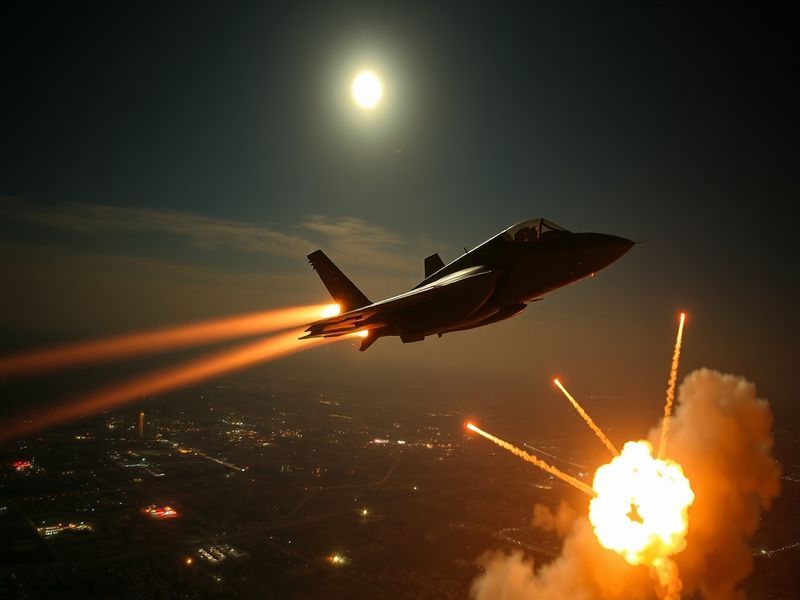
The most significant recent escalation occurred in April 2024, when Iran launched a massive missile and drone attack on Israel in response to a suspected Israeli strike on its consulate in Damascus, which killed several high-ranking Iranian officers. While Israel, with the help of the U.S. and regional allies, intercepted most of the projectiles, the attack marked the first direct military confrontation between the two nations.
- April 2024 Attack: Iran fired over 300 drones and missiles toward Israel, the largest such assault in the country’s history.
- Israeli Response: Israel launched limited strikes on Iranian military sites, avoiding civilian targets but signaling a willingness to escalate if necessary.
- International Reactions: The U.S., UK, France, and Jordan provided defensive support to Israel, while Russia and China called for restraint.
This exchange underscored the fragility of the region’s security architecture. The involvement of multiple state and non-state actors complicates de-escalation efforts, as each strike risks triggering a wider conflict.
Global Implications: Oil, Diplomacy, and Security
The Israel-Iran conflict has far-reaching consequences beyond the Middle East. The Strait of Hormuz, a critical chokepoint for global oil shipments, remains a flashpoint. Any disruption could send shockwaves through energy markets, driving up prices and straining economies already grappling with inflation and supply chain issues.
Diplomatically, the conflict has deepened divisions among global powers. The U.S. maintains its unwavering support for Israel, while European nations urge restraint and seek diplomatic solutions. Meanwhile, Iran’s alliances with Russia and China have turned the conflict into a proxy battleground for broader geopolitical rivalries.
In the cultural sphere, the conflict has fueled debates about anti-Semitism and Islamophobia, particularly in Western nations. Protests, social media campaigns, and misinformation have amplified tensions, complicating efforts to foster dialogue and understanding.
The Human Cost and the Path Forward
The civilian toll of the Israel-Iran conflict is often overshadowed by geopolitical maneuvering. In Syria, where Iran-backed forces have clashed with Israeli airstrikes, thousands of civilians have been displaced or killed. In Yemen, the Houthi rebels—backed by Iran—have targeted Israeli-linked shipping, further destabilizing an already fragile region.
Despite the grim outlook, there are glimmers of hope. Backchannel negotiations, mediated by regional actors like Jordan and Oman, have occasionally yielded temporary ceasefires. However, the lack of a comprehensive peace framework leaves the door open for further escalation.
For a deeper analysis of regional dynamics, explore our Politics section, which examines the broader implications of Middle Eastern conflicts on global stability.
The path forward remains uncertain. Both Israel and Iran appear locked in a cycle of mutual deterrence, where each side seeks to avoid direct war while maintaining pressure on the other. Yet history has shown that miscalculations can lead to unintended consequences, with devastating human and geopolitical costs.
As the international community watches, the question is no longer whether another major confrontation will occur, but when—and how the world will respond.