Premier League Darts Live: How a Pub Game Became a Global Sensation
Premier League Darts Live: A Global Spectacle in the World of Throwing Precision
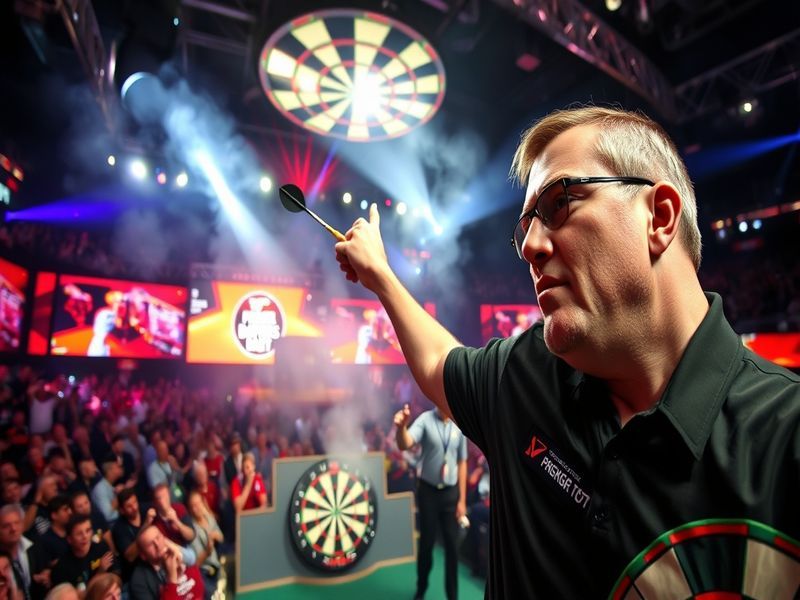
Since its inception in 2005, the Premier League Darts has transformed what was once a pub-based pastime into a global television extravaganza. Broadcast to over 180 countries and watched by millions, the tournament blends athletic precision, razor-sharp tactics, and high-pressure drama. Unlike traditional darts played in local leagues, this event features the sport’s elite players competing weekly across multiple cities in a league-style format, culminating in a dramatic playoffs showdown. It’s a spectacle where a single misplaced shot can shift the balance of power—and where the roar of the crowd often dwarfs the sound of the dartboard itself.
What began as a British sporting innovation has grown into a truly international affair. While darts has deep roots in working-class pubs across the UK, Ireland, and the Netherlands, the Premier League has exported the sport’s intensity to new audiences. Cities like Berlin, Copenhagen, and New York now host sell-out arenas where fans don’t just watch—they participate, chanting, clapping in sync, and creating an electric atmosphere that rivals top-tier football or rugby events. The league’s success reflects a broader trend: the globalization of niche sports through premium broadcasting and strategic venue expansion.
The Format That Changed the Game: Structure, Strategy, and Stamina
The Premier League stands apart due to its format—10 world-class players compete in a nine-month marathon of matches, each worth two points. The top four after the regular season advance to the playoffs, where sudden-death tension takes over. But this isn’t just about throwing darts. It’s about endurance. Players must maintain consistency across 16 rounds, adapting to different boards, atmospheres, and opponents. A missed checkout in week three can haunt a player all season, while a late surge in form can turn a struggler into a contender.
Strategy plays a huge role. Unlike knockout tournaments where one bad leg can end a campaign, the league rewards consistency and tactical adaptability. Players must decide when to go for high-risk finishes and when to play safe. The mental game is just as important as the physical. As Michael van Gerwen once noted, “You’re not just playing your opponent—you’re playing the crowd, the board, and your own nerves.”
Television production amplifies the drama. Broadcasters use multiple camera angles, player microphones, and slow-motion replays to highlight every dart’s flight. The result is a viewing experience that feels immersive—viewers aren’t just spectators; they’re part of the arena. This level of engagement has helped darts cultivate a loyal, passionate fanbase that spans generations, from seasoned punters to younger viewers discovering the sport through streaming.
A Cultural Bridge: How Darts Connects Communities Across Borders
Darts may seem like a simple game—180, treble 20, checkout—but its cultural resonance runs deep. In the UK, it’s a working-class tradition, a staple of pub culture where locals gather around a board after work. The Premier League has elevated this ritual into a mainstream sporting event, attracting corporate sponsors and prime-time TV slots. Yet it hasn’t lost its grassroots appeal. Many fans still play in local leagues, inspired by the professionals they watch on TV.
Internationally, the league has acted as a cultural ambassador. In Germany, where darts was once a niche interest, the Premier League has helped grow participation by over 40% in the past decade. Similar growth has been seen in the United States, where darts was historically overshadowed by baseball and American football. The introduction of American players like Luke Humphries and the inclusion of New York as a host city signal a deliberate push to expand the sport’s footprint.
The league’s global appeal is also reflected in its fanbase demographics. While the core audience remains in the UK and Europe, viewership has surged in Asia—particularly in China and Japan—thanks to online streaming platforms. Social media has played a key role, with players like Gerwyn Price and Dimitri Van Gerwen building massive followings through behind-the-scenes content and viral moments. A single viral checkout or tense leg can spark international fandom overnight.
Technology and Tradition: The Evolution of a Modern Classic
The Premier League darts isn’t just a sporting event—it’s a technological showcase. Every dart thrown is tracked in real time using sensors, producing live statistics on average scores, checkout percentages, and pressure metrics. These data points are broadcast alongside the action, giving fans deeper insights into player performance. This blend of tradition and tech mirrors broader trends in sports broadcasting, where analytics and accessibility enhance the viewing experience.
The league has also embraced digital innovation. Fans can now stream matches live via platforms like DAZN and YouTube, breaking free from traditional TV schedules. Interactive apps allow viewers to predict outcomes, vote on player of the match, and even play along in real time. Social media amplifies the conversation—Twitter becomes a second screen for debates, memes, and trending moments. The result is a hybrid fan experience that’s both communal and personalized.
Despite these advancements, the soul of the game remains unchanged. The sound of a perfectly struck treble 20, the clink of a pint glass between legs, the hush of a packed arena as a player lines up a double—these are rituals that connect past and present. The Premier League has modernized darts without erasing its identity. It’s a balancing act few sports have pulled off so successfully.
Key Takeaways for Fans and Newcomers
Whether you’re a seasoned darts enthusiast or a curious newcomer, here are a few things to keep in mind when following the Premier League:
- Know the format: Nine months of matches, two points per win, top four advance to playoffs. It’s a marathon, not a sprint.
- Watch the stats: Average scores and checkout percentages reveal more than just the final score. They tell the story of pressure and precision.
- Follow the crowd: The atmosphere in each arena is part of the spectacle. Fans in Berlin chant differently than those in Glasgow—and that matters.
- Appreciate the players: These athletes combine hand-eye coordination, mental resilience, and tactical genius. A single dart can define a career.
- Engage digitally: Use apps and social media to connect with other fans. The Premier League thrives on shared passion.
Looking Ahead: The Future of Premier League Darts
The Premier League darts is more than a tournament—it’s a cultural institution in motion. With expansion into new markets, increased investment in youth programs, and continued innovation in broadcasting, the league is poised to grow even further. Yet its greatest strength may be its authenticity. In an era of algorithm-driven sports and synthetic entertainment, darts remains refreshingly human: a game of inches, nerves, and nerve.
As broadcasting rights continue to rise and global audiences expand, the question isn’t whether the Premier League will grow—it’s how far it can go. Will we see a Premier League darts final in Los Angeles or Tokyo? Could regional leagues emerge in Africa or South America? The possibilities are as endless as the combinations on a dartboard. One thing is certain: when the lights go down and the first treble 20 rings out, millions will be watching—ready to cheer, to cringe, and to be captivated by the next perfect shot.
The Premier League darts isn’t just a sporting event. It’s a global gathering of fans, a celebration of precision, and a testament to the power of a simple game done exceptionally well.