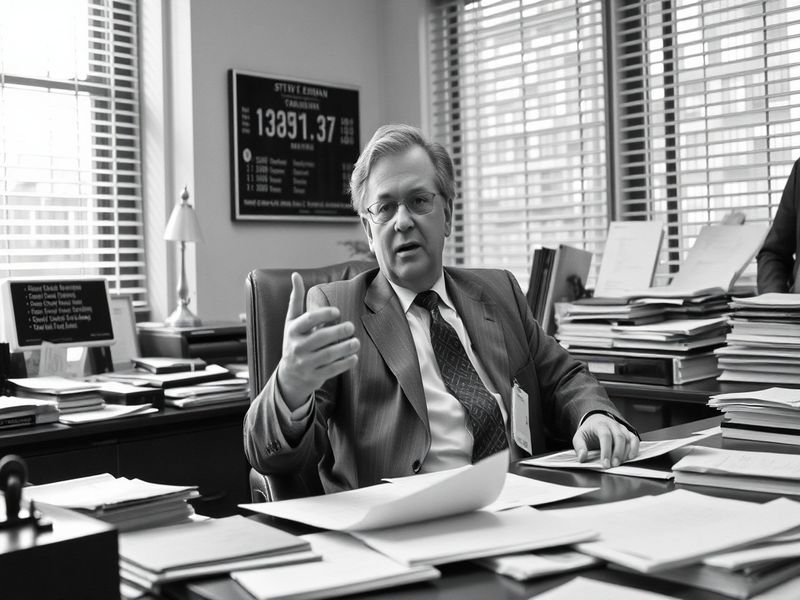
Steve Eisman is one of the most respected—and sometimes controversial—figures in modern finance. His prescient warnings about the subprime mortgage crisis earned him both notoriety and credibility, transforming him from an obscure hedge fund manager into a celebrated contrarian voice. While he shies away from the spotlight, his investment strategies and public critiques have left an indelible mark on Wall Street.
Born in 1962, Eisman spent years in relative obscurity before the financial world caught up with his insights. His career spans decades, but it was his role in exposing the fragility of the housing market that defined his legacy. Today, he remains a polarizing figure: some see him as a visionary who challenged systemic greed, while others question his timing and motives. Regardless of perspective, his story offers valuable lessons about risk, regulation, and the dangers of complacency.
The Early Years: From Lawyer to Investor
Before Eisman became a household name in finance, he pursued a different path. He graduated from the University of Pennsylvania with a degree in finance and later earned a law degree from Harvard. His legal training initially led him to work at a New York law firm, but the allure of investing proved stronger. In the late 1980s, he transitioned into the financial sector, joining Oppenheimer & Co. as an equity analyst.
Eisman’s early focus was on financial services, where he developed a reputation for thorough research and blunt honesty. Colleagues and clients often noted his willingness to challenge conventional wisdom—a trait that would later define his most famous trades. By the late 1990s, he had shifted into asset management, eventually launching his own hedge fund, FrontPoint Partners, in 2000.
At FrontPoint, Eisman built a team that specialized in deep-dive research, often targeting industries rife with misplaced confidence. His strategy relied on identifying cracks in the system before they became obvious to the broader market. This approach served him well during the tech bubble of the early 2000s, where he avoided many of the dot-com excesses that wiped out less discerning investors.
The Subprime Mortgage Gamble: Eisman’s Most Famous Trade
The turning point in Eisman’s career arrived in the mid-2000s, as he zeroed in on the housing market. By 2005, he had become convinced that the subprime mortgage industry—a cornerstone of the U.S. economy—was built on a foundation of fraud and unsustainable debt. His research revealed alarming patterns: lenders were issuing mortgages to borrowers with poor credit histories, often with adjustable rates that would reset to unaffordable levels. Worse, these loans were being repackaged into complex securities and sold to investors worldwide as low-risk assets.
Eisman’s skepticism grew as he met with executives at major banks and mortgage lenders. In a now-famous 2007 presentation, he famously compared the housing market to a “giant Ponzi scheme.” He shorted shares of subprime lenders like New Century Financial and Countrywide Financial, betting that their business models would collapse. His fund also took positions against mortgage-backed securities, profiting as defaults surged.
The 2008 financial crisis validated Eisman’s thesis. Lehman Brothers collapsed, Bear Stearns was sold in a fire sale, and the global economy teetered on the brink of depression. While many investors lost fortunes, Eisman’s bets against the housing bubble generated billions in profits for FrontPoint and its investors. The trade cemented his reputation as one of the few who had seen the disaster coming.
- Key Players in Eisman’s Research: He relied on a network of analysts and even visited subprime lenders firsthand to assess their operations.
- The Role of Ratings Agencies: Eisman criticized Moody’s and S&P for their lax standards, which allowed toxic assets to be sold as safe investments.
- Collateralized Debt Obligations (CDOs): His fund targeted these complex instruments, which were later exposed as vehicles for financial deception.
Public Profile and Media Spotlight
Eisman’s success during the crisis thrust him into the public eye. He was featured in financial news outlets like The Wall Street Journal and Bloomberg, where his contrarian views were dissected in detail. His participation in Michael Lewis’s 2010 book The Big Short—later adapted into an Oscar-winning film—further cemented his status as a financial icon.
Despite his newfound fame, Eisman remained cautious about the limelight. He avoided the celebrity investor persona, preferring to let his track record speak for itself. In interviews, he often downplayed his role, emphasizing that his success was the result of rigorous research rather than luck. Colleagues described him as intensely private, with a dry sense of humor and a low tolerance for financial nonsense.
His public commentary post-crisis focused on the need for stronger regulations, particularly in the shadow banking sector. Eisman testified before Congress in 2009, arguing that the financial system remained vulnerable to similar crises unless systemic risks were addressed. His testimony contributed to the push for reforms like the Dodd-Frank Act, though he later expressed skepticism about whether the changes went far enough.
Legacy and Lessons from Eisman’s Career
More than a decade after the financial crisis, Eisman’s influence persists. His career serves as a case study in contrarian investing, highlighting the value of questioning consensus and digging beneath surface-level data. Yet his story also raises uncomfortable questions about the ethics of profiting from others’ misfortune. While Eisman framed his bets as a corrective to market excesses, critics argue that his trades exacerbated the very collapse he claimed to foresee.
Eisman himself has acknowledged the moral complexities of his work. In a 2011 interview, he noted that while he felt vindicated by the crisis, he also recognized the human cost—millions of families lost homes, jobs, and savings. His fund, FrontPoint, eventually shut down in 2013, though Eisman continued investing through his family office, Neuberger Berman. Today, he remains active in markets, though he has shifted focus away from the kind of macroeconomic bets that defined his career.
For aspiring investors, Eisman’s approach offers several key takeaways:
- Question Authority: Eisman’s willingness to challenge industry insiders and ratings agencies set him apart. He didn’t accept narratives at face value.
- Embrace Uncomfortable Truths: His subprime thesis was unpopular for years. Success often requires patience and conviction in the face of skepticism.
- Balance Profit with Principle: While Eisman’s trades were lucrative, they were also ethically fraught. Investors must weigh financial gains against broader impacts.
- Adapt or Fade: Markets evolve, and strategies that work in one era may fail in another. Eisman’s shift from subprime to other sectors reflects this reality.
Eisman’s story is a reminder that finance is as much about psychology as it is about numbers. The best investors don’t just analyze data; they anticipate the collective delusions of their peers. In an industry often criticized for short-term thinking, his long-term skepticism stands out as a rare virtue.
Conclusion: Why Eisman Still Matters
Steve Eisman’s career is a study in contradictions. He’s a Wall Street insider who exposed the system’s flaws, a hedge fund manager who profited from others’ suffering, and a voice of caution in an industry prone to exuberance. His legacy is not just about the money he made or the crisis he predicted; it’s about the questions he forced the financial world to confront.
In an era where financial crises seem to recur with unsettling frequency, Eisman’s insights remain relevant. His emphasis on rigorous skepticism—of both markets and one’s own assumptions—is a lesson for investors and policymakers alike. Whether or not the next Steve Eisman emerges, his career underscores a timeless truth: the greatest risks are often hiding in plain sight, disguised as business as usual.
As for Eisman himself, he shows no signs of slowing down. Though he operates outside the spotlight today, his influence lingers in the strategies of a new generation of contrarian investors. In finance, as in life, the ability to see what others miss is a rare and valuable skill—and one that Eisman has mastered.