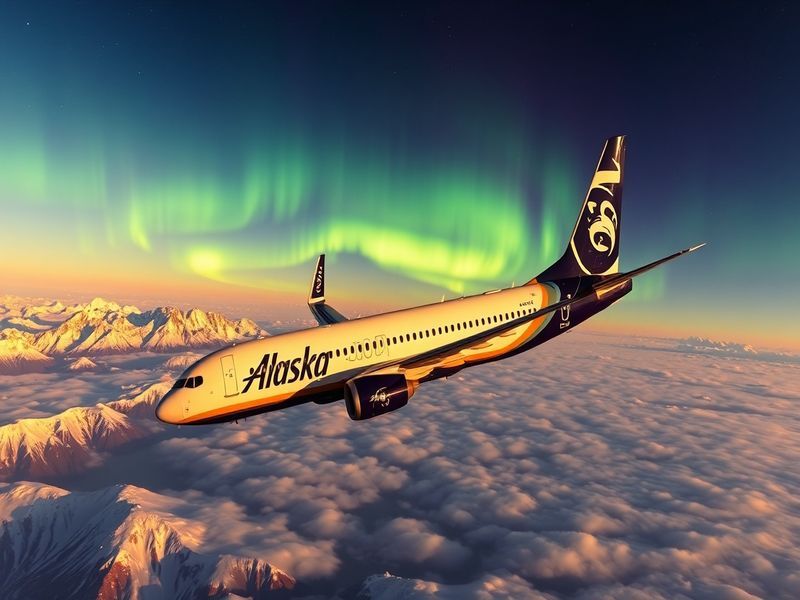
Alaska Air Group, parent company of Alaska Airlines and Horizon Air, has quietly positioned itself as one of the most innovative and customer-focused carriers in the United States. While major legacy carriers often dominate industry headlines, Alaska Air has cultivated a distinct identity built on operational reliability, regional connectivity, and a commitment to sustainability. Its strategic growth over the past two decades reflects both smart acquisitions and organic expansion, particularly in markets underserved by larger competitors.
The airline’s recent financial performance and operational metrics highlight its resilience. In 2023, Alaska Air reported a net income of $401 million on $9.2 billion in revenue, maintaining a load factor above 86% despite industry-wide labor challenges and rising fuel costs. These figures underscore not just financial stability, but a model that balances scale with service quality—a rare achievement in modern aviation.
Operational Excellence and Customer Loyalty
Alaska Airlines has long been recognized for its operational reliability. In 2023, it achieved the lowest rate of flight cancellations among U.S. carriers for the ninth consecutive year, according to data from the U.S. Department of Transportation. This consistency has earned it a reputation as a dependable choice for travelers, especially in the Pacific Northwest and California markets, where weather and air traffic delays often disrupt schedules.
Customer loyalty is another cornerstone of Alaska Air’s strategy. Its Mileage Plan frequent flyer program consistently ranks among the best in the industry, offering valuable redemption options and elite benefits without the complexity of some larger programs. The airline’s partnership with American Airlines further extends its reach, allowing Mileage Plan members to earn and redeem miles across a vast network while retaining access to Alaska’s superior customer service.
Alaska Air also differentiates itself through employee engagement. The company has invested heavily in pilot and crew training, contributing to higher job satisfaction scores compared to industry averages. This focus on workforce stability has translated into fewer disruptions and a more cohesive operational culture—a critical factor in an industry plagued by labor shortages.
A Fleet Built for Efficiency and Comfort
One of Alaska Air’s most strategic moves in recent years has been its fleet modernization. The airline operates one of the youngest and most fuel-efficient fleets in the U.S., with an average aircraft age of under 10 years. Its Boeing 737 MAX 9 fleet, which entered service in 2019, offers improved fuel efficiency, reduced emissions, and enhanced passenger comfort. The MAX 9’s larger windows, advanced air filtration systems, and quieter cabins have become a selling point for travelers choosing Alaska over competitors.
Horizon Air, Alaska’s regional subsidiary, operates a fleet of Embraer E175 jets, which serve shorter routes with high frequency. These aircraft are particularly effective in connecting smaller cities like Boise, Idaho, and Santa Rosa, California, to major hubs such as Seattle, Portland, and San Francisco. The regional strategy not only supports Alaska’s core operations but also strengthens its presence in communities often overlooked by larger airlines.
Strategic Expansion and Market Positioning
Alaska Air’s growth has been methodical and geographically focused. Unlike some competitors that pursue rapid global expansion, Alaska has concentrated on deepening its roots in the West Coast and expanding into key Sun Belt markets. In 2021, the airline announced new routes to destinations such as Austin, Texas, and Orlando, Florida, tapping into the booming demand for travel to warm-weather destinations.
The acquisition of Virgin America in 2016 was a pivotal moment. Though the integration process was complex, it allowed Alaska to instantly double its footprint in California and gain access to premium transcontinental routes. Today, San Francisco and Los Angeles serve as critical hubs, connecting Alaska’s Pacific Northwest base to major East Coast cities like New York and Boston.
Alaska Air has also been proactive in addressing gaps in regional connectivity. In 2022, it launched service to Belize City, its first international destination in Central America, signaling a broader ambition to serve leisure travelers seeking tropical getaways. This expansion aligns with the airline’s broader goal of balancing business travel dominance with leisure market growth.
Sustainability and the Future of Aviation
Sustainability is no longer optional in aviation—it’s a business imperative. Alaska Air has positioned itself as an industry leader in environmental responsibility. In 2021, it committed to achieving net-zero carbon emissions by 2040, one of the most ambitious targets in the sector. To meet this goal, the airline has invested in sustainable aviation fuel (SAF), with a commitment to purchase 185 million gallons of SAF by 2030—enough to cover approximately 10% of its annual fuel consumption.
The airline has also pioneered operational efficiency measures, such as single-engine taxiing and optimized flight routing, to reduce fuel burn. Its participation in the Boeing ecoDemonstrator program has allowed it to test new technologies, including electric ground equipment and noise-reducing flight procedures. These efforts have not gone unnoticed: Alaska Air was named the most fuel-efficient U.S. airline in 2022 by the International Council on Clean Transportation.
Beyond environmental initiatives, Alaska Air is also investing in workforce development. Its Ascend Pilot Academy, launched in 2021, is a tuition-free training program designed to address the nationwide pilot shortage by creating a pipeline of qualified aviators. The program reflects a long-term commitment to both sustainability and operational stability.
Challenges and Competitive Landscape
Despite its strengths, Alaska Air faces significant challenges. The airline operates in a highly competitive environment dominated by giants like Delta, United, and American Airlines. These carriers often have deeper pockets, broader route networks, and more extensive frequent flyer partnerships, giving them a structural advantage in certain markets.
Labor relations remain a persistent concern. While Alaska Air’s employee engagement scores are strong, the broader industry has seen waves of unionization efforts and contract disputes. The airline’s pilots, represented by the Air Line Pilots Association, have pushed for better compensation and working conditions, reflecting tensions seen across the sector.
Fuel price volatility also poses a financial risk. Despite hedging strategies, the airline’s profitability is closely tied to global oil markets. In 2022, fuel costs surged to $3.8 billion—nearly 30% of total operating expenses—highlighting the vulnerability of even the most well-managed carriers to external shocks.
Looking Ahead: Innovation and Adaptation
For Alaska Air, the future will be defined by its ability to balance growth with stability. The airline’s recent $2.8 billion acquisition of a minority stake in Hawaiian Airlines, announced in December 2023, signals a bold step toward expanding its presence in the Pacific. The partnership aims to enhance connectivity between the West Coast and Hawaii while exploring potential synergies in fleet and operational efficiency.
Technological innovation will also play a critical role. Alaska Air has been an early adopter of digital tools, from mobile boarding passes to AI-driven customer service chatbots. Its investment in data analytics allows it to personalize offers and optimize pricing, giving it an edge in a market where personalization is increasingly expected.
As the aviation industry continues to evolve, Alaska Air’s focus on regional strength, customer loyalty, and sustainability may prove to be its greatest assets. While it may never rival the scale of the largest U.S. carriers, its ability to deliver consistent performance and innovative solutions positions it as a model for regional aviation in the 21st century.
For travelers seeking a dependable, customer-focused airline with a strong regional identity, Alaska Air offers a compelling alternative. Its story is one of steady progress rather than explosive growth—a testament to the power of strategic consistency in an industry defined by volatility.
Explore more travel insights on Dave’s Locker or dive into industry analysis for deeper perspectives on aviation trends.