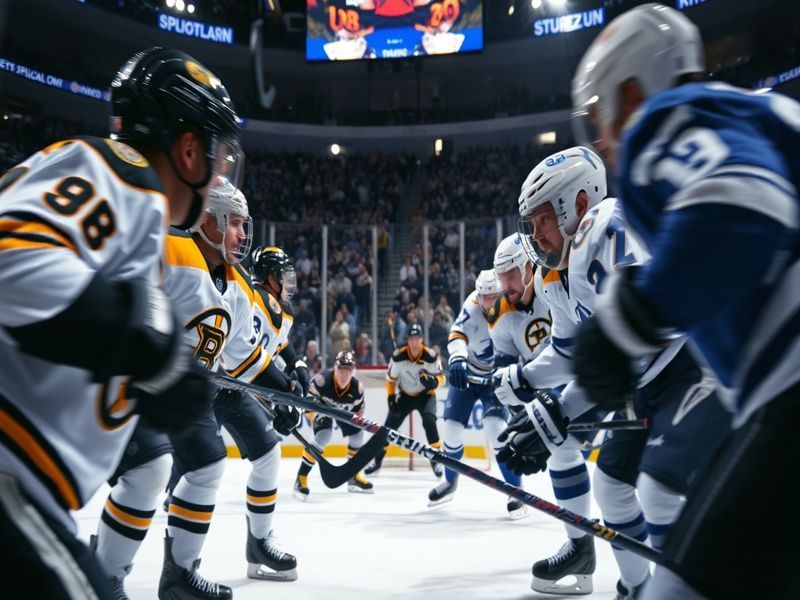
Bruins vs. Lightning: A Rivalry That Transcends the Rink
The Boston Bruins and Tampa Bay Lightning have forged one of the most compelling rivalries in modern NHL history. Beyond the wins and losses, their battles on the ice reflect deeper shifts in hockey’s global landscape. This rivalry isn’t just about playoff spots—it’s about the evolution of a sport that has expanded far beyond its traditional North American strongholds.
From the frozen ponds of Massachusetts to the sun-soaked arenas of Florida, the Bruins and Lightning represent two distinct hockey cultures. The Bruins embody the grit and tradition of the Original Six, while the Lightning showcase the sport’s growing appeal in non-traditional markets. Their clashes in recent years have mirrored broader trends in global hockey, where speed, skill, and analytics now rival the physicality of the past.
The Origins of a Modern Rivalry
The Bruins and Lightning first met in the 1992-93 season, but their rivalry truly ignited during the 2010s. The Lightning’s rise under Steven Stamkos and Victor Hedman aligned with Boston’s dominance under Zdeno Chara and Patrice Bergeron. Their playoff meetings in 2018 and 2020 set the stage for a rivalry that now feels as essential to the NHL as any between Original Six teams.
What makes this rivalry unique is its global resonance. The Bruins’ fanbase stretches from New England to Europe, where hockey has deep historical roots. Meanwhile, the Lightning’s success has helped popularize the sport in the American South, a region where hockey once struggled to gain traction. Their matchups are now watched not just in Boston and Tampa, but in hockey hotbeds like Sweden, Finland, and the Czech Republic.
For fans outside North America, these games offer a glimpse into the NHL’s shifting dynamics. The Lightning’s fast-paced, high-scoring style contrasts with the Bruins’ disciplined, defensive approach—two philosophies that reflect hockey’s evolution worldwide. Whether it’s the Lightning’s Russian connections (Nikita Kucherov, Mikhail Sergachev) or the Bruins’ European influence (David Pastrnak, Hampus Lindholm), the rivalry highlights hockey’s global talent pool.
Key Moments That Defined the Rivalry
The Bruins and Lightning have produced some of the most dramatic moments in recent NHL history. Their 2018 Eastern Conference Final remains a defining series, with Boston ultimately prevailing in five games. The Lightning, however, turned the tables in 2020, sweeping the Bruins in the second round en route to their second Stanley Cup in franchise history.
Here are some of the most unforgettable moments from their rivalry:
- Brad Marchand’s Game 4 Hat Trick (2018) – The Bruins forward torched the Lightning with three goals in a pivotal Game 4, igniting a frenzy among Boston fans.
- Yanni Gourde’s Game-Winning Goal (2020) – In a tightly contested Game 5, Gourde’s late goal sent Tampa to the next round, sparking celebrations in Florida.
- Patrice Bergeron’s Dominance – The Bruins captain has been a thorn in Tampa’s side for over a decade, his two-way play frustrating even the Lightning’s most skilled forwards.
- Kucherov’s Playoff Heroics – The Russian superstar has repeatedly elevated his game in these matchups, his vision and playmaking leaving Bruins defensemen grasping at air.
These moments aren’t just highlights—they’re a testament to how far both franchises have come. The Lightning’s transition from expansion team to dynasty mirrors hockey’s growth in new markets, while the Bruins’ sustained success reflects the enduring power of tradition.
The Cultural Impact Beyond the NHL
The Bruins vs. Lightning rivalry has transcended sports, influencing how hockey is perceived globally. In Europe, where hockey has long been a way of life, these games are studied as case studies in modern NHL strategy. Coaches in Sweden and Finland analyze Tampa’s puck possession tactics, while young players in Boston emulate the Bruins’ structured defensive system.
Social media has amplified the rivalry’s reach. Memes, highlight reels, and debates between fans in Toronto and Moscow keep the conversation alive year-round. For a sport that once struggled to break beyond its traditional borders, this digital engagement is invaluable. The Bruins and Lightning aren’t just teams—they’re ambassadors for hockey’s global future.
This rivalry also highlights the NHL’s push into new markets. While the Bruins represent hockey’s historic heartland, the Lightning embody the league’s expansion into the Sun Belt. Their success in Florida has proven that hockey can thrive outside traditional strongholds, paving the way for future franchises in cities like Seattle and Las Vegas.
For younger fans in non-traditional hockey markets, the Bruins and Lightning are more than teams—they’re gateways to the sport. A kid in Miami or London can now follow NHL action as passionately as a fan in Boston or Toronto. This shift is reshaping hockey’s cultural footprint, and the Bruins-Lightning rivalry is at the forefront of that change.
What’s Next for This Rivalry?
The Bruins and Lightning are entering a new phase. Boston, with a mix of aging stars and rising talent, is rebuilding while remaining competitive. Tampa, despite salary cap constraints, continues to reload with young players like Brayden Point and Anthony Cirelli leading the way.
What makes their future matchups so intriguing is the balance of power. The Lightning are still a Cup contender, but the Bruins are no longer the underdogs they were in 2018. The NHL’s parity means every game between them could swing either way, keeping fans worldwide invested.
As hockey’s global audience grows, so does the significance of this rivalry. The Bruins and Lightning aren’t just playing for playoff position—they’re shaping the future of the sport. Whether it’s in North America, Europe, or Asia, their battles resonate far beyond the rink.
For fans of sports and hockey alike, the Bruins vs. Lightning rivalry is a reminder of how far the game has come. It’s a story of tradition meeting innovation, of old-school grit colliding with modern analytics. And most importantly, it’s a rivalry that continues to captivate audiences around the world.