From Comeback to Crown: The Second Act That Changed Everything
Robert Downey Jr. didn’t just return to Hollywood after his early troubles—he redefined what a second chance could look like. By the late 1990s, his career was in freefall, marked by arrests, rehab stints, and industry blacklisting. Yet within a decade, he had become the highest-paid actor in the world, shaping global pop culture in ways few could have predicted. His journey from the edge of irrelevance to the summit of A-list fame offers more than just a redemption arc; it reveals how resilience, timing, and reinvention can rewrite personal and professional narratives on a worldwide stage.
The Early Years: A Prodigy’s Rise and the Pitfalls of Fame
Born in 1965 to a filmmaker father and an actress mother, Downey Jr. grew up in the heart of New York’s creative scene. He made his film debut at age five in Pound (1970), directed by his father, and by the 1980s, he was a sought-after talent in Hollywood. His breakout role in Less Than Zero (1987) showcased his raw intensity, earning critical praise and establishing him as a leading man with depth and charisma. Yet success came with the trappings of fame: substance abuse, legal troubles, and a reputation for unpredictability followed him into the 1990s.
By 1996, his career was in tatters. Multiple arrests, failed stints in rehab, and a string of box-office disappointments left him with few options. Hollywood had moved on. It wasn’t just his personal life that suffered—his professional identity was at risk. The roles dried up. The calls stopped. For many, he was a cautionary tale, a talent squandered by self-destruction. But Downey Jr. refused to accept that as the end of his story.
The Comeback Blueprint: Small Screen, Big Gamble
Downey Jr.’s road back began not on the big screen, but on television. His role as Larry Paul on the hit sitcom Ally McBeal (2000–2002) earned him a Golden Globe and proved he could still connect with audiences. Though controversial—some critics called it exploitation of his past—it was a calculated risk that paid off. The show’s success reminded Hollywood that he was still bankable, still relevant. It bought him time, a platform, and most importantly, credibility.
But the real turning point came with Kiss Kiss Bang Bang (2005), a neo-noir comedy where he starred alongside Val Kilmer. The film was a critical darling, praised for its sharp dialogue and Downey Jr.’s magnetic performance. It signaled that he wasn’t just a comeback story—he was a force to be reckoned with again. Yet it was the role he almost didn’t get that would change everything.
The Role That Changed Everything: Tony Stark and the Birth of a Franchise
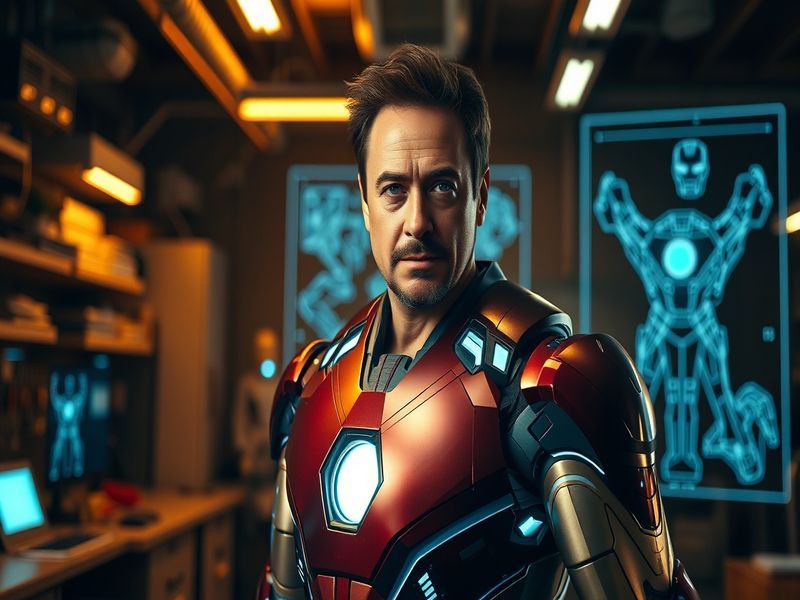
When Jon Favreau pitched Iron Man (2008), few expected it to become a cultural juggernaut. The character of Tony Stark—brilliant, arrogant, flawed—seemed tailor-made for Downey Jr. He immersed himself in the role, bringing wit, depth, and a rare vulnerability to a genre dominated by invincible heroes. His chemistry with Gwyneth Paltrow, the snappy dialogue, and his physical transformation into the armored Avenger made the film resonate globally.
Iron Man grossed over $585 million worldwide, defying skeptics who doubted the viability of a R-rated superhero film. More importantly, it launched the Marvel Cinematic Universe (MCU), a franchise that would redefine blockbuster filmmaking. Downey Jr.’s performance didn’t just save his career—it redefined the superhero genre, proving that flawed, human characters could carry massive global franchises. His portrayal of Tony Stark became the emotional core of the MCU, anchoring films from The Avengers (2012) to Avengers: Endgame (2019), which remains one of the highest-grossing films of all time.
Global Icon: Beyond the MCU and Into Cultural Legacy
Downey Jr.’s influence extends far beyond the MCU. His voice work as Sherlock Holmes in The Adventures of Tintin (2011) and Sherlock Gnomes (2018) introduced him to younger audiences worldwide. His role in Oppenheimer (2023) as Lewis Strauss earned him an Oscar nomination, proving his range hadn’t diminished with age. He’s become a global brand, not just an actor—a symbol of transformation, discipline, and reinvention.
His cultural impact is evident in the way his roles are analyzed in academic circles, referenced in memes, and emulated in fashion. Tony Stark’s tech-forward aesthetic influenced Silicon Valley culture, while his wit and charm have made him a favorite in interviews and public appearances. From Tokyo to Toronto, fans cite his performances as inspirations for personal growth and ambition.
The Business of Reinvention: How Downey Jr. Built an Empire
Downey Jr. didn’t just act his way back—he built an empire. In 2019, he launched Team Downey, a production company focused on socially conscious projects. The company has backed films like Dolittle (2020) and the upcoming Sherlock Holmes 3, proving he’s more than just a star—he’s a mogul. His business acumen, combined with his star power, has made him one of the most influential figures in modern entertainment.
He’s also used his platform for advocacy. A vocal advocate for criminal justice reform, Downey Jr. has spoken openly about his past struggles and supported initiatives aimed at helping others with addiction and legal troubles. His transparency has humanized him further, turning his personal story into a source of strength for millions.
Lessons from the Comeback King: What We Can Learn
Downey Jr.’s story is more than a Hollywood fairy tale. It’s a case study in resilience, adaptability, and the power of second chances. His journey offers several key lessons:
- Own Your Narrative: Downey Jr. didn’t hide from his past; he used it. His interviews and public appearances often acknowledge his struggles, turning them into part of his brand.
- Embrace Reinvention: He didn’t just return to acting—he evolved. From Larry Paul to Tony Stark to Sherlock Holmes, he constantly redefined himself.
- Surround Yourself with the Right Team: His partnership with producer Jon Favreau and his wife, Susan Downey, has been pivotal in his success.
- Turn Weakness into Strength: His flaws—arrogance, vulnerability, past mistakes—became his strengths on screen. Tony Stark’s genius was inseparable from his arrogance.
His story resonates globally because it’s universal: the struggle to overcome, the fear of failure, and the hope of redemption. In an industry obsessed with youth and perfection, Downey Jr. proved that character, depth, and authenticity matter more than ever.
A Lasting Legacy: The Man Who Saved Himself—and Hollywood
Robert Downey Jr. didn’t just rebuild his career—he helped rebuild Hollywood’s faith in redemption stories. His success paved the way for other actors with troubled pasts to get second chances. It also proved that audiences crave authenticity, even in fantasy. Tony Stark wasn’t just a hero; he was a mirror, reflecting our own flaws and aspirations.
Today, he stands as a global icon, a testament to the power of perseverance. His influence stretches from the silver screen to boardrooms, from meme culture to social justice advocacy. He’s not just an actor; he’s a symbol of what’s possible when talent meets resilience.
As Hollywood continues to evolve, one thing is certain: Robert Downey Jr. has already secured his place in cinematic history. Not just as Iron Man, but as a man who dared to dream—and dared to rise.
For more on Hollywood’s most iconic figures, explore our Entertainment section.
Interested in the business side of showbiz? Check out our Business category for deeper analysis.