Few fixtures in Turkish football carry the weight of Trabzonspor versus Galatasaray. Beyond the pitch, this rivalry embodies regional pride, generational shifts in support, and the enduring tension between tradition and ambition. While European football often focuses on global powerhouses, the Trabzonspor-Galatasaray clash offers a unique lens into how football culture thrives outside the usual spotlight—rooted in identity, geography, and history.
Trabzonspor, representing the Black Sea coast, and Galatasaray, the storied club from Istanbul, have built a rivalry that spans over half a century. Their matches are not merely games; they are cultural touchpoints that reflect Turkey’s diverse social fabric. The passion of their fans, the tactical battles on the field, and the high stakes of each encounter make this fixture one of the most compelling in world football.
The Historical Roots of the Rivalry
Tracing back to the 1970s, the rivalry between Trabzonspor and Galatasaray emerged during a time when Turkish football was transitioning from amateurism to professionalism. Trabzonspor, founded in 1967, quickly rose as a regional force, challenging Istanbul’s dominance. By the late 1970s and early 1980s, Trabzonspor had claimed multiple league titles, defying the long-standing hegemony of clubs like Galatasaray and Fenerbahçe.
This period marked the birth of a fierce competition. Galatasaray, a club with a deeply cosmopolitan identity due to its location in Istanbul and its historic ties to the Ottoman elite, found itself facing a team from Turkey’s rugged north—a region known for its fierce independence and working-class values. The contrast between the two clubs became symbolic of Turkey’s regional divides: coastal versus inland, progressive versus traditional, and cosmopolitan versus rooted.
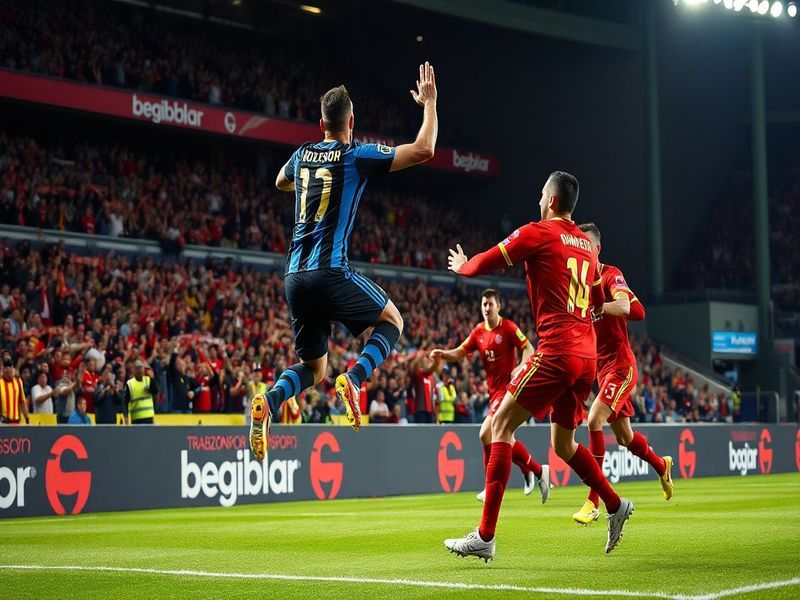
Matches between them became more than sporting events; they were expressions of identity. Fans in Trabzon draped themselves in blue and navy, while Istanbul’s supporters waved red and yellow. The stadiums transformed into arenas of regional pride, where every goal and every decision carried the weight of collective honor.
The Global Reach of a Local Rivalry
While the Trabzonspor-Galatasaray rivalry remains deeply Turkish in its essence, its significance has transcended national borders. Turkish football has increasingly gained global visibility, with leagues like the Süper Lig attracting international attention through streaming platforms and social media. The 2020s, in particular, have seen a surge in viewership for Turkish football, with diaspora communities in Europe, North America, and Australia tuning in to watch these high-stakes fixtures.
The rivalry’s global appeal lies in its authenticity. Unlike some modern European clashes that are engineered for commercial appeal, Trabzonspor vs Galatasaray is organic—a product of decades of competition, regional pride, and fan loyalty. Social media has amplified this reach, with clips of fan choreographies, pre-match rituals, and post-match celebrations going viral across platforms like Twitter and Instagram. Hashtags such as #Trabzonspor and #Galatasaray frequently trend in Turkey and among Turkish diaspora communities worldwide.
This global interest has not gone unnoticed by broadcasters. Major sports networks, including beIN Sports and TRT Spor, have expanded their coverage of the Süper Lig, recognizing the international appetite for fixtures like this one. The matches are now broadcast in over 100 countries, bringing the passion of the Black Sea coast to audiences as far-flung as Berlin, Toronto, and Sydney.
Why This Rivalry Matters Beyond the Pitch
Football rivalries often reflect broader societal dynamics, and Trabzonspor vs Galatasaray is no exception. The clubs represent different facets of Turkish society:
- Geographical Identity: Trabzonspor embodies the Black Sea region’s rugged individualism and maritime heritage, while Galatasaray reflects Istanbul’s cosmopolitanism and historical role as Turkey’s cultural and economic hub.
- Class and Background: Trabzon’s working-class roots contrast with Galatasaray’s association with Turkey’s elite, though both clubs have broad fan bases across social classes.
- Historical Narratives: Trabzonspor’s rise in the 1970s and 1980s challenged the status quo, symbolizing a shift in footballing power away from Istanbul. Galatasaray, meanwhile, has long been seen as a club of prestige, with a legacy tied to Turkey’s modernization.
These contrasts make the rivalry a microcosm of Turkey’s ongoing cultural and social evolution. When the teams meet, it’s not just about three points; it’s about asserting regional pride, challenging established norms, and celebrating the diversity that defines modern Turkey.
The Tactical and Psychological Battle
On the pitch, Trabzonspor vs Galatasaray is a clash of philosophies. Trabzonspor, historically, has been associated with disciplined, defensive football—mirroring the resilience of the Black Sea people. Their teams often prioritize organization and counterattacks, frustrating opponents with tactical discipline. Galatasaray, by contrast, has often embraced a more attacking, possession-based style, reflecting its ambitions to compete at the highest European levels.
Recent seasons have seen tactical shifts. Under managers like Şenol Güneş, Trabzonspor has retained its defensive solidity while incorporating more fluid attacking play. Galatasaray, under coaches such as Okan Buruk, has blended youthful energy with experienced leadership, aiming to reclaim its dominance in Turkish football.
The psychological aspect of the rivalry cannot be overstated. Players stepping onto the pitch at the Şenol Güneş Spor Kompleksi or the Nef Stadium carry the weight of their club’s history—and the expectations of their fans. A single mistake can be magnified in a match where the margin for error is razor-thin. The intensity of these fixtures often leads to dramatic moments, from last-minute winners to controversial refereeing decisions that spark national debates.
Looking Ahead: The Future of the Rivalry
The Trabzonspor-Galatasaray rivalry shows no signs of fading. As Turkish football continues to evolve, so too does this fixture. Financial disparities between clubs, the rise of new powerhouses like Beşiktaş and Fenerbahçe, and the increasing globalization of the sport all pose challenges to the traditional dynamics of the rivalry. Yet, its cultural significance remains undiminished.
For fans, the rivalry is a source of pride and identity. For players, it’s an opportunity to etch their names into history. For neutrals, it’s a spectacle of passion, skill, and drama. As long as Trabzonspor and Galatasaray continue to compete at the highest level, their meetings will remain a cornerstone of Turkish football—and a testament to the power of sport as a unifying and divisive force.
In an era where football is increasingly dominated by financial power and global branding, the Trabzonspor-Galatasaray rivalry reminds us of the sport’s deeper roots. It’s a celebration of regional identity, a showcase of tactical brilliance, and a spectacle that transcends the boundaries of the pitch. As long as there are fans willing to sing, chant, and fight for their colors, this rivalry will endure.
For more on Turkish football and its cultural impact, explore our Sports section.