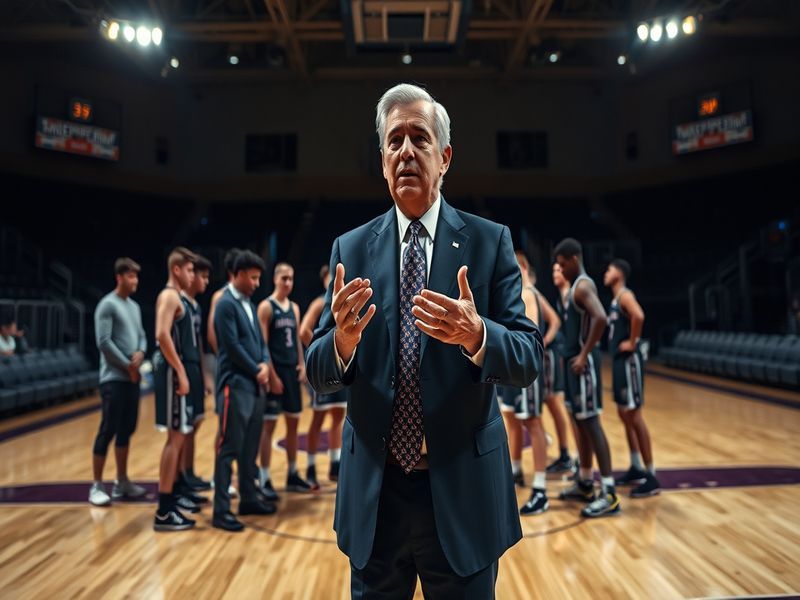
Vic Schaefer’s name now carries weight in women’s basketball circles, not just as a coach but as an architect of modern offensive strategy. His teams consistently rank among the nation’s best in scoring efficiency, a testament to his ability to blend tactical precision with player development. Schaefer’s influence extends beyond wins and losses; he’s reshaping how young players are trained and how programs are built from the ground up.
From Assistant to Head Coach: The Schaefer Blueprint
Schaefer’s journey to the top of college basketball wasn’t linear. After cutting his teeth as an assistant under established coaches, he took over the helm at Mississippi State in 2014. The program was solid but not elite. Within three seasons, he transformed the Bulldogs into national contenders, culminating in back-to-back NCAA Championship appearances in 2017 and 2018. His formula? A relentless focus on three-point shooting, defensive intensity, and positionless basketball.
At the University of Texas, Schaefer inherited a roster with raw talent but inconsistent execution. His first season in Austin saw immediate results: a 27–8 record and a top-10 national ranking. What stands out is how he adapted. Unlike coaches who force systems on players, Schaefer tailors his approach to the strengths of his roster. His offensive sets prioritize spacing and movement, forcing defenses to cover ground they can’t.
Core Principles of Schaefer’s Coaching Philosophy
- Positionless Basketball: Players aren’t pigeonholed into traditional roles. Guards initiate sets, forwards shoot threes, and centers handle the ball. This versatility keeps opponents guessing.
- Defensive Identity: Schaefer’s teams press aggressively, prioritizing turnovers and fast-break opportunities. His defensive rating at Texas improved by 12 points per 100 possessions in his first year.
- Player Development Pipeline: Development isn’t an afterthought. Schaefer’s staff spends countless hours refining skills—especially shooting form and decision-making under pressure.
Impact Beyond the Court: Culture and Leadership
Schaefer’s influence isn’t confined to Xs and Os. He’s built a reputation as a player’s coach, fostering environments where athletes thrive both on and off the court. His locker room culture emphasizes accountability, humility, and relentless work ethic. Players often cite his ability to connect on a personal level as a key reason for their growth.
This leadership style has broader implications for the sport. As women’s basketball gains mainstream attention, coaches like Schaefer are proving that success isn’t just about Xs and Os—it’s about creating cultures where players feel valued. His approach aligns with the growing emphasis on athlete well-being in college sports, where mental health and personal development are increasingly prioritized.
Challenges and Criticisms: The Other Side of the Story
No coaching philosophy is without scrutiny. Some critics argue that Schaefer’s system relies too heavily on three-point shooting, leaving teams vulnerable when shots aren’t falling. Others point to his occasional struggles in late-game situations, where over-aggressive defenses can backfire. Yet these critiques often overlook the adaptability he’s shown throughout his career.
For instance, when Texas lost to UConn in a tight game last season, Schaefer adjusted by incorporating more post-up sets to counter the Huskies’ defensive schemes. The adjustments weren’t perfect, but they demonstrated his willingness to evolve—a hallmark of great coaches.
The Big Picture: What Schaefer Means for Women’s Basketball
Schaefer’s success reflects a broader trend in women’s basketball: the rise of coaches who treat the game with the same strategic depth as their male counterparts. His work challenges outdated notions that women’s basketball should prioritize fundamentals over innovation. Instead, he’s proving that elite basketball—regardless of gender—requires creativity, adaptability, and a willingness to take risks.
His impact extends to recruiting as well. Top prospects now see programs like Texas and Mississippi State as destinations for both athletic and personal growth. Schaefer’s ability to attract high-level talent speaks to his reputation as a developer of players, not just a coach who wins games.
Looking ahead, Schaefer’s next move—whether at Texas or beyond—will be closely watched. If he can lead the Longhorns to a national title, his methods may become the gold standard for women’s basketball programs nationwide. Even if he doesn’t, his influence is already reshaping the sport’s future.
One thing is clear: Vic Schaefer isn’t just coaching basketball. He’s redefining what it means to lead in women’s sports.
For more insights into coaching strategies and player development, explore our Sports and Analysis sections.