Blackhawks vs Kraken: A Global Showdown in the NHL’s Evolving Landscape
The National Hockey League continues to expand its footprint beyond traditional North American strongholds, and the matchup between the Chicago Blackhawks and the Seattle Kraken represents more than just a game. It symbolizes the league’s deliberate push into new markets, the blending of hockey cultures, and the growing influence of European talent in North American leagues. This rivalry, though still in its early stages, has already begun to shape narratives around team identity, fan engagement, and the globalization of the sport.
Seattle’s entry into the NHL in 2021 marked a turning point for the league. Unlike previous expansion teams, the Kraken arrived not as a novelty but as a fully formed franchise backed by serious investment and a clear vision. The Blackhawks, meanwhile, carry the legacy of six Stanley Cup championships and a fanbase steeped in tradition. When these two teams meet, the contrast is palpable—between old hockey power and new hockey ambition, between a team with a century-long history and one still defining its own identity.
The Cultural Shift: Hockey’s Expansion Beyond the Rust Belt
For decades, the NHL’s identity was tightly woven with the industrial cities of the northeastern and midwestern United States—Detroit, Boston, Pittsburgh, and Chicago. These markets were hockey’s lifeblood, their blue-collar roots reflected in the physical, grinding style of play. But the league’s recent expansion into the Pacific Northwest and the southern United States has forced a reckoning with its cultural assumptions. Seattle, with its tech-driven economy and outdoor-oriented lifestyle, presented a different kind of challenge for the NHL.
The Kraken’s arrival was met with cautious optimism. The team embraced the city’s Scandinavian heritage, incorporating Nordic mythology into its branding and tapping into a local appetite for soccer culture. The Blackhawks, by contrast, have long been a symbol of Chicago’s working-class pride, their success during the 2010s coinciding with a resurgence of civic identity in the face of economic struggles. When these teams face off, they bring not just players to the ice, but entire cities’ aspirations and anxieties.
This cultural collision is not unique to Seattle and Chicago. The NHL’s global outreach has led to more international players entering the league, with young talents from Sweden, Finland, and Russia making an immediate impact. The Blackhawks, historically strong in drafting European players, have benefited from this trend, while the Kraken have built their roster with a deliberate international flavor. The result is a league where the lines between North American and European hockey are increasingly blurred.
Globalization has also influenced the fan experience. The NHL’s digital platforms now offer multilingual broadcasts and interactive content tailored to international audiences. Games between the Blackhawks and Kraken are streamed not just in North America but across Europe and Asia, where hockey’s popularity is growing. This shift reflects broader trends in sports media, where traditional boundaries are dissolving in favor of a more interconnected fanbase.
On-Ice Dynamics: Style, Strategy, and the New NHL
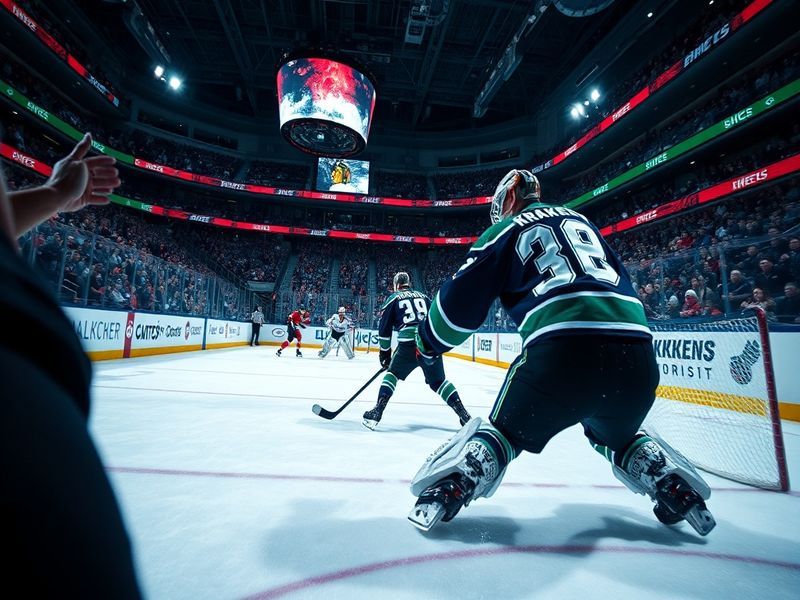
The Blackhawks and Kraken embody different philosophical approaches to the game. Chicago has long been associated with a fast, skillful style, built around puck possession and offensive creativity. The Kraken, meanwhile, have developed a reputation for physicality and defensive structure, a reflection of their expansion-era emphasis on system play. When these teams meet, the clash isn’t just about wins and losses—it’s about the evolving nature of NHL hockey.
The Blackhawks’ core of veterans, including stars like Connor Bedard and Seth Jones, brings a mix of raw talent and championship experience. Their play reflects the team’s history: quick transitions, high-pressure forechecking, and a willingness to take risks. The Kraken, led by coach Dave Hakstol, have cultivated a more measured approach, prioritizing defensive responsibility and structured breakouts. This contrast creates compelling matchups, particularly in transition play where turnovers can lead to high-danger chances on either side.
Defensively, the Blackhawks have struggled at times with consistency, a byproduct of their aggressive forecheck. The Kraken, however, have thrived in neutral-zone traps and structured defensive systems, frustrating opponents who rely on speed and creativity. This tactical battle is a microcosm of the NHL’s broader evolution, where analytics-driven coaching has led to a more conservative, possession-heavy style of play.
The goaltending matchup is another storyline. The Blackhawks have cycled through several goaltenders in recent years, searching for a reliable last line of defense. The Kraken, meanwhile, have benefited from the steady play of Philipp Grubauer, whose ability to steal games has been a cornerstone of their success. When these two netminders face off, the result often hinges on who can make the bigger save at a critical moment.
The Business of Hockey: Market Growth and Financial Realities
The NHL’s expansion into Seattle was not just a hockey decision—it was a business one. The league’s leadership recognized that traditional markets were saturated and that new revenue streams lay in untapped regions. The Kraken’s ownership group, led by billionaire David Bonderman, invested heavily in infrastructure, from their state-of-the-art arena to their digital engagement strategies. The Blackhawks, meanwhile, have long been one of the league’s most valuable franchises, thanks to their massive fanbase and corporate partnerships.
The financial stakes of this rivalry extend beyond ticket sales and merchandise. The NHL’s revenue-sharing model means that every game between two teams contributes to a broader pool that supports smaller-market franchises. The Blackhawks and Kraken, despite their differences in market size, both play a role in sustaining the league’s financial health. This interdependence is a reminder that, in the NHL, success is often a collective effort.
The global pandemic further accelerated changes in how teams approach revenue. The Blackhawks, like many NHL franchises, had to adapt to empty arenas and reduced attendance. The Kraken, still in their infancy, faced the challenge of building a fanbase from scratch. Both teams turned to digital engagement, from virtual watch parties to interactive social media campaigns. The result has been a more dynamic relationship between teams and their supporters, one that transcends traditional fandom.
The rivalry between the Blackhawks and Kraken also highlights the growing importance of esports and gaming in hockey culture. The NHL has embraced video game simulations, with virtual versions of both teams competing in the EA Sports NHL franchise. For younger fans, these digital matchups are often their first introduction to the rivalry, blurring the lines between real and simulated hockey.
What’s Next for the Blackhawks-Kraken Rivalry?
The future of this rivalry is as much about off-ice developments as it is about on-ice performance. The NHL’s commitment to expanding its global reach means that games between the Blackhawks and Kraken will increasingly be seen as international events, drawing viewers from Europe and Asia. The league’s partnerships with streaming services like DAZN and ESPN+ have made it easier than ever for fans worldwide to follow the action.
For the Blackhawks, the challenge will be maintaining relevance in a league that is rapidly changing. The team’s aging core and salary cap constraints have forced a rebuild, but Chicago’s fanbase remains one of the most passionate in the NHL. The Kraken, meanwhile, are still defining their identity. Their early struggles have been met with resilience, and their ability to develop young talent will determine their long-term success.
The rivalry’s next chapter could be shaped by several factors:
- Player development: Both teams are investing heavily in their farm systems. The Blackhawks’ recent draft picks, including Bedard, could redefine their competitive window. The Kraken’s prospect pool, bolstered by strategic trades, may yield future stars.
- Coaching changes: The NHL’s coaching carousel is always in motion. A new voice behind the bench could alter either team’s trajectory.
- International influence: The league’s growing reliance on European talent means that players from Sweden, Finland, and beyond will continue to shape the Blackhawks-Kraken dynamic.
- Fan engagement: The NHL’s digital transformation is far from over. Innovations in streaming, interactive content, and augmented reality could redefine how fans experience this rivalry.
The Blackhawks and Kraken may not yet have the storied history of Original Six matchups, but their rivalry is a reflection of the NHL’s present—and its future. It’s a story of adaptation, ambition, and the relentless pursuit of hockey excellence. As the league continues to evolve, so too will the narratives that define its teams, its players, and its fans.
For now, the Blackhawks and Kraken are writing their own chapter in the NHL’s ongoing saga. And whether you’re a fan in Chicago, Seattle, or halfway around the world, their battles on the ice are a reminder of why hockey remains one of the most dynamic sports in the world.