General Motors: A Century of Innovation and Adaptation
“`html
General Motors: The Evolution of America’s Auto Titan
General Motors (GM) has been a cornerstone of the automotive industry for over a century. From its early days as a fledgling company to its current position as a global leader in electric vehicles, GM’s journey reflects broader shifts in technology, economics, and consumer behavior. This evolution is not just about cars—it’s about how an industrial giant adapts to changing times while maintaining its influence.
The Early Years: Foundations of an Empire
General Motors was founded in 1908 by William C. Durant, a former carriage manufacturer with a vision for consolidation in the burgeoning auto industry. At the time, the U.S. automotive market was fragmented, with over 250 automakers competing for dominance. Durant’s strategy was simple: acquire smaller companies and streamline production under a single corporate umbrella. Within a decade, GM had absorbed brands like Buick, Cadillac, and Oldsmobile, creating a portfolio that catered to nearly every segment of the market.
The company’s growth was fueled by innovation and ambition. In 1911, GM established the General Motors Research Corporation, laying the groundwork for future advancements in automotive engineering. The introduction of the Model T competitor, the Chevrolet Series C, in 1912, further solidified GM’s dominance. By the 1920s, GM had surpassed Ford as the leading automaker in the U.S., a position it would hold for decades.
The Rise and Fall of an Industrial Giant
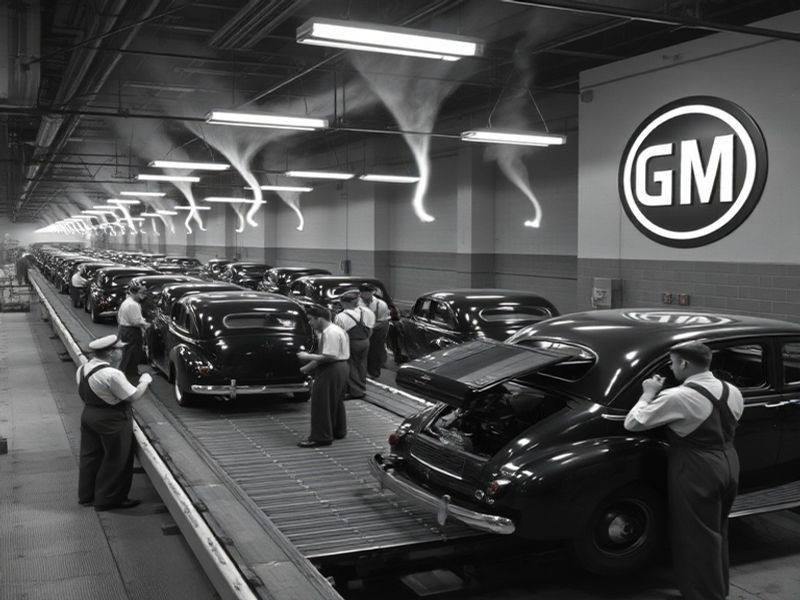
GM’s mid-century success was unparalleled. The company became synonymous with American industrial might, producing iconic vehicles like the Chevrolet Bel Air and the Cadillac Eldorado. Its assembly lines epitomized efficiency, and its marketing campaigns shaped consumer culture. Yet, by the 1970s and 1980s, GM faced challenges that would test its resilience. Rising fuel prices, foreign competition, and labor disputes created a perfect storm. The company’s market share eroded as Japanese automakers like Toyota and Honda gained traction with more fuel-efficient models.
The 1990s and early 2000s brought further struggles. GM’s dependence on gas-guzzling SUVs and trucks left it vulnerable to economic downturns and shifting consumer preferences. The 2008 financial crisis exacerbated these issues, pushing GM to the brink of collapse. The U.S. government intervened with a $49.5 billion bailout, and GM emerged from bankruptcy in 2010 as a leaner, government-backed entity. The bailout was controversial, but it allowed the company to restructure and refocus on innovation.
GM in the 21st Century: A Pivot to Electric and Autonomous Vehicles
Today, GM is undergoing a transformation that could redefine its legacy. The company has committed $35 billion to electric and autonomous vehicle development, aiming to become carbon neutral by 2040. Its Ultium battery platform, introduced in 2020, powers a new generation of electric vehicles (EVs), including the GMC Hummer EV and the Chevrolet Silverado EV. These vehicles represent a departure from GM’s traditional focus on trucks and SUVs, signaling a shift toward sustainability.
GM’s push into EVs is not just about environmental responsibility—it’s a strategic move to stay competitive in a rapidly changing market. Rivals like Tesla have demonstrated the potential of EVs, and traditional automakers are racing to catch up. GM’s approach is unique, however, in its emphasis on scaling production and leveraging its existing supply chain. The company’s Cruise division, which focuses on autonomous vehicle technology, is another key pillar of its future strategy. In 2021, Cruise secured a $2.1 billion investment from Microsoft, underscoring the commercial potential of self-driving cars.
Key Milestones in GM’s Modern Era
- 2010: GM emerges from bankruptcy after a $49.5 billion government bailout.
- 2016: GM acquires Cruise Automation, signaling its commitment to autonomous vehicle technology.
- 2020: The company unveils the Ultium battery platform, laying the foundation for its EV lineup.
- 2021: GM announces plans to phase out gasoline and diesel vehicles by 2035.
- 2023: The GMC Hummer EV and Chevrolet Silverado EV hit the market, marking GM’s entry into the mass-market EV segment.
The Broader Implications of GM’s Transformation
GM’s pivot to electric and autonomous vehicles is more than just a business strategy—it reflects broader societal shifts. Climate change, urbanization, and technological advancements are reshaping the automotive industry, and GM is positioning itself as a leader in this new landscape. However, the transition is not without challenges. The shift to EVs requires massive investments in infrastructure, from charging stations to battery recycling programs. Additionally, GM must navigate regulatory hurdles and consumer skepticism about autonomous vehicles.
The company’s success will depend on its ability to balance innovation with accessibility. While luxury EVs like the Cadillac Lyriq cater to high-end buyers, GM must also make electric vehicles affordable for the average consumer. This is where its Ultium platform could prove transformative, offering a scalable solution for mass production. GM’s partnerships with companies like LG Energy Solution and Honda also highlight its collaborative approach to overcoming industry challenges.
GM’s story is a microcosm of the challenges and opportunities facing traditional automakers in the 21st century. Its ability to adapt—whether through bankruptcy, government intervention, or technological innovation—demonstrates the resilience required to thrive in an ever-changing industry. For investors, policymakers, and consumers alike, GM’s journey offers valuable lessons about the intersection of industry, technology, and society.
Conclusion: What’s Next for GM?
General Motors is at a crossroads. The company’s future hinges on its ability to execute its EV and autonomous vehicle strategies while maintaining its core strengths in manufacturing and supply chain management. The next decade will be critical, as GM races to meet its carbon neutrality goals and compete with both traditional automakers and tech-driven startups like Tesla.
For consumers, GM’s transformation could mean more choices, better technology, and a reduced environmental impact. For the industry, it could set a new standard for innovation and sustainability. One thing is certain: GM’s story is far from over. As the company continues to evolve, it will remain a bellwether for the automotive industry and a testament to the power of adaptation.
For more insights into the automotive industry, explore our Automotive and Technology categories on Dave’s Locker.