Two of America’s most vibrant cities have emerged as unlikely rivals in a broader conversation about cultural identity, economic growth, and urban evolution. Nashville and Chicago, each with distinct histories and personalities, now represent contrasting models of American urban life. While one thrives on music and hospitality, the other stands as a bastion of industry and innovation. Their differences reveal deeper trends shaping cities across the nation.
The Heartbeat of Nashville: Music, Growth, and Southern Charm
Nashville’s transformation over the past two decades has been nothing short of remarkable. Once known primarily as the home of country music and hot chicken, the city has become a magnet for young professionals, entrepreneurs, and transplants from across the country. The city’s population has grown by nearly 15% since 2010, making it one of the fastest-growing metropolitan areas in the United States. This influx has driven demand for housing, reshaped downtown neighborhoods, and fueled a booming service economy centered around tourism and hospitality.
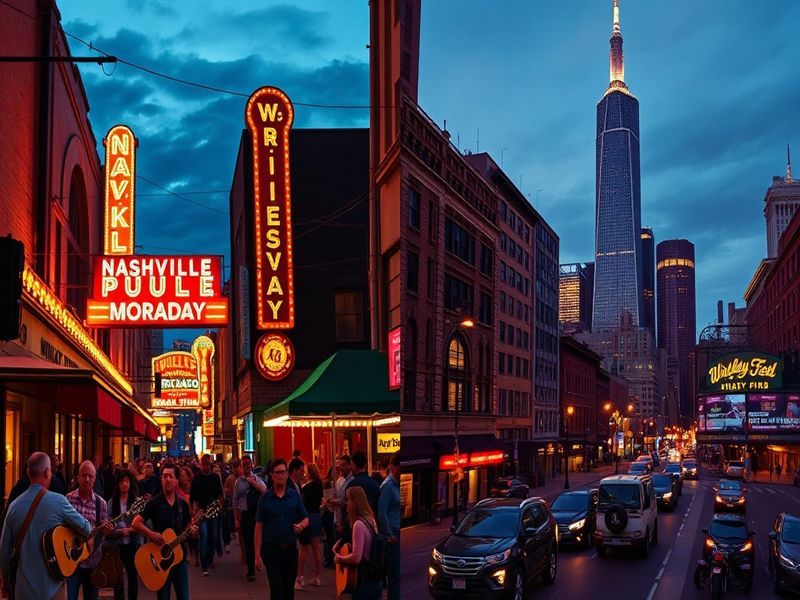
The city’s cultural identity remains deeply tied to music. Broadway’s honky-tonk row, with its neon signs and live bands spilling onto the sidewalk, continues to draw millions of visitors each year. Yet, Nashville’s appeal now extends beyond country. The city has diversified its cultural offerings, hosting major festivals for jazz, blues, and even electronic music. This blend of tradition and innovation has allowed Nashville to cultivate an image that feels both timeless and forward-looking.
Key Factors Driving Nashville’s Rise
- Affordable living: Compared to coastal tech hubs, Nashville’s cost of living remains relatively low, attracting remote workers and startups.
- Business-friendly policies: Tennessee’s lack of income tax and streamlined regulations have lured corporations like Amazon and Oracle.
- Cultural branding: Nashville has successfully marketed itself as a “cool,” accessible Southern city, balancing authenticity with modernity.
- Tourism infrastructure: The city’s investment in hotels, restaurants, and entertainment venues has created a self-sustaining economic loop.
Yet, this growth has not come without consequences. Rising rents and gentrification have displaced long-time residents, particularly in historically Black neighborhoods like North Nashville. The tension between progress and preservation underscores a broader challenge facing cities across the South.
Chicago: A City of Contrasts, Resilience, and Reinvention
Chicago, by contrast, is a city of stark contrasts. Its skyline, architecture, and economic might make it a global powerhouse, yet its streets tell stories of inequality, crime, and systemic neglect. The city’s population has declined by nearly 200,000 since 2000, a trend driven by suburbanization, economic stagnation in some neighborhoods, and a reputation for violence that persists despite improvements in recent years. Still, Chicago remains a cultural and economic engine, home to Fortune 500 headquarters, world-class universities, and some of the country’s most influential arts institutions.
The city’s identity is as layered as its architecture. Chicago gave the world blues, house music, and improv comedy. It’s a city of neighborhoods—each with its own rhythm, from the Polish enclaves of Avondale to the Mexican-American communities of Pilsen. Yet, Chicago’s reputation often overshadows these nuances. The city is frequently reduced to headlines about crime or political corruption, ignoring its role as a hub for innovation in food, design, and technology.
Chicago’s challenges are as much about perception as they are about reality. While Nashville grows by marketing its charm, Chicago struggles to reconcile its legacy with its future. The city’s leaders face a delicate balancing act: revitalizing neighborhoods without erasing the histories that define them.
The Broader Implications: What These Cities Tell Us About America
The rivalry between Nashville and Chicago is more than a comparison of amenities or lifestyles. It reflects a national conversation about what cities should be—and who they should serve. Nashville represents the promise of controlled growth, where economic expansion is paired with a carefully curated identity. Chicago, meanwhile, embodies the messiness of reinvention, where progress is uneven but possibilities remain vast.
These contrasting models offer lessons for urban planners, policymakers, and residents alike. Nashville’s success suggests that branding and affordability can drive growth, but at what cost to authenticity? Chicago’s resilience demonstrates that even cities facing decline can reinvent themselves, provided they invest in their people as much as their infrastructure.
Both cities also highlight the role of culture in shaping urban futures. Nashville’s music scene is both a selling point and a pressure valve, giving residents and visitors alike a sense of connection. Chicago’s cultural institutions—from the Art Institute to the Second City—serve as anchors in a city constantly redefining itself. In an era where digital connectivity often replaces physical community, these cities prove that culture remains a vital glue.
Three Takeaways from the Nashville vs. Chicago Divide
- Growth without displacement is possible—but it requires intentional policy. Nashville’s rapid expansion has outpaced its housing supply, pushing out long-time residents. Chicago’s struggles with abandonment show the opposite risk: growth that never materializes.
- Cultural identity is both an asset and a liability. Nashville leverages its musical heritage to attract visitors and businesses, while Chicago’s cultural richness is often overshadowed by its challenges. The key lies in balancing pride with honesty.
- Perception shapes reality. Chicago’s reputation as a dangerous city persists despite improvements in safety and quality of life. Nashville’s sunny branding sometimes glosses over its own inequalities. Both cities must work harder to control their narratives.
What’s Next for These Cities—and for America?
The trajectories of Nashville and Chicago offer a glimpse into the future of American urbanism. For cities seeking growth, Nashville’s playbook provides a roadmap—but one that demands vigilance against the pitfalls of unchecked expansion. For cities fighting decline, Chicago’s story is a reminder that reinvention is possible, even if the path is uneven.
Yet, the rivalry between these two cities also raises uncomfortable questions. Is America’s urban future one of boutique cities catering to transplants, or of resilient metropolises that refuse to be defined by their struggles? The answer may lie in how well both Nashville and Chicago—and cities like them—can serve all their residents, not just the ones who fit the mold.
One thing is clear: the conversation between Nashville and Chicago is far from over. As these cities continue to evolve, they will shape not only their own futures but the very idea of what a city can be in 21st-century America.
For those watching from afar, the choice may come down to what they value most: the allure of a city on the rise, or the grit of a place that refuses to quit. Either way, the story of Nashville vs. Chicago is a story about America itself—its dreams, its contradictions, and its endless capacity for reinvention.
Explore more about urban culture and music scenes on Dave’s Locker Music or dive into broader cultural analysis on Dave’s Locker Culture.