The FA Cup Final stands as one of football’s most storied traditions, blending history, drama, and unscripted glory. Since its inception in 1871, the tournament has grown from an amateur competition into a global spectacle, uniting fans across continents under a shared passion. Unlike league titles decided over months, the FA Cup Final delivers a single, unforgettable moment—where underdogs triumph, legends are made, and football’s unpredictable magic unfolds.
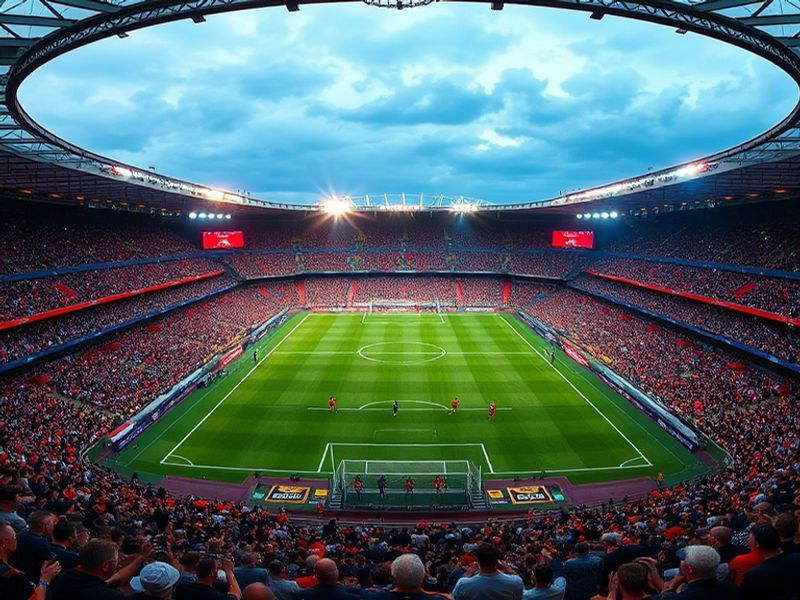
Played annually at London’s iconic Wembley Stadium, the final isn’t just a sporting event; it’s a cultural institution. Families gather in pubs, communities decorate their streets, and broadcasters beam the match to millions worldwide. The competition’s format—open to all levels of English football—ensures that even non-league clubs can dream of lifting the trophy, adding a layer of romance that transcends sport. This year’s final, like those before it, promises to write another chapter in football’s most enduring narrative.
The History and Evolution of the FA Cup
The FA Cup is the oldest national football competition in the world, predating even the Football League by five years. Its origins trace back to 1871, when the Football Association sought a way to crown England’s champion club. The first final, held at The Oval in Kennington, saw Wanderers FC defeat Royal Engineers 1-0 in front of just 2,000 spectators. Little did anyone know that this modest beginning would evolve into a global phenomenon.
By the late 19th century, the FA Cup had become a symbol of working-class pride, with industrial towns fielding teams that defied the dominance of aristocratic clubs. The competition’s early decades were marked by fierce local rivalries and the rise of clubs like Blackburn Rovers and Aston Villa, who claimed multiple titles. The introduction of Wembley Stadium in 1923—originally called the Empire Stadium—transformed the final into a mass spectacle, with 200,000 fans cramming into the stadium for the first match, affectionately known as the “White Horse Final.”
In the modern era, the FA Cup has adapted to changing times while preserving its essence. The introduction of penalty shootouts in 1970 added a new layer of tension, while the expansion of live television coverage in the 1990s brought the tournament to a global audience. Today, the FA Cup remains a cornerstone of English football, valued by clubs for its prestige and financial rewards, even as the Premier League dominates headlines.
Key Moments That Define the FA Cup
The FA Cup’s history is rich with unforgettable moments, from last-minute winners to David vs. Goliath upsets. Here are a few that have left an indelible mark on football’s collective memory:
- 1970: Chelsea vs. Leeds United – The Battle of the Bridge
This final was a brutal, tactical masterclass that ended 2-2 after extra time. Chelsea’s victory in the replay marked the arrival of a new generation of London football, with players like Peter Osgood and David Webb becoming legends. The match’s intensity set a standard for future finals. - 1989: Liverpool vs. Everton – The Anfield Show
Played just weeks after the Hillsborough disaster, this final was a poignant reminder of football’s power to unite. Liverpool defeated Everton 3-2 in a thrilling encounter, with Ian Rush scoring twice. The emotional weight of the match made it one of the most memorable in FA Cup history. - 2001: Liverpool vs. Arsenal – The Michael Owen Show
A teenage Owen announced himself on the biggest stage with two goals, securing Liverpool’s first FA Cup in 11 years. The match also marked Arsenal’s first final under Arsène Wenger, foreshadowing their dominance in English football. - 2013: Wigan Athletic vs. Manchester City – The Unthinkable Triumph
Wigan’s 1-0 victory over the then-reigning Premier League champions was one of the biggest upsets in football history. The result was followed by tragedy just days later, when manager Roberto Martínez left for Everton, underscoring the fleeting nature of glory.
These moments highlight why the FA Cup Final is more than just a game—it’s a stage for stories that transcend sport. Whether it’s a club’s first-ever final or a manager’s redemption arc, the competition has a way of creating legends.
The Cultural Impact of the FA Cup Final
The FA Cup Final’s influence extends far beyond the pitch. In England, the tournament is woven into the fabric of national identity, often serving as a nostalgic counterpoint to the commercialism of the Premier League. For working-class communities, the FA Cup represents hope—a chance for local heroes to shine on a global stage. Clubs like Portsmouth and Wigan Athletic, despite their financial struggles, have used FA Cup runs to rally their fans and secure vital revenue.
Globally, the FA Cup Final has carved out a unique niche. While the Premier League dominates in terms of viewership, the FA Cup retains a loyal following for its unpredictability. Broadcasters in Asia, Africa, and the Americas regularly feature the final, often highlighting the tournament’s grassroots origins. The competition’s embrace of amateur clubs also resonates in countries where football is deeply tied to community values.
In recent years, the FA Cup has also become a platform for social causes. Campaigns around mental health, diversity, and inclusivity have been amplified during the tournament, using football’s reach to spark conversations. The final’s halftime show, often featuring British musical acts, further cements its role as a cultural event, blending sport with art.
The Final’s Place in Modern Football
In an era where football is increasingly dominated by financial powerhouses, the FA Cup Final remains a bastion of tradition. While the Premier League’s global appeal is undeniable, the FA Cup offers something intangible—a sense of romance that money can’t buy. Clubs may prioritize league campaigns, but the FA Cup’s prestige ensures that every team enters the competition with ambition.
The final’s location at Wembley adds to its mystique. The iconic arch, visible from miles away, is a symbol of football’s enduring appeal. The stadium’s history—from hosting the 1966 World Cup final to the 2012 Olympics—makes it a fitting stage for the FA Cup’s climax. For many players, scoring at Wembley in an FA Cup Final is a career-defining achievement, often overshadowing even league titles.
Yet, the FA Cup is not without its challenges. Critics argue that the increased fixture congestion in modern football devalues the competition, while some top clubs have fielded weakened teams in recent years. The introduction of the EFL Cup’s revamped format has also diluted the prestige of England’s secondary knockout tournaments. Despite these pressures, the FA Cup Final endures, a testament to football’s ability to adapt while honoring its past.
Why the FA Cup Final Still Matters
The FA Cup Final’s magic lies in its simplicity. It’s a competition where any team can dream, where history is made in an instant, and where the underdog has a real chance to triumph. In a world of predictable superclubs and globalized football, the FA Cup offers a rare dose of unpredictability—a reminder that football is, at its core, a game of passion and possibility.
For fans, the final is a rite of passage. Whether it’s the first time watching from the terraces or the hundredth time cheering from a pub, the experience is universal. The shared joy, the collective heartbreak, and the collective memory of a goal scored in extra time create bonds that transcend generations.
As football continues to evolve, the FA Cup Final remains a constant—a beacon of tradition in an ever-changing landscape. It’s a celebration of the game’s past, present, and future, where the magic of football is on full display for the world to see.