Across Poland and Polish communities worldwide, Wesołych Świąt Wielkanocnych (“Happy Easter”) carries more than just holiday cheer. These four words encapsulate centuries of tradition, regional nuance, and evolving cultural practices that continue to shape how Poles celebrate the most important feast in the Christian calendar.
The holiday represents more than religious observance—it’s a cultural touchstone that bridges generations. From the solemnity of Holy Week to the joyous family gatherings of Easter Sunday, these traditions offer a window into Poland’s history, values, and even its relationship with modernity. What makes contemporary Easter celebrations uniquely Polish is how they blend ancient customs with contemporary lifestyles, creating a living heritage that adapts without losing its essence.
The Evolution of Easter Symbols in Polish Culture
Polish Easter isn’t just about chocolate eggs and lamb-shaped cakes. The holiday’s most enduring symbols have roots stretching back to pre-Christian times, later absorbed and reinterpreted through centuries of religious tradition. The decorated egg, or pisanka, serves as a prime example—originally a pagan symbol of rebirth, it became a Christian emblem of resurrection through its intricate designs and vibrant colors.
Modern pisanki techniques reflect this layered history. While some families still use natural dyes boiled from onion skins or beetroot, others embrace contemporary artistic approaches, incorporating glitter, decoupage, or even digital printing. This fusion of old and new demonstrates how Polish Easter traditions remain dynamic rather than static.
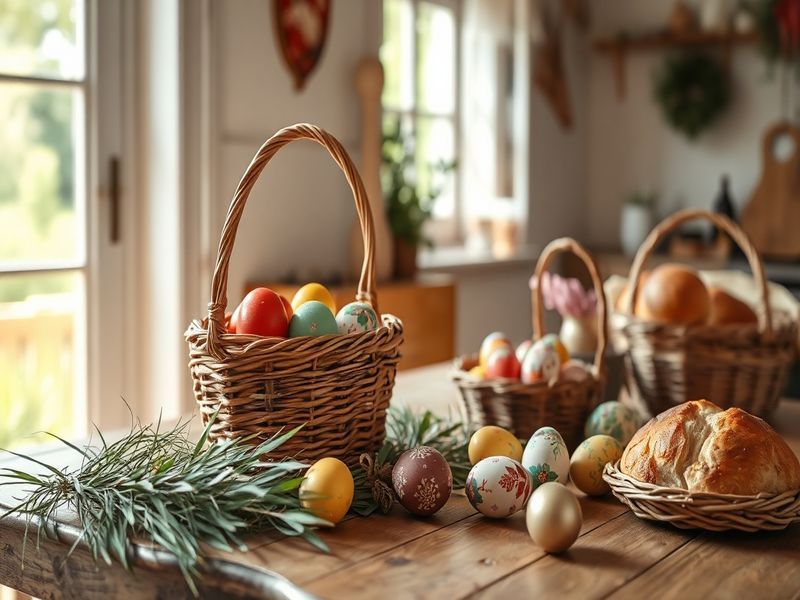
The Easter basket, or święconka, represents another fascinating evolution. Once a simple offering of food blessed by the priest, today’s baskets often include items like bottled water with a cross etched into the plastic—a modern nod to tradition that speaks to Poland’s relationship with consumer culture. The contents of these baskets, carefully arranged and blessed on Holy Saturday, tell a story of both faith and practicality in Polish life.
Key Elements of the Święconka Tradition
- Bread (chleb): Symbolizes Christ as the “Bread of Life” and prosperity for the coming year
- Eggs (jajka): Represent rebirth and Christ’s resurrection
- Salt (sól): Signifies purification and preservation
- Horseradish (chrzan): Represents the bitterness of Christ’s suffering
- Lamb-shaped cake or butter (baranek): Symbolizes Christ as the “Lamb of God”
The Regional Tapestry of Polish Easter Celebrations
Poland’s diverse regions contribute distinct flavors to the national Easter experience. In the rural areas of Małopolska, families still practice Śmigus-Dyngus (Wet Monday) with particular fervor, dousing each other with water—a custom dating back to pagan spring rites meant to ensure fertility. Meanwhile, in the northern regions, some communities maintain Rękawka, a folk tradition where people climb hills to watch the sunrise, blending Christian and Slavic agricultural rituals.
Urban celebrations have taken on their own character. In Warsaw and other cities, parishes organize massive Easter Vigil services that draw thousands, while shopping centers compete to create the most elaborate Easter displays. This urban-rural divide reveals how Polish Easter functions as both a unifying national event and a canvas for local identity.
The contrast between traditional village practices and cosmopolitan city celebrations highlights a broader tension in modern Poland: the negotiation between preserving heritage and embracing change. This dynamic plays out not just in Easter customs, but across Polish cultural life in the 21st century.
From Tradition to Modernity: How Polish Easter Adapts
The most significant transformation in Polish Easter celebrations might be the quiet shift in family dynamics. Where once multi-generational households gathered for days of preparation, today’s celebrations often take place in smaller nuclear family units, sometimes even via video call for those abroad. Yet this change hasn’t diminished the holiday’s importance—instead, it has forced Poles to reimagine how traditions are transmitted.
Social media has become an unexpected vessel for tradition. Platforms like Instagram showcase elaborate pisanki from across the country, while Facebook groups share recipes for regional Easter dishes. These digital spaces create new communities centered around Polish Easter, connecting diaspora Poles with homeland traditions in ways impossible just a generation ago.
The commercial aspect of Easter has also evolved. While chocolate eggs and lamb cakes have always been part of the celebration, today’s supermarkets offer everything from pre-made święconka baskets to Easter-themed alcoholic beverages. This commercialization has sparked debates about authenticity, with some Poles decrying the loss of “true” traditions while others argue that adaptation is inherent to cultural survival.
The Broader Implications of Polish Easter Traditions
Examining Polish Easter reveals important truths about how cultures preserve identity in an era of globalization. The holiday’s persistence suggests that traditional practices remain relevant when they offer meaning, community, and a sense of continuity. Polish Easter succeeds because it provides multiple layers of significance—religious, familial, cultural, and personal—rather than demanding singular interpretation.
For Poland’s growing diaspora, Easter celebrations become acts of cultural preservation. Second- and third-generation Poles abroad often report that Easter is the one time of year when they feel most connected to their heritage. The pisanki they decorate, the święconka baskets they prepare, and even the conflicts they have over family recipes become vessels for transmitting Polishness across generations and borders.
Economically, Easter represents a significant moment in Poland’s retail calendar. The weeks leading up to the holiday see spikes in sales of food, decorations, and travel services. This economic impact demonstrates how cultural traditions can drive commercial activity while also reflecting societal values about family, generosity, and celebration.
Looking ahead, Polish Easter faces both challenges and opportunities. Climate change threatens some traditional spring customs, while secularization continues to reshape religious practices. Yet the holiday’s adaptability suggests it will endure, finding new forms that continue to resonate with Polish society.
Three Ways Polish Easter Reflects Broader Cultural Trends
- Digital preservation: Social media platforms become archives of tradition, allowing new generations to access and reinterpret customs
- Diaspora connection: Holiday practices serve as bridges between Polish identity and global citizenship
- Commercial authenticity: The tension between preserving tradition and embracing modernity creates space for innovation within cultural practices
Conclusion: Why Polish Easter Still Matters
Wesołych Świąt Wielkanocnych isn’t just a seasonal greeting—it’s a declaration of cultural continuity. In an era where traditions are often dismissed as outdated, Polish Easter demonstrates how heritage can evolve while maintaining its core significance. The holiday’s power lies in its multiplicity: it’s simultaneously a religious observance, a family ritual, a regional expression, and a national unifier.
As Poland navigates its place in the modern world, Easter remains a touchstone that connects past and present. Whether through the humble pisanka or the elaborate święconka basket, these traditions offer Poles—and those who share in their celebration—a way to mark time, define identity, and pass on what matters most to the next generation.
The future of Polish Easter isn’t in preserving every detail exactly as it was centuries ago. Instead, it lies in continuing the tradition of adaptation that has defined these celebrations from their earliest origins. In this balance between constancy and change, Polish Easter finds its enduring strength.
As families gather this year to share meals, exchange blessings, and create new memories within ancient frameworks, they participate in a story that stretches back through generations. In saying Wesołych Świąt Wielkanocnych, they don’t just greet a holiday—they affirm their place in a living tradition that continues to shape Polish identity.
For those seeking to understand Poland’s cultural DNA, look no further than its Easter celebrations. Here, in the blending of the sacred and the secular, the ancient and the modern, the local and the universal, lies the essence of what makes Polish culture so resilient and so deeply human.
Explore more about Polish traditions and cultural celebrations on Dave’s Locker Culture and Travel sections.