<!DOCTYPE html>
<html lang="en">
<head>
    <meta charset="UTF-8">
    <meta name="viewport" content="width=device-width, initial-scale=1.0">
    <title>Alaska Air Group: How an Alaskan Airline Grew into a Global Travel Leader</title>
</head>
<body>
    <article>
        <h1>Alaska Air Group: How an Alaskan Airline Grew into a Global Travel Leader</h1>

        <p>Alaska Air Group, the parent company of Alaska Airlines and Horizon Air, has transformed from a regional carrier into one of the most respected names in commercial aviation. With a fleet that spans from the icy runways of Anchorage to the sun-soaked terminals of Los Angeles, the airline has built a reputation for reliability, customer service, and operational excellence. Its journey reflects broader trends in global travel, where legacy carriers adapt to shifting consumer expectations and competitive pressures.</p>

        <p>Founded in 1932 as McGee Airways, the airline began with a single aircraft—a three-passenger Stinson—operating out of Anchorage. Over the decades, through mergers, acquisitions, and organic growth, it evolved into a major U.S. airline. Today, Alaska Air Group serves over 120 destinations across the United States, Canada, Mexico, and Costa Rica, with a focus on West Coast connectivity and strategic hubs in Seattle, Portland, and Anchorage. Its reach extends beyond mere geography; it has become a symbol of Pacific Northwest identity, blending local culture with global aviation standards.</p>

        <h2>The Strategic Evolution of Alaska Air Group</h2>

        <p>Alaska Air Group’s growth has been marked by calculated strategic decisions that balanced expansion with operational discipline. One of the most pivotal moments came in 2016 with the acquisition of Virgin America, a deal that doubled the airline’s size overnight. While the merger presented significant integration challenges—including aligning different fleets, cultures, and IT systems—Alaska Airlines managed the transition with relative smoothness, earning praise from industry analysts and customers alike.</p>

        <p>The airline’s fleet strategy has been another cornerstone of its success. Unlike many competitors that rely heavily on narrow-body aircraft for short-haul routes, Alaska Airlines operates a diverse fleet that includes Boeing 737s and Airbus A320 family jets. This mix allows it to optimize fuel efficiency and capacity, particularly on high-demand routes like Seattle to Los Angeles or San Francisco. In recent years, the airline has also invested in sustainable aviation fuel (SAF) initiatives, positioning itself as a leader in environmental responsibility within the industry.</p>

        <ul>
            <li><strong>Fleet Composition (as of 2024):</strong>
                <ul>
                    <li>Boeing 737-700, -800, -900ER, and MAX 9 aircraft</li>
                    <li>Airbus A319, A320, and A321neo aircraft (from Virgin America acquisition)</li>
                    <li>Horizon Air operates a fleet of Bombardier Q400 turboprops</li>
                </ul>
            </li>
            <li><strong>Hub Locations:</strong> Seattle-Tacoma International Airport (SEA), Portland International Airport (PDX), Los Angeles International Airport (LAX), San Francisco International Airport (SFO)</li>
            <li><strong>Destinations:</strong> 120+ across the U.S., Canada, Mexico, and Costa Rica</li>
        </ul>

        <h2>Customer Experience and Brand Identity</h2>

        <p>Alaska Airlines has long prioritized customer experience in an industry notorious for delays and frustration. Its frequent flyer program, Mileage Plan, is consistently ranked among the best in the U.S. for flexibility, redemption options, and value. Unlike some programs that nickel-and-dime members with blackout dates or high redemption fees, Mileage Plan offers straightforward earning and redeeming, with no blackout dates on most flights. This transparency has fostered deep loyalty among travelers, particularly in the Pacific Northwest, where the airline enjoys a near-cult following.</p>

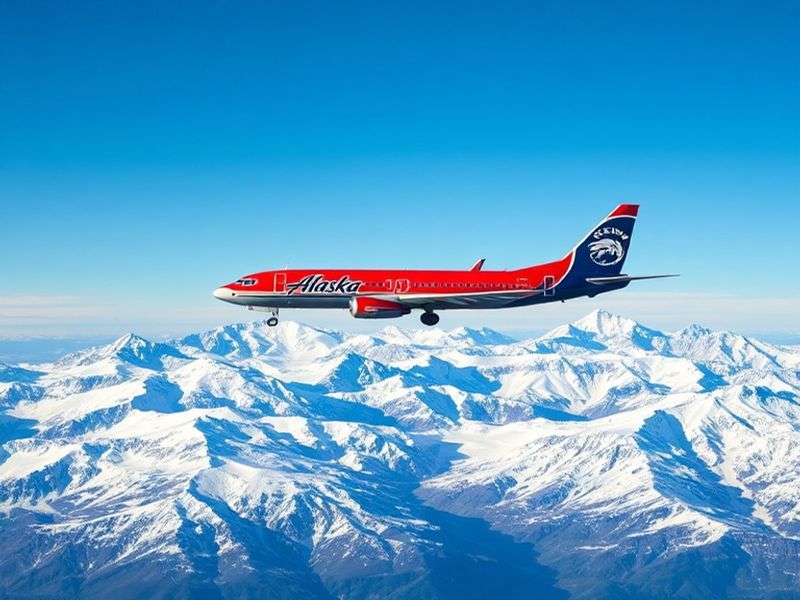
        <p>The airline’s brand identity is deeply intertwined with the culture of the Pacific Northwest. From the iconic Eskimo logo—a nod to the airline’s Alaskan roots—to the quirky safety videos featuring local celebrities and musicians, Alaska Airlines has cultivated a distinct personality that sets it apart from its competitors. Even its in-flight service reflects regional sensibilities: locally sourced food options, craft beer and coffee pairings, and a commitment to sustainability resonate with environmentally conscious travelers.</p>

        <p>In an era where airlines are often criticized for nickel-and-diming passengers, Alaska Airlines has bucked the trend by introducing perks like free checked bags for Mileage Plan members and even offering cash compensation for flight delays or cancellations under certain conditions. These policies have not only enhanced customer satisfaction but also created a blueprint for how legacy carriers can compete with low-cost airlines without sacrificing service quality.</p>

        <h2>Global Impact and Industry Influence</h2>

        <p>While Alaska Air Group’s operations are primarily focused on North America, its influence extends globally, particularly in the realms of sustainability and employee relations. The airline has been a vocal advocate for the adoption of sustainable aviation fuels, partnering with organizations like Boeing and Neste to reduce its carbon footprint. In 2022, Alaska Airlines became the first U.S. airline to fly commercial flights powered by 100% sustainable aviation fuel, a milestone that underscored its commitment to environmental stewardship.</p>

        <p>Employee relations have also been a key differentiator for Alaska Air Group. The company has maintained a strong labor-friendly reputation, with relatively low turnover rates and high employee satisfaction scores. This is particularly notable in an industry where labor disputes and strikes are not uncommon. Alaska Airlines’ approach to employee relations—prioritizing fair wages, benefits, and a collaborative work environment—has not only fostered a positive workplace culture but has also translated into better service for customers.</p>

        <p>The airline’s global impact is also felt in its partnerships with international carriers. Through its membership in the oneworld alliance, Alaska Airlines offers travelers seamless connections to destinations across Europe, Asia, and South America. This collaboration has been particularly beneficial for business travelers and tourists seeking to explore the Pacific Northwest as part of a broader itinerary.</p>

        <h2>Challenges and Future Outlook</h2>

        <p>Despite its many successes, Alaska Air Group faces a host of challenges as it navigates an increasingly complex global travel landscape. The COVID-19 pandemic dealt a severe blow to the airline industry, forcing Alaska Airlines to furlough thousands of employees and seek government aid to stay afloat. While the airline has since rebounded, the recovery has been uneven, with some routes and markets still struggling to return to pre-pandemic levels.</p>

        <p>Another challenge is the competitive pressure from ultra-low-cost carriers like Spirit and Frontier Airlines, which have eroded market share on many of Alaska Airlines’ high-volume routes. To counter this, the airline has focused on differentiating itself through superior customer service, loyalty programs, and strategic partnerships. Its recent expansion into new markets, such as Hawaii and Mexico, reflects a broader strategy to diversify its route network and reduce reliance on any single region.</p>

        <p>Looking ahead, Alaska Air Group is poised to continue its growth trajectory, with plans to modernize its fleet further and expand its international reach. The airline’s recent order for 52 Boeing 737 MAX 9 aircraft—one of the largest orders in its history—signals its commitment to long-term sustainability and efficiency. Additionally, the airline is investing in digital innovation, with initiatives aimed at enhancing the customer experience through mobile apps, AI-driven customer service, and personalized travel planning tools.</p>

        <p>As global travel continues to evolve, Alaska Air Group’s ability to balance tradition with innovation will be key to its ongoing success. Whether it’s through its commitment to sustainability, its dedication to customer service, or its strategic partnerships, the airline remains a compelling case study in how legacy carriers can thrive in a rapidly changing industry.</p>

        <h3>A Legacy of Adaptation and Resilience</h3>

        <p>From its humble beginnings in Anchorage to its current status as a global travel leader, Alaska Air Group’s story is one of resilience, adaptation, and a deep commitment to its roots. In an industry often defined by cutthroat competition and operational challenges, the airline has carved out a unique identity that resonates with travelers and industry observers alike. As it continues to expand its reach and refine its operations, Alaska Air Group serves as a reminder that success in aviation—and in business more broadly—is not just about size or scale, but about vision, values, and the ability to evolve with the times.</p>
    </article>

    <!-- Metadata Section -->