Dodgers vs. Nationals: Baseball’s Quietest Global Rivalry Explained
“`html
Dodgers vs. Nationals: Baseball’s Quietest Global Rivalry
The Los Angeles Dodgers and Washington Nationals may not share the same storied history as Yankees-Red Sox or Dodgers-Giants, but their matchups carry a unique resonance in Major League Baseball. These teams, separated by geography and culture, have forged a rivalry that transcends the diamond. From Washington’s political backdrop to Los Angeles’ entertainment capital status, their clashes reflect broader themes of ambition, identity, and globalization in sports.
The Nationals, born in 2005 after relocating from Montreal, represent the National League’s “new money” mentality—built on analytics, youth development, and a fanbase hungry for relevance. The Dodgers, meanwhile, are the archetype of baseball’s blueprint for success: big-market dominance, star power, and a legacy that stretches back to Brooklyn. When these two teams meet, it’s more than a series; it’s a collision of philosophies.
The Cultural Divide: East Coast Discipline Meets West Coast Flamboyance
Washington, D.C., is a city of institutions. Politics, history, and bureaucracy shape its identity, and the Nationals embody that ethos. Their stadium, Nationals Park, sits along the Anacostia River, a stone’s throw from the U.S. Capitol. The team’s approach to baseball—grounded in data, patience, and organizational discipline—mirrors the city’s no-nonsense reputation. Even their fanbase, once skeptical of the franchise’s relocation, has grown into one of MLB’s most loyal, albeit understated, groups.
The Dodgers, by contrast, thrive in Los Angeles, a city where spectacle and excess are part of the fabric. Chavez Ravine is a temple of celebrity, where fans don’t just watch baseball—they experience it. The Dodgers’ history is a tapestry of Hollywood glamour, from Sandy Koufax’s dominance to Fernando Valenzuela’s legendary 1981 season. Their rivalry with the Giants, rooted in New York and transplanted to California, is baseball’s original coast-to-coast feud. Yet when they face the Nationals, the contrast feels sharper: one team is a relic of old-school charm, the other a modern laboratory of baseball innovation.
- Nationals’ Strengths: Pitching depth, defensive flexibility, and a knack for developing young talent.
- Dodgers’ Strengths: Offensive firepower, star power, and a farm system that churns out MLB-ready players.
- Key Matchup Trends: Nationals often exploit Dodgers’ left-handed-heavy lineups with right-handed pitching; Dodgers counter with aggressive baserunning and power.
A Rivalry Born in the Postseason: October’s Unlikely Drama
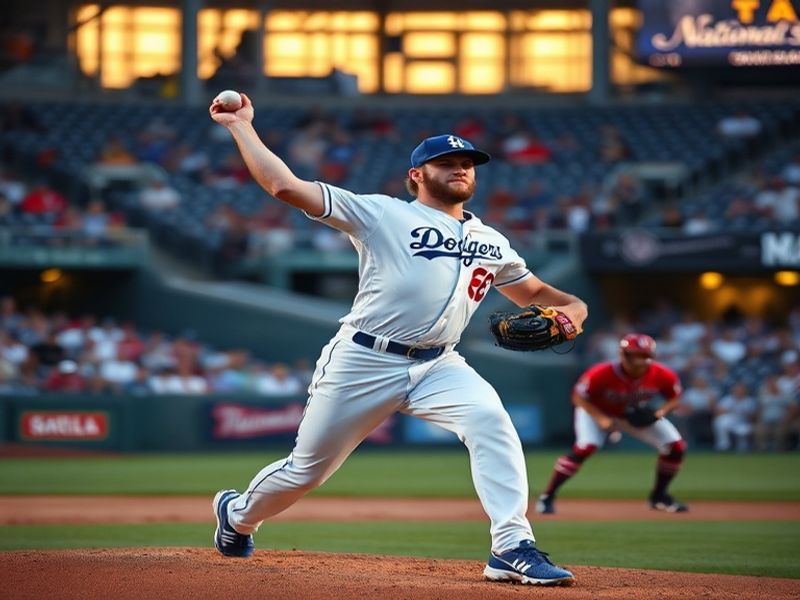
The Dodgers and Nationals have met just twice in the postseason—both times in the National League Division Series—but those matchups crystallized their rivalry. In 2016, the Nationals, heavy favorites, were stunned by the Dodgers in five games. Washington’s vaunted rotation faltered, while Los Angeles’ bullpen and timely hitting carried them. It was a microcosm of the Dodgers’ resilience and the Nationals’ inability to close the deal.
Two years later, the tables turned. The Nationals swept the Dodgers in the 2018 NLDS, a series that exposed Los Angeles’ postseason vulnerabilities. Max Scherzer and Stephen Strasburg dominated, while the Dodgers’ vaunted offense went silent. The sweep sent Washington to the World Series and cemented the Nationals’ reputation as baseball’s ultimate underachievers-turned-champions.
These postseason clashes added a layer of drama to their regular-season meetings. When the two teams face off in April or September, the stakes feel different. It’s not just another series; it’s a referendum on who owns the National League’s future. The Dodgers, with their relentless pursuit of titles, see the Nationals as a speed bump. Washington, meanwhile, uses these games as motivation to prove they belong among baseball’s elite.
The Globalization of MLB’s Most Underrated Rivalry
The Dodgers and Nationals aren’t just American teams anymore. Their rosters reflect baseball’s global expansion, with players from the Dominican Republic, Venezuela, Japan, South Korea, and beyond. In 2023, the Dodgers’ lineup featured stars like Mookie Betts (born in Nashville but raised in Georgia) and Shohei Ohtani (Japan), while the Nationals countered with Juan Soto (Dominican Republic) and Keibert Ruiz (Venezuela). These matchups aren’t just about wins and losses; they’re cultural exchanges, showcasing the diversity that defines modern baseball.
The rivalry’s global appeal extends beyond the field. In countries where baseball is growing—like Australia, the Netherlands, and even England—Dodgers vs. Nationals games are often broadcast as marquee matchups. The Dodgers, with their international fanbase, bring a Hollywood-like glamour to the sport. The Nationals, meanwhile, appeal to the purists: the fans who love baseball for its strategy, its history, and its underdog stories.
Even in Japan, where baseball is a national obsession, these games draw attention. When Ohtani faced the Nationals in 2023, it wasn’t just another interleague game—it was a clash of titans. Ohtani’s two-way dominance against Washington’s pitching staff became a highlight reel for baseball fans worldwide, reinforcing the Dodgers’ status as a global brand.
The Business of Baseball: How Economics Shape the Rivalry
Financially, the Dodgers and Nationals operate in different stratospheres. The Dodgers, with their $3+ billion valuation, are baseball’s financial behemoths. Their revenue streams—from TV deals to sponsorships—are unmatched. The Nationals, while no slouches, operate in a smaller market with fewer corporate giants. Their $2 billion valuation pales in comparison, but their free-spending ways in the mid-2010s (signing Scherzer and Strasburg to megadeals) showed their ambition.
This economic disparity adds another layer to their rivalry. The Dodgers’ payroll flexibility allows them to absorb mistakes, while the Nationals often face tougher decisions about when to spend and when to rebuild. In 2023, for example, the Nationals traded Soto—a generational talent—to the Padres, signaling a rebuild. The Dodgers, meanwhile, added Ohtani, ensuring they’d remain title contenders. These moves aren’t just about wins; they’re about defining the future of their franchises.
Yet for all their differences, both teams understand the value of their rivalry. The Dodgers need competition to justify their spending; the Nationals need marquee matchups to keep fans engaged. Together, they represent the dual nature of modern baseball: one team is a machine built for dominance, the other is a scrappy underdog fighting for relevance. When they meet, it’s a clash of ideologies, a battle for the soul of the National League.
Why This Rivalry Matters Beyond the Box Score
The Dodgers vs. Nationals rivalry may lack the historical weight of Yankees-Red Sox or the intensity of Cubs-Cardinals, but its significance lies in what it represents. It’s a microcosm of baseball’s evolution: a league that’s becoming more global, more analytical, and more competitive with each passing year. The Dodgers embody the sport’s future—big markets, big money, big stars. The Nationals, meanwhile, are a reminder that baseball is still a game of unpredictability, where even the most well-run franchises can fall short.
For fans, these matchups offer something rare: a rivalry that’s fresh, unpredictable, and brimming with potential. Whether it’s Soto’s clutch hitting, Ohtani’s two-way dominance, or Scherzer’s postseason heroics, every game feels like a story in the making. And in an era where baseball is fighting for attention in a crowded sports landscape, that’s no small feat.
As the 2024 season approaches, the question remains: Will the Dodgers continue their march toward another title? Or will the Nationals, with their blend of youth and experience, finally break through? One thing is certain: when these two teams take the field, the world is watching.
For more on the evolution of MLB rivalries and their cultural impact, explore our Sports section, where we break down the stories shaping America’s pastime.