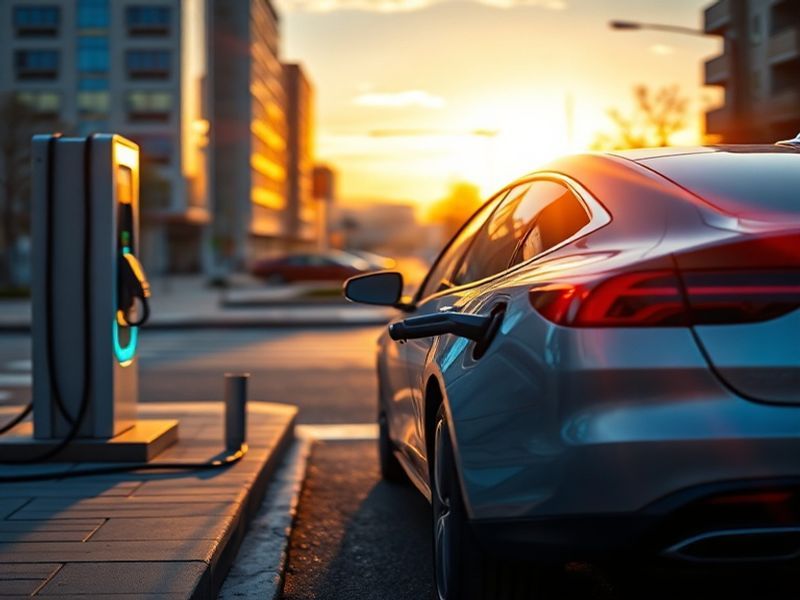
electric vehicle
“`html
Understanding the Rise of Electric Vehicles
The electric vehicle (EV) market has grown from a niche innovation to a mainstream movement in just over a decade. What began as a curiosity in automotive circles is now reshaping how the world thinks about transportation. Automakers have poured billions into research and development, while governments have created incentives to accelerate adoption. The shift isn’t just about cars—it’s about energy, infrastructure, and a fundamental change in how society powers mobility.
The first modern electric vehicles started appearing in the late 1990s, but cost, limited range, and a lack of charging infrastructure kept them from gaining traction. It wasn’t until Tesla’s Roadster in 2008 and the subsequent launch of the Model S in 2012 that EVs began to capture public imagination. Today, nearly every major automaker offers at least one all-electric model, and some, like Volvo, have pledged to phase out internal combustion engines entirely by 2030. The momentum is undeniable, but the road ahead remains complex.
The Technology Behind the Transition
Electric vehicles rely on lithium-ion batteries, the same technology that powers smartphones and laptops, but scaled up to propel multi-ton vehicles. Battery chemistry has improved significantly over the past decade, with energy density increasing by about 5-7% annually. This has allowed EVs to travel farther on a single charge—many now exceed 300 miles per charge, a threshold once considered aspirational. Fast-charging networks, such as Tesla’s Supercharger and Electrify America, have also shortened refueling times, making long-distance travel more feasible.
Beyond batteries, EVs feature fewer moving parts than internal combustion engines. There are no spark plugs, fuel injectors, or exhaust systems. This simplicity reduces maintenance costs and improves reliability. Regenerative braking, which captures energy during deceleration, further enhances efficiency. These technical advantages are complemented by software-driven performance improvements. Over-the-air updates can enhance battery management, range optimization, and even driving dynamics—something traditional automakers struggle to match.
Yet challenges remain. Battery production is energy-intensive, often relying on cobalt and nickel mining, which raises environmental and ethical concerns. Recycling programs are still in their infancy, though companies like Redwood Materials and Li-Cycle are scaling up operations. Additionally, the electricity used to charge EVs matters—charging from a coal-powered grid diminishes the environmental benefits. As renewable energy adoption grows, so too will the sustainability of electric transportation.
Infrastructure: The Backbone of EV Adoption
The availability of charging stations remains one of the biggest hurdles for widespread EV adoption. While urban areas and highways are becoming better equipped, rural regions lag behind. According to the U.S. Department of Energy, there are over 130,000 public charging stations in the U.S., but they are unevenly distributed. States like California lead with over 30,000 chargers, while others have fewer than 500. This disparity creates range anxiety for drivers outside major metropolitan areas.
Charging speed is another critical factor. Level 1 chargers, which plug into standard outlets, can take over 40 hours to fully charge a battery. Level 2 chargers, common in homes and workplaces, take 4-8 hours. DC fast chargers, capable of adding 60-80 miles in 20 minutes, are the gold standard but require significant investment. Automakers and energy companies are partnering to expand fast-charging networks. For example, Ford has invested $1 billion in building 3,200 chargers across the U.S. as part of its BlueOval charging network.
Home charging remains the most convenient option for most EV owners. Installing a Level 2 charger at home costs between $500 and $2,000, with additional electrical work often required. Some utilities offer rebates to offset these costs, and federal tax credits can cover up to 30% of the expense. For renters or those without dedicated parking, public charging is the only option, which can be inconvenient and time-consuming. The industry is exploring wireless charging solutions, though these are still in early testing phases.
The Economic and Environmental Impact
The economic implications of the EV transition are vast. Traditional automakers face existential threats as they pivot from gas-powered vehicles to electric ones. Ford, for instance, has committed $50 billion to EV development through 2026, retooling factories and retraining workers. The shift is creating new jobs in battery production, software engineering, and charging infrastructure but also eliminating roles in traditional manufacturing. Labor unions and policymakers are grappling with how to manage this transition without leaving communities behind.
For consumers, the cost of EVs is decreasing. The average price of an electric car in the U.S. dropped from $64,300 in 2019 to $58,940 in 2023, according to Kelley Blue Book. However, this is still higher than the average gas-powered car, which costs around $48,000. Incentives play a crucial role. The federal Clean Vehicle Tax Credit offers up to $7,500 for eligible EVs, and some states provide additional rebates. Used EVs are also becoming more affordable, with models like the Nissan Leaf and Chevrolet Bolt entering the second-hand market.
Environmentally, EVs produce significantly fewer emissions over their lifetime compared to gas-powered cars. A study by the Union of Concerned Scientists found that driving an EV in the U.S. produces half the emissions of a comparable gas car, even when accounting for electricity generation. The benefits are even greater in regions with clean energy grids. In Norway, where hydropower dominates electricity production, EVs emit 80% less CO2 than gas cars. However, the environmental case weakens if the electricity comes from coal or natural gas. The long-term goal is a fully renewable-powered charging infrastructure.
Another economic angle is the impact on oil demand. The International Energy Agency projects that global oil demand could peak by 2030 due to EV adoption and other factors. This shift threatens oil-dependent economies, particularly in the Middle East and Russia. Meanwhile, countries with lithium, cobalt, or rare earth mineral reserves stand to benefit economically. Chile, Australia, and the Democratic Republic of Congo dominate lithium production, while China controls much of the battery supply chain. Geopolitical tensions over these resources are likely to intensify in the coming decades.
Consumer Perceptions and Market Trends
Despite the progress, consumer skepticism persists. A 2023 survey by Consumer Reports found that 40% of Americans are unlikely to consider an EV for their next car purchase. Top concerns include range anxiety, charging convenience, and upfront costs. Older consumers, in particular, are hesitant to switch from familiar gas-powered vehicles. Automakers are addressing these concerns with longer-range models, improved charging networks, and lease options that lower the barrier to entry.
Tesla remains the dominant player in the EV market, with over 50% market share in the U.S. However, legacy automakers are catching up. General Motors aims to sell only electric vehicles by 2035, while Volkswagen plans to invest €89 billion in electrification by 2026. Chinese brands like BYD are also gaining ground, offering affordable EVs with competitive features. The market is becoming more diverse, giving consumers more choices but also creating competition that could drive down prices.
Another trend is the rise of electric trucks and SUVs. Models like the Ford F-150 Lightning, Rivian R1T, and Tesla Cybertruck are redefining what an electric vehicle can be. These vehicles cater to consumers who need utility but want to reduce their carbon footprint. The commercial sector is also adopting EVs, with companies like Amazon and UPS deploying electric delivery vans. The versatility of electric platforms is proving that EVs aren’t just for urban commuters—they’re viable for nearly every segment of the market.
The Future of Electric Vehicles
The next decade will be pivotal for EVs. Battery technology is advancing rapidly, with solid-state batteries promising higher energy density, faster charging, and improved safety. Companies like QuantumScape and Solid Power are in the late stages of development, with commercialization expected by the mid-2020s. These batteries could double the range of current EVs while reducing charging times to under 10 minutes. If successful, they would eliminate one of the biggest barriers to adoption.
Autonomous driving is another frontier. EVs are inherently better suited for self-driving technology due to their electric drivetrains and advanced software integration. Tesla’s Full Self-Driving (FSD) system and Waymo’s ride-hailing service are just the beginning. As autonomous technology matures, it could further reduce the need for personal vehicle ownership, shifting toward shared mobility solutions. This would have profound implications for urban planning, reducing the need for parking spaces and reshaping cityscapes.
Government policies will continue to shape the industry’s trajectory. The U.S. Inflation Reduction Act includes $369 billion in clean energy investments, much of which targets EV adoption. The European Union has set a ban on new gas and diesel cars by 2035, while China aims for 40% of new car sales to be electric by 2030. These regulations are forcing automakers to accelerate their electrification plans. However, political shifts could slow progress. In the U.S., some states are pushing back against EV mandates, citing concerns over cost and grid reliability.
Ultimately, the future of electric vehicles will be defined by collaboration. Automakers, energy companies, governments, and consumers must work together to address infrastructure gaps, supply chain challenges, and environmental concerns. The transition won’t be seamless, but the momentum is irreversible. As battery costs continue to fall and technology improves, EVs will become the default choice for millions of drivers. The question isn’t whether the world will go electric—it’s how quickly it will happen.
Conclusion
The electric vehicle revolution is more than a technological shift—it’s a cultural and economic transformation. From the streets of Oslo to the highways of California, EVs are redefining what it means to drive. The benefits are clear: lower emissions, reduced maintenance, and a quieter, smoother ride. Yet the road ahead is lined with challenges, from charging deserts to battery supply chain issues. Success will require innovation, investment, and a commitment to sustainability at every level.
For consumers, the choice is increasingly clear. With more models, better range, and enticing incentives, going electric is no longer a radical decision—it’s a practical one. For automakers, the pressure is on to innovate or risk obsolescence. And for society, the EV transition represents an opportunity to rethink energy, infrastructure, and our relationship with the planet.
As the world moves toward an electric future, one thing is certain: the internal combustion engine’s days are numbered. The question is not if the shift will happen, but how soon it will be complete.
—
METADATA
{
“title”: “Electric Vehicles: The Future of Driving and What It Means for You”,
“metaDescription”: “Explore the rise of electric vehicles, their benefits, challenges, and what the future holds