Iran’s Last-Ditch Ceasefire Push: Can 45 Days Change the Middle East?
“`html
Iran’s Diplomatic Push Intensifies as Regional Tensions Escalate
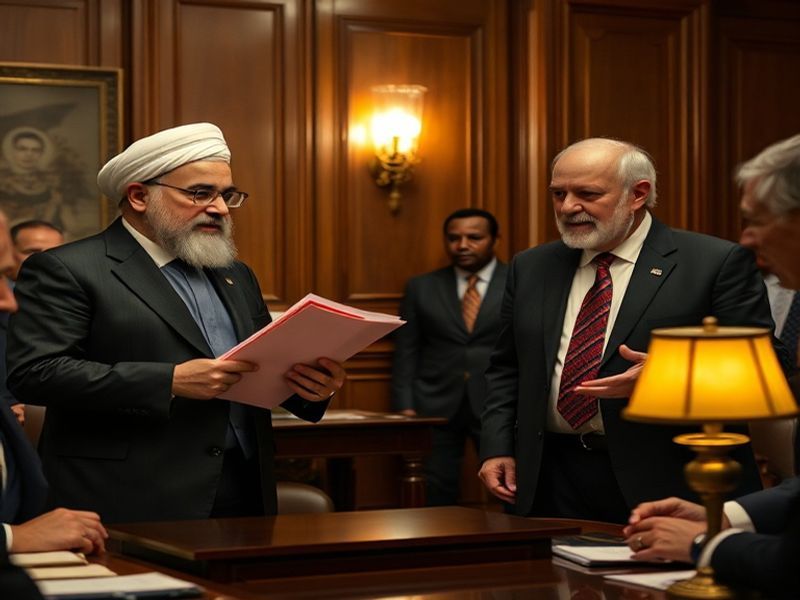
As the Middle East remains locked in a cycle of violence and retaliation, Iran has taken a more assertive role in brokering a fragile peace. Diplomatic sources confirm that Iranian mediators are now making a concentrated effort to secure a 45-day ceasefire between Israel and Hamas, with the goal of preventing further escalation into a full-blown regional conflict. The push comes at a critical juncture, as recent airstrikes in Gaza and Lebanon have raised fears of a wider war that could destabilize global energy markets and deepen humanitarian crises.
The urgency of these negotiations cannot be overstated. With civilian casualties mounting in Gaza and southern Lebanon, international pressure has intensified on both sides to pause hostilities. Iran, which has long positioned itself as a defender of Palestinian rights while also maintaining influence over groups like Hezbollah, finds itself in a delicate balancing act. While Tehran denies direct involvement in recent attacks, its indirect support for militant factions complicates any attempt to mediate in good faith.
Analysts suggest that Iran’s mediation efforts may be as much about projecting strength as they are about achieving peace. By positioning itself as a key player in regional security, Tehran seeks to reinforce its narrative as a counterbalance to Western influence in the Middle East. However, skepticism remains high, particularly among Western governments and Israel, which view Iran’s involvement with deep suspicion.
Key Players and Their Stakes in the Ceasefire Talks
The success of any ceasefire agreement hinges on the cooperation—or at least the tacit acceptance—of multiple regional and international actors. Below are the primary stakeholders and their motivations:
- Iran: Aims to prevent a direct Israel-Hezbollah war that could draw in its own forces while also maintaining its influence over proxy groups. Domestic economic pressures may also push Tehran toward de-escalation.
- Israel: Seeks to dismantle Hamas’ military capabilities while avoiding a prolonged conflict on multiple fronts. The government faces growing public pressure to secure the return of hostages held in Gaza.
- Hamas: In a weakened position after months of bombardment, the group may see a ceasefire as a way to regroup and reassert its political relevance in Palestinian governance.
- Hezbollah: While avoiding full-scale war with Israel, the Lebanese militant group may use the ceasefire talks to negotiate concessions, such as prisoner exchanges or a lifting of sanctions on Lebanon.
- United States: While not directly involved in the talks, Washington’s stance—support for Israel’s right to self-defense while urging restraint—plays a crucial role in shaping the negotiations.
- Egypt and Qatar: Both countries have historically mediated between Israel and Palestinian factions. Their involvement could provide the necessary diplomatic cover for both sides to save face.
The Humanitarian Toll and Global Implications
The humanitarian crisis in Gaza has reached catastrophic levels, with the United Nations reporting that over 80% of the population has been displaced. The World Health Organization warns of collapsing healthcare infrastructure, while the UN Relief and Works Agency for Palestine Refugees (UNRWA) faces severe funding shortages. The situation in southern Lebanon is similarly dire, with thousands fleeing their homes amid near-daily clashes.
Beyond the immediate loss of life, the conflict has triggered ripple effects across the globe. Oil prices have surged on fears of supply disruptions from the Strait of Hormuz, while global grain markets have been disrupted due to the closure of key shipping routes in the Red Sea. In Europe, governments are grappling with how to respond to protests that have erupted in major cities, demanding an end to the violence.
Culturally, the conflict has reignited debates about representation and justice in the West. Social media platforms have become battlegrounds for competing narratives, with misinformation spreading rapidly. Artists, musicians, and writers from the Middle East and diaspora communities have used their platforms to amplify Palestinian voices while also critiquing the role of Western media in shaping perceptions of the conflict.
A Ceasefire’s Fragile Promise: What’s Next?
The proposed 45-day ceasefire is not a permanent solution but rather a temporary measure to allow for negotiations on broader issues, such as the release of hostages, the lifting of blockades, and the future of Palestinian governance. However, past ceasefires have repeatedly collapsed under the weight of mutual distrust and sporadic violence.
For the ceasefire to hold, several conditions must be met:
- A clear mechanism for monitoring violations, with neutral third-party observers such as the UN or the Red Cross.
- Concrete steps toward addressing the humanitarian crisis, including the reopening of critical aid corridors into Gaza.
- Confidence-building measures, such as the release of prisoners or the easing of movement restrictions for civilians.
- Diplomatic assurances that neither side will use the ceasefire period to regroup or rearm, which has doomed past agreements.
Even if the ceasefire holds, the underlying issues fueling the conflict remain unresolved. The status of Jerusalem, the right of return for Palestinian refugees, and the expansion of Israeli settlements in the West Bank are all flashpoints that have derailed past negotiations. Without addressing these core grievances, any truce may only be temporary.
The international community’s role will be crucial in ensuring that the ceasefire does not become just another footnote in a long history of failed peace efforts. The United States and European Union must leverage their influence to push both sides toward more substantive talks, while regional powers like Egypt and Saudi Arabia can help mediate by offering economic incentives or security guarantees.
Cultural Echoes and the War of Narratives
In an era where information travels faster than diplomacy, the battle for global public opinion has become as critical as the military engagements on the ground. Social media platforms have amplified voices from Gaza and the West Bank, with graphic videos and firsthand accounts shaping international perceptions of the conflict. Meanwhile, pro-Israel advocates have countered with arguments about Hamas’ use of human shields and the group’s refusal to recognize Israel’s right to exist.
This clash of narratives has extended beyond the digital realm. Universities, particularly in the West, have become sites of protest and debate, with students and faculty divided over issues of free speech, colonialism, and the ethics of academic partnerships with Israeli institutions. In the arts, institutions like the Metropolitan Museum of Art in New York have faced pressure to divest from sponsors linked to the conflict, while film festivals have canceled screenings in solidarity with either side.
Artists and intellectuals from the Middle East have also weighed in, using their work to challenge dominant narratives. Palestinian poets like Mosab Abu Toha, whose poetry collection Things You May Find Hidden in My Ear was longlisted for the 2022 National Book Award, have gained international acclaim for their unflinching depictions of life under occupation. Meanwhile, Israeli writers such as David Grossman have used their platforms to advocate for peace, arguing that the status quo is unsustainable.
These cultural expressions matter because they shape how future generations will remember this conflict. The stories we tell—and the ones we choose to amplify—will determine whether the cycle of violence continues or whether a new chapter of reconciliation can begin.
Conclusion: A Ceasefire as a Stepping Stone, Not an End
The push for a 45-day ceasefire represents a glimmer of hope in an otherwise bleak landscape. It is a necessary first step, but not a sufficient one. For lasting peace to take root, the international community must move beyond temporary truces and address the root causes of the conflict. This will require difficult compromises, unwavering political will, and a commitment to justice for all parties involved.
Iran’s role in these negotiations is particularly fraught. While its mediation efforts may be driven by a desire to avoid a wider war, its support for militant groups complicates its ability to act as an impartial broker. The true test of its intentions will be whether it can use its influence to pressure its allies toward de-escalation.
The road ahead is uncertain, but the stakes could not be higher. The lives of millions hang in the balance, and the choices made in the coming weeks will reverberate far beyond the borders of Israel and Palestine. Whether this ceasefire leads to a lasting peace—or merely a pause before the next round of violence—will depend on the actions of leaders, the resilience of civil society, and the collective will of the international community to prioritize humanity over politics.