<!DOCTYPE html>
<html lang="en">
<head>
    <meta charset="UTF-8">
    <meta name="viewport" content="width=device-width, initial-scale=1.0">
    <title>Kristaps Porziņģis: The Latvian Unicorn Shaping the NBA</title>
</head>
<body>
    <article>
        <h1>Kristaps Porziņģis: The Latvian Unicorn Shaping the NBA</h1>

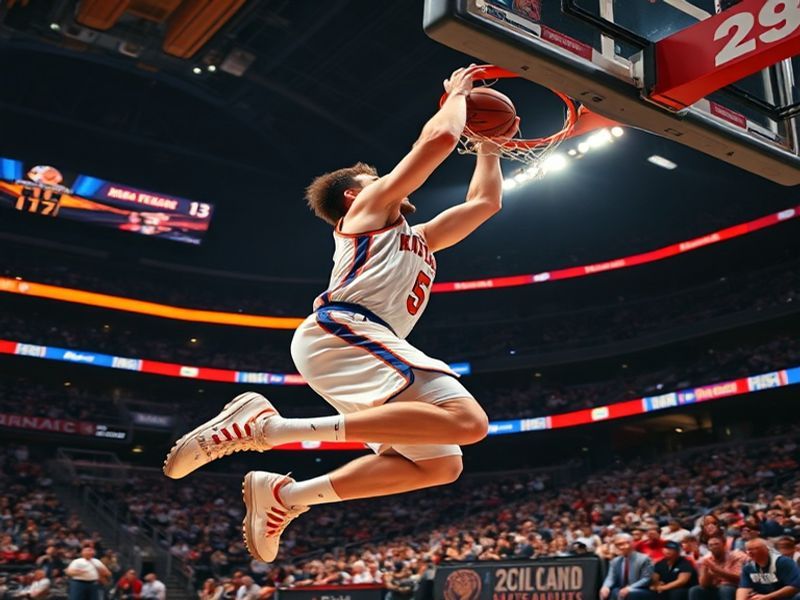
        <p>Few players in modern basketball embody the fusion of skill, size, and versatility quite like Kristaps Porziņģis. Standing at 7 feet 3 inches with the shooting touch of a guard, the Latvian big man has carved out a unique identity in the NBA—a rarity often described as a "unicorn" for his ability to stretch defenses while dominating in the paint. His career, marked by highs and setbacks, tells a story of adaptation, resilience, and unfulfilled potential that continues to evolve with each season.</p>

        <p>Porziņģis was drafted fourth overall by the New York Knicks in the 2015 NBA Draft, a selection that carried immediate expectations. The hype surrounding him was justified early on. In his rookie season, he averaged 14.3 points and 7.3 rebounds per game, showcasing a rare combination of shooting range, footwork, and shot-blocking ability. His 39.2% three-point shooting in his second season (2017–18) further cemented his role as a stretch big—a player who forces opponents to guard him far beyond the three-point line.</p>

        <h2>From Knicks to Mavericks: A Career Defined by Adaptability</h2>

        <p>Porziņģis’s tenure with the Knicks was tumultuous, marked by inconsistent coaching, roster instability, and a strained relationship with the front office. Despite flashes of brilliance—including a 30-point, 10-rebound performance against the Atlanta Hawks in 2018—his time in New York never fully coalesced into playoff success. A torn ACL in February 2018 derailed his development and sidelined him for nearly two years, raising concerns about his durability.</p>

        <p>In January 2019, the Knicks traded Porziņģis to the Dallas Mavericks in a blockbuster deal that sent him, Trey Burke, Tim Hardaway Jr., and Courtney Lee to Dallas in exchange for DeAndre Jordan, Wesley Matthews, Dennis Smith Jr., and two future first-round picks. The move was polarizing. Some questioned whether Porziņģis could thrive in a new system under head coach Rick Carlisle, who emphasized structure and spacing. Others saw potential in pairing him with Luka Dončić, one of the league’s brightest young stars.</p>

        <p>In Dallas, Porziņģis found a more stable environment. He averaged 19.2 points and 9.4 rebounds during the 2019–20 season, forming a dynamic duo with Dončić that pushed the Mavericks to the playoffs. The partnership highlighted Porziņģis’s ability to play both as a primary scorer and a complementary piece. His mid-range game improved, and his defense remained a critical asset, particularly in rim protection and switchability. However, injuries continued to plague him. A right knee injury in the 2020 playoffs and a calf strain in 2021 limited his availability and impact during crucial moments.</p>

        <h3>Statistical Breakdown: Where Porziņģis Excels and Where He Struggles</h3>

        <p>Porziņģis’s statistical profile reflects his dual-threat nature. Over his career, he has averaged 17.2 points, 7.0 rebounds, and 2.0 blocks per game. His shooting percentages—43.2% from the field, 36.1% from three, and 80.6% from the free-throw line—underscore his scoring versatility. His offensive rating (114.0) and defensive rating (105.9) over the past five seasons place him among the league’s most impactful big men when healthy.</p>

        <p>However, Porziņģis’s impact is often limited by availability. In the 2021–22 season, he played just 43 games due to a calf strain, and in 2022–23, he appeared in 65 contests after recovering from a left knee injury. Durability remains the biggest question mark in evaluating his long-term role in the NBA.</p>

        <ul>
            <li><strong>Strengths:</strong> Elite shooting for a big man, strong shot-blocking presence, versatile offensive game (post-ups, face-ups, threes), improved playmaking.</li>
            <li><strong>Weaknesses:</strong> Injury history, limited physicality in the paint, occasional lapses in defensive rotations, inconsistent energy levels.</li>
        </ul>

        <h2>The International Influence: Porziņģis and Latvian Basketball</h2>

        <p>Porziņģis is more than just an NBA player; he is a cultural icon in Latvia. The country of fewer than 2 million people has produced remarkably few NBA players, making Porziņģis a national hero. His success has inspired a new generation of Latvian basketball talent, including Artūrs Žagars and Roberts Blumbergs, who are now making their own marks in European basketball and the NBA G League.</p>

        <p>His impact extends beyond the court. Porziņģis has used his platform to advocate for basketball development in Latvia, funding youth camps and supporting local leagues. In 2021, he was named Latvia’s Athlete of the Year, a testament to his influence in a country where sports often unite a small but passionate fanbase.</p>

        <p>On the international stage, Porziņģis has represented Latvia in multiple FIBA tournaments, including the 2017 EuroBasket and the 2023 FIBA World Cup Qualifiers. While Latvia has never been a basketball powerhouse, Porziņģis’s presence raises the profile of the national team and brings credibility to its ambitions. His leadership and skill could be pivotal if Latvia qualifies for the Olympics or future World Cups.</p>

        <h2>Future Outlook: Can Porziņģis Regain All-Star Form?</h2>

        <p>At 28 years old, Porziņģis is entering the prime years of a big man’s career, but questions persist about his long-term trajectory. The Mavericks, now with a revamped roster featuring Kyrie Irving, have shown faith in him, re-signing him to a three-year, $36 million contract in 2023. The move suggests Dallas views him as a key piece to their championship window, alongside Dončić and Irving.</p>

        <p>For Porziņģis to regain All-Star form, several factors will be critical:</p>

        <ol>
            <li><strong>Health:</strong> Staying on the court is the most important factor. His injury history demands careful load management.</li>
            <li><strong>Role Clarity:</strong> With Dončić as the primary playmaker, Porziņģis must refine his role—whether as a stretch four, a secondary scorer, or a defensive anchor.</li>
            <li><strong>Shooting Efficiency:</strong> Improving his three-point shooting consistency (career 36.1%) could unlock even greater offensive versatility.</li>
            <li><strong>Defensive Impact:</strong> Maximizing his shot-blocking and switchability will be vital in playoff series against elite frontcourts.</li>
        </ol>

        <p>The 2023–24 season will be a telling one. If Porziņģis can stay healthy and elevate his play, he could re-emerge as a key contributor for a Mavericks team with championship aspirations. If injuries resurface, however, his career may be defined by what could have been—another talent whose brilliance was dimmed by fragility.</p>

        <h2>Legacy and Larger Impact</h2>

        <p>Porziņģis’s career invites comparison to other stretch bigs like Dirk Nowitzki and Giannis Antetokounmpo—players who redefined their positions through skill and innovation. While he may never reach the superstardom of those legends, his influence on the game is undeniable. He has forced opposing teams to rethink traditional big-man roles, proving that a 7-foot player can be a floor-spacing threat without sacrificing defensive presence.</p>

        <p>Off the court, Porziņģis represents the global growth of the NBA. His journey from Riga, Latvia, to the league’s marquee franchises highlights the increasing diversity of talent in professional basketball. As the NBA expands its international reach, players like Porziņģis serve as bridges between cultures and continents.</p>

        <p>For fans of the game, Porziņģis remains one of the most fascinating figures in basketball—a player of contradictions, capable of breathtaking plays and frustrating absences in equal measure. His story is not yet complete, but it is already one of the more compelling narratives in modern sports.</p>

        <p>As he continues to navigate the challenges of an NBA career defined by both brilliance and adversity, one thing is certain: Kristaps Porziņģis is a player who demands attention, respect, and a closer look—every time he steps on the court.</p>

        <p>For more on emerging NBA talents and international players shaping the league, visit <a href="https://daveslocker.net/category/sports">Dave’s Locker Sports</a>.</p>
    </article>

    <!-- Metadata Section -->