The Rise and Legacy of Metrocentre: Europe’s First Megamall
The Metrocentre in Gateshead, England, holds a unique place in retail history as Europe’s first megamall. Opened in 1979, it set a precedent for large-scale shopping environments that would later define urban consumer culture across the continent. Unlike traditional high streets or standalone department stores, the Metrocentre centralized retail, leisure, and dining under one expansive roof, creating a self-contained ecosystem for modern living.
Its development coincided with broader economic shifts in the late 20th century. As suburbanization accelerated and car ownership rose, developers sought to replicate the convenience of American-style shopping malls in the UK. The Metrocentre wasn’t just a retail space—it was a social hub, a place where families spent weekends, teenagers gathered after school, and workers grabbed lunch during breaks. This blend of commerce and community redefined how people interacted with urban spaces.
A Blueprint for Global Shopping Malls
While American malls like the Southdale Center in Minnesota had already pioneered the concept in the 1950s, the Metrocentre adapted the model for a European context. Its location in Gateshead, a post-industrial town in northeast England, reflected a deliberate strategy to revive declining urban areas through retail-led regeneration. The mall’s success spurred a wave of similar projects across Europe, from France’s Le Centre Commercial in Lyon to Germany’s CentrO in Oberhausen.
One of the Metrocentre’s most influential features was its integration of leisure attractions. From bowling alleys to multiplex cinemas, it merged shopping with entertainment long before the rise of modern “experience malls.” This approach anticipated today’s retail trends, where destinations like Dubai Mall or West Edmonton Mall offer aquariums, ice rinks, and even theme parks. The Metrocentre proved that malls could be more than transactional spaces—they could shape local identity.
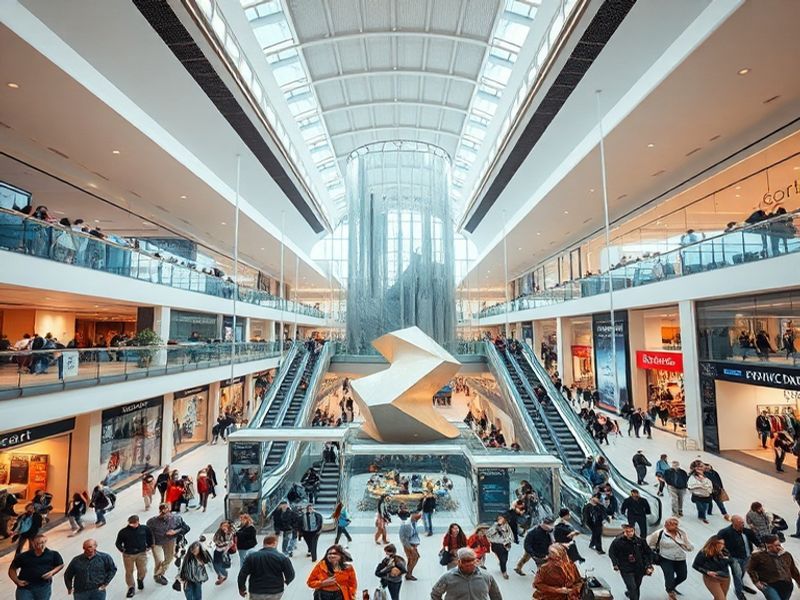
Its architectural design also broke from tradition. Unlike the enclosed, inward-facing layouts of American malls, the Metrocentre emphasized natural light with skylights and open walkways. This created a more welcoming atmosphere, reducing the claustrophobic feel often associated with large retail complexes. Architects drew inspiration from brutalist and modernist principles, blending functionality with a sense of grandeur that felt accessible to everyday shoppers.
The Cultural Impact of Megamalls in Urban Life
Megamalls like the Metrocentre didn’t just change how people shopped—they transformed social behaviors. In many European cities, malls became de facto public squares, places where diverse groups mingled under one roof. For communities in the UK’s north, where traditional high streets were in decline, the Metrocentre offered a rare sense of modernity and prosperity. It symbolized economic resilience during the 1980s, a decade marked by industrial decline and the rise of service economies.
However, the mall’s cultural legacy is complex. Critics argue that megamalls contributed to the homogenization of urban spaces, replacing independent shops with chain stores and global brands. In some cases, they accelerated the decline of town centers, as retailers relocated to larger, out-of-town complexes. The Metrocentre itself faced challenges in later years, as online shopping and shifting consumer habits forced malls to reinvent themselves.
Despite these criticisms, the Metrocentre remains a cultural touchstone. It has been referenced in music, literature, and film as a symbol of late 20th-century Britain. Bands like The Smiths and artists like Jarvis Cocker have immortalized the mall’s neon-lit corridors and food courts in their work, capturing its role as a backdrop to everyday life. Even today, it hosts events that reflect its community roots, from charity fundraisers to local art exhibitions.
Adapting to the Future: Lessons from Metrocentre
The Metrocentre’s journey mirrors the broader evolution of retail architecture. In an era where e-commerce dominates, physical malls must innovate to survive. Some have doubled down on experiential offerings, turning into mixed-use spaces with co-working offices, gyms, and even housing. The Metrocentre has embraced this shift, adding a trampoline park, a soft-play area, and a revamped food hall to attract new generations of visitors.
Its story also highlights the importance of balancing commercial success with community needs. Unlike some malls that prioritize luxury brands, the Metrocentre has maintained affordable retail options, including high-street favorites and local vendors. This inclusivity has helped it retain a loyal customer base, even as competitors struggle to stay relevant.
Looking ahead, the Metrocentre’s legacy offers valuable insights for urban planners and developers. As cities grapple with post-pandemic retail recovery, there’s renewed interest in repurposing malls as community hubs. Projects like London’s Coal Drops Yard or Rotterdam’s Markthal show how historic retail spaces can be reimagined for contemporary needs. The Metrocentre, with its blend of nostalgia and adaptability, stands as a testament to this potential.
A Lasting Influence
The Metrocentre’s impact extends beyond its walls. It helped shape the language of retail, introducing terms like “megamall” and “shopping destination” into everyday vocabulary. It also influenced policy, as governments debated the role of large-scale retail in urban planning. In an age where sustainability and walkability are key concerns, the Metrocentre’s original design—spacious, accessible, and centered on pedestrian movement—remains surprisingly forward-thinking.
For historians and architecture enthusiasts, the Metrocentre is more than a relic of the past—it’s a case study in how built environments shape culture. Its story reminds us that malls are not just commercial ventures; they are microcosms of society, reflecting economic trends, social values, and technological shifts. As we navigate the future of retail, the Metrocentre’s journey offers a blueprint for balancing profit with purpose.
Whether it’s the neon glow of its signage or the hum of its food court, the Metrocentre endures as a landmark. It’s a place where memories are made, where families gather, and where the pulse of modern Britain can still be felt. In a world of fleeting trends, its legacy is anything but temporary.