Mexico: A Tapestry of Tradition, Innovation and Global Influence
“`html
Where Ancient Echoes Meet Modern Pulse
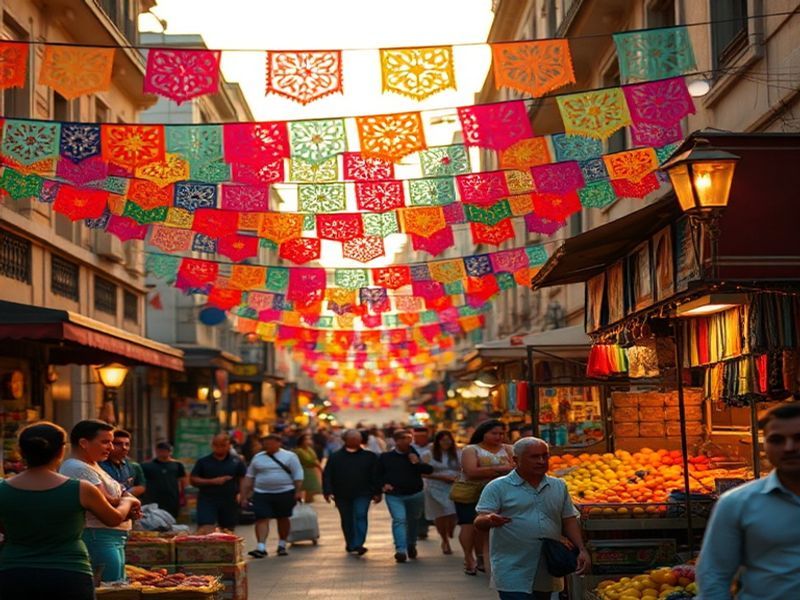
Mexico exists in the overlapping shadows of its pre-Columbian origins and the vibrant, chaotic energy of its 21st-century incarnation. The country is not a static relic but a living laboratory where 3,000-year-old Zapotec glyphs share Wi-Fi with street-food vendors serving tlayudas in Oaxaca City, and where colonial cathedrals stand sentinel over mezcal palenques that double as Instagram studios. This duality is not a contradiction; it is Mexico’s operating system.
What outsiders often label “exotic” is simply everyday life. The National Autonomous University of Mexico, one of Latin America’s largest, graduates more engineers per year than Germany. Meanwhile, the village of Teotitlán del Valle still weaves rugs on backstrap looms using patterns unchanged since Moctezuma’s time. The contrast is not a paradox; it is the rhythm of a nation that refuses to be reduced to a single story.
The Economy: From Maquiladoras to Global Tech Hubs
Mexico’s economic footprint stretches far beyond tacos and tequila. In 2023, the country overtook China as the top exporter to the United States, a shift powered by nearshoring as multinational firms relocate supply chains south of the Rio Grande. The automotive sector alone employs nearly one million people, churning out one in four cars sold in North America. Yet Mexico is also home to a 20,000-strong IT services workforce servicing Fortune 500 clients, and Guadalajara—nicknamed the “Silicon Valley of Latin America”—hosts IBM, Intel, and a burgeoning aerospace cluster.
The informal economy remains stubbornly large—nearly 60% of workers operate outside formal payrolls—but digital platforms like Mercado Libre and Rappi are pulling millions into the formal fold. Remittances from the diaspora, now exceeding $63 billion annually, underwrite everything from microloans in Chiapas to tuition at private universities in Monterrey. These flows create a parallel welfare state, one that operates without bureaucracy and with deep emotional ties.
Culture: A Global Export Without a Manual
Mexican culture radiates outward in unpredictable waves. In 2022, the country ranked sixth globally for film production, churning out 200+ features annually despite modest budgets. Directors like Guillermo del Toro and Alfonso Cuarón have rewritten the rules of visual storytelling, while streaming platforms now compete fiercely for the next breakout auteur. Yet the real magic lies in grassroots expression: the Lucha Libre masks stitched by families in Mexico City, the alebrijes carved in Oaxaca, and the son jarocho rhythms that migrate from Veracruz to Berlin without a visa.
Food is the most portable form of diplomacy. Mexico boasts 35 UNESCO-recognized culinary elements—more than any other country—and UNESCO itself has declared Mexican cuisine an “intangible cultural heritage.” Yet the narrative often stops at tacos and tequila. Behind the scenes, chefs like Jorge Vallejo and Elena Reygadas are redefining fine dining with native ingredients: huitlacoche risotto, chaya mole, and fermented corn beverages that predate Coca-Cola by centuries. These innovations trickle upward, influencing menus from Noma in Copenhagen to street stalls in Tijuana.
The Diaspora: A Nation Without Borders
Over 12% of Mexico’s population lives abroad, primarily in the United States. This diaspora functions as both safety valve and economic engine. Remittances finance 40% of household consumption in states like Michoacán and Zacatecas, while migrant networks funnel capital into micro-enterprises from Puebla to Jalisco. The cultural feedback loop is equally powerful: Día de los Muertos altars in Los Angeles rival those in Mexico City, and reggaeton remixes of traditional corridos now dominate Spotify playlists in both countries.
The relationship is symbiotic but uneven. Mexican migrants send back money and culture, yet face increasingly hostile immigration policies. In 2024, the Biden administration expanded work permits for up to 500,000 noncitizens, a tacit acknowledgment that the U.S. economy cannot function without Mexican labor. Meanwhile, the Mexican government has begun offering dual citizenship pathways, signaling a new phase in the diaspora compact.
Challenges: Security, Sustainability and Identity
No portrait of Mexico is complete without acknowledging its contradictions. The country remains one of the most violent in the OECD, with over 35,000 homicides annually. Yet the violence is concentrated: 80% of cases occur in just 100 municipalities, while states like Yucatán report fewer than 100 murders per year. Cartel wars are not a national condition but a regional pathology, fed by U.S. demand for fentanyl and Central American transit routes.
Environmental strain is another pressure point. Mexico City sinks a meter per decade as aquifers collapse, while deforestation in the Lacandon Jungle accelerates to make way for avocado orchards destined for U.S. toast bars. Yet here too, innovation is emerging. The Maya Train—a 1,500-kilometer rail network—promises to connect tourist zones while funding conservation corridors. Simultaneously, indigenous communities are winning legal battles to protect sacred sites from lithium mining, proving that sustainability can be a cultural right as much as an environmental one.
Mexico Beyond the Headlines
Mexico is frequently reduced to a cautionary tale or a vacation postcard. The truth is far more interesting. It is a laboratory of hybrid economies where barter networks coexist with blockchain startups. It is a cultural exporter that rewrites global standards without sacrificing local flavor. It is a society that has survived conquest, revolution, and globalization by perfecting the art of reinvention.
For outsiders, the lesson is simple: stop looking for Mexico in a single image. It is not just a land of pyramids and piñatas, nor merely a manufacturing floor for the world. It is both, and neither, and everything in between. The country’s genius lies in its refusal to be pigeonholed—whether by historians, marketers, or algorithms.
The next time you taste a tlayuda, stream a Mexican film, or receive a remittance notification, remember: you are touching a thread in a much larger tapestry. One that has been weaving itself for millennia, and shows no signs of stopping.