Mexico’s Global Influence: Culture, Economy, and Identity
“`html
Mexico: A Tapestry of Tradition and Modernity
Mexico occupies a unique position on the global stage, blending ancient civilizations with rapid contemporary development. Its 32 states stretch from arid deserts to lush jungles, from colonial cities to sprawling metropolises. This diversity shapes a culture that is both deeply rooted in history and dynamically evolving in response to global pressures.
The country’s relationship with its past remains visible in everyday life. Indigenous traditions persist alongside modern innovations, creating a society where pre-Hispanic rituals coexist with digital transformation. This balance defines Mexico’s identity in the 21st century, making it a compelling case study for cultural continuity and change.
The Historical Layers of Mexican Identity
Mexico’s history is not a single narrative but a palimpsest of civilizations. The Olmec, Maya, and Aztec empires laid the foundations for a sophisticated understanding of astronomy, mathematics, and urban planning. These achievements were later reshaped by Spanish colonization, which imposed new religious, linguistic, and architectural paradigms.
The fusion of Indigenous and European influences produced the mestizo identity that defines modern Mexico. Yet this process was not seamless. The colonial era brought exploitation and conflict, leaving scars that still influence social hierarchies today. The Mexican Revolution of 1910-1920 further redefined national consciousness, emphasizing land reform, indigenous rights, and cultural sovereignty.
Today, Mexico honors this layered past through institutions like the National Museum of Anthropology in Mexico City. The museum houses artifacts such as the Aztec Sun Stone and Maya murals, serving as a reminder that the country’s heritage is not confined to textbooks but is alive in its people and landscapes.
Indigenous Resurgence and Cultural Revival
In recent decades, Indigenous communities have gained greater visibility in national discourse. Movements led by groups like the Zapatista Army of National Liberation in Chiapas have demanded political autonomy and cultural recognition. Their efforts have led to constitutional amendments protecting Indigenous languages and land rights.
Cultural expressions such as the Day of the Dead festival in Oaxaca and the Wixárika (Huichol) art in Jalisco showcase this resurgence. These traditions, once marginalized, now draw international tourists and inspire artists worldwide. They also challenge the dominant narrative of Mexico as a homogeneous society, highlighting the resilience of its original inhabitants.
Mexico in the Global Economy: Between Trade and Turmoil
Mexico’s economic significance extends far beyond its borders. As the United States’ second-largest trading partner, it plays a critical role in North American supply chains. The automotive industry alone employs over one million people, with major manufacturers like General Motors and Nissan operating large plants across central Mexico.
Yet economic integration has not eliminated inequality. While cities like Monterrey and Guadalajara thrive as tech and industrial hubs, rural regions in Chiapas and Oaxaca face persistent poverty. Remittances from Mexican migrants in the U.S. amount to nearly $60 billion annually—more than the country’s oil exports—underscoring the complex ties between migration and development.
Trade Agreements and Economic Dependence
Mexico’s membership in the USMCA (the updated NAFTA agreement) solidified its role as a manufacturing gateway to North America. However, this dependence creates vulnerabilities. Supply chain disruptions during the COVID-19 pandemic exposed the fragility of just-in-time production models centered in Mexico.
Efforts to diversify trade have led to increased engagement with Asia and Europe. Mexico has signed free trade agreements with 46 countries, positioning itself as a bridge between continents. Still, challenges remain, including corruption, cartel violence, and infrastructure gaps that hinder foreign investment outside industrial corridors.
Art, Music, and the Export of Mexican Culture
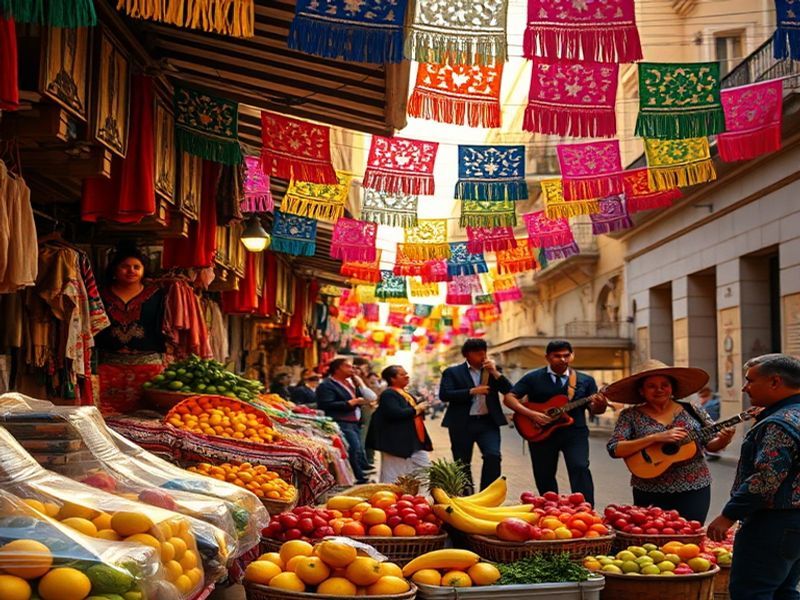
Few countries exert as much soft power through culture as Mexico does. Its music, art, and cinema have crossed borders for decades, shaping global perceptions. The mariachi tradition, recognized by UNESCO as an Intangible Cultural Heritage, is now performed from Tokyo to Buenos Aires. Meanwhile, contemporary artists like Frida Kahlo and Diego Rivera remain icons of feminist and political art movements worldwide.
Cinema offers another lens into Mexico’s cultural export. Directors such as Alfonso Cuarón and Guillermo del Toro have won international acclaim, using film to explore themes of memory, migration, and identity. Cuarón’s Roma (2018) became a global phenomenon, offering an intimate portrayal of Mexico City in the 1970s that resonated with audiences far beyond Latin America.
From Muralism to Streaming: The Evolution of Mexican Art
Mexico’s artistic legacy is not static. The muralist movement of the early 20th century—led by Rivera, José Clemente Orozco, and David Alfaro Siqueiros—used public art to narrate national history. Today, street art in cities like Mexico City and Puebla continues this tradition, with murals addressing issues like femicide, climate change, and social justice.
Digital platforms have further expanded Mexico’s cultural reach. Musicians like Café Tacvba and artists like Yalitza Aparicio have leveraged streaming services to build international followings. Even traditional crafts, such as Oaxacan alebrijes and Talavera pottery, have seen renewed interest thanks to e-commerce and social media.
Challenges and Opportunities on the Horizon
Mexico’s future is shaped by a paradox: its deep cultural richness coexists with systemic challenges. Violence related to organized crime remains a pressing concern, particularly in states like Michoacán and Tamaulipas. Meanwhile, environmental degradation—from deforestation in the Lacandona jungle to water scarcity in the Valley of Mexico—poses long-term threats.
Yet the country also holds immense potential. Its young population—over 50% under 30—represents a demographic dividend. Educational reforms and tech hubs in cities like Querétaro and Mérida are fostering innovation. Renewable energy projects, particularly solar and wind in Oaxaca and Yucatán, are positioning Mexico as a leader in sustainable development in Latin America.
Youth, Innovation, and the Digital Frontier
Mexico’s digital economy is one of the fastest-growing in the region. Startups in fintech, e-commerce, and AI are emerging in cities like Mexico City and Guadalajara. Companies like Clip (a mobile payments platform) and Konfio (a digital lending service) are redefining financial inclusion for millions without access to traditional banking.
This technological leap is not without challenges. Digital divides persist between urban and rural areas, and cybersecurity threats continue to rise. Still, initiatives like Mexico’s National Digital Strategy aim to expand internet access and digital literacy, ensuring that innovation benefits all citizens.
Mexico’s story is one of resilience, creativity, and constant reinvention. From the ancient pyramids of Teotihuacán to the neon-lit streets of Monterrey, the country offers a living example of how tradition and modernity can coexist. Its cultural exports remind the world of its vibrancy, while its struggles highlight the ongoing need for equity and justice.
As Mexico navigates the 21st century, it does so with one foot firmly planted in its past and the other stepping into a future it is actively shaping. In an era of globalization, it stands not as a passive participant but as an active contributor—defining its own path while influencing the wider world.
For those seeking to understand the complexities of Latin America, Mexico offers an essential case study. Its lessons extend beyond borders, offering insights into identity, economics, and the power of culture in an interconnected world.