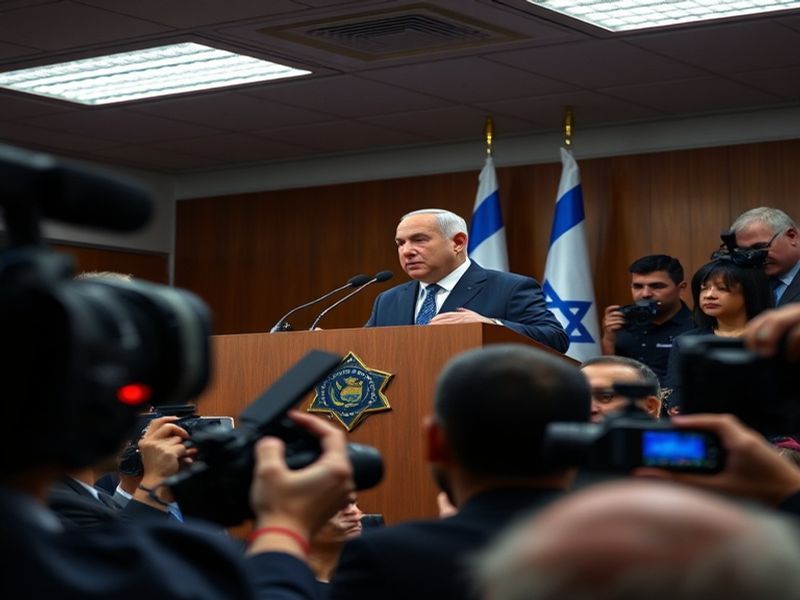
Israeli Prime Minister Benjamin Netanyahu’s recent decisions have intensified political divisions both within Israel and across the Middle East. His government’s policies on Gaza, judicial reforms, and regional diplomacy have drawn sharp criticism from international observers and domestic opponents alike. This article examines the key developments and their broader implications.
Escalation in Gaza and Military Operations
Netanyahu’s hardline stance on Gaza has defined his latest term in office. Since October 2023, Israeli military operations in the region have intensified, following the October 7 attacks by Hamas. The Israeli Defense Forces (IDF) reported conducting over 30,000 airstrikes in Gaza as of early 2024, resulting in significant civilian casualties and infrastructure damage.
The humanitarian crisis in Gaza has worsened, with the United Nations reporting that over 70% of the population faces acute food insecurity. International aid organizations have repeatedly called for ceasefires, but Netanyahu’s government has maintained that military operations will continue until Hamas is dismantled. Critics argue that the prolonged conflict risks destabilizing the entire region further.
International Reactions and Diplomatic Fallout
The international community remains deeply divided over Israel’s actions. The United States has continued to provide military support, though with growing reservations. Meanwhile, countries like South Africa have taken Israel to the International Court of Justice, accusing it of genocide. The court’s provisional measures in January 2024 ordered Israel to prevent genocidal acts in Gaza, a ruling Netanyahu dismissed as baseless.
European Union nations have also expressed concerns, with some calling for sanctions on Israeli officials. France and Germany, traditionally strong allies of Israel, have urged restraint and a return to negotiations. The diplomatic strain has raised questions about Israel’s long-term strategic alliances.
Judicial Reforms Fuel Domestic Protests
Netanyahu’s push to overhaul Israel’s judicial system has triggered mass protests across the country. The proposed reforms, which include limiting the Supreme Court’s power to strike down laws, have drawn accusations of undermining democracy. Over 500,000 Israelis have participated in weekly demonstrations, making it one of the largest protest movements in the country’s history.
The reforms passed their first reading in July 2023, despite widespread opposition. Protest leaders, including former military chiefs and business figures, warn that the changes threaten Israel’s checks and balances. Netanyahu, who faces ongoing corruption trials, has framed the reforms as necessary to restore balance between branches of government.
Economic and Security Concerns
The protests have had tangible consequences. Israel’s credit rating was downgraded by Moody’s in 2023, citing political instability. The tech sector, a cornerstone of Israel’s economy, has seen capital flight, with companies relocating operations abroad. Defense experts have also raised concerns about the impact on military readiness, as reservists—key to Israel’s defense—have joined the protests in large numbers.
Netanyahu’s government has defended the reforms, arguing that they correct an imbalance where unelected judges hold too much power. However, critics point to opinion polls showing that over 60% of Israelis oppose the changes. The divide has deepened political polarization, with families and communities split over the issue.
Regional Diplomacy and Shifting Alliances
Netanyahu has pursued a strategy of strengthening ties with Arab states while maintaining a hardline approach toward Palestinians. The Abraham Accords, which normalized relations with several Arab countries, remain a cornerstone of his foreign policy. However, the Gaza conflict has strained these relationships, particularly with Jordan and Egypt, which have criticized Israel’s military actions.
Saudi Arabia, a potential future signatory to the Abraham Accords, has signaled that normalization with Israel is contingent on progress toward a Palestinian state. Netanyahu has shown little willingness to compromise on this front, complicating efforts to expand the accords. Meanwhile, Iran continues to support proxy groups like Hezbollah and Hamas, further escalating tensions.
Potential for Wider Conflict
The risk of a broader regional conflict has grown. In early 2024, Israeli strikes on Iranian targets in Syria and Lebanon drew retaliatory threats from Tehran. Analysts warn that miscalculations could spiral into a full-scale war involving multiple actors. Netanyahu’s government has reiterated its commitment to preventing Iran from acquiring nuclear weapons, but the path to de-escalation remains unclear.
Despite these challenges, Netanyahu has sought to position Israel as a stabilizing force in the region. His government has engaged in backchannel diplomacy with Arab states, particularly the United Arab Emirates, to address security concerns. However, the Gaza conflict has overshadowed these efforts, leaving the future of Israel’s regional alliances uncertain.
Public Opinion and the Future of Netanyahu’s Leadership
Netanyahu’s approval ratings have fluctuated amid the dual crises of Gaza and domestic unrest. A poll conducted by the Israel Democracy Institute in late 2023 found that 54% of Israelis disapprove of his handling of the Gaza war, while 47% oppose his judicial reforms. His coalition government, already fragile, faces growing pressure to address both issues.
The opposition, led by figures like Yair Lapid and Benny Gantz, has capitalized on the discontent. Lapid, a centrist former prime minister, has called for early elections, arguing that Netanyahu’s leadership has failed to deliver security or stability. Gantz, a former military chief, briefly joined Netanyahu’s coalition in 2023 but resigned in protest over the judicial reforms.
Possible Scenarios Ahead
The coming months will be critical in determining Netanyahu’s political future. Several scenarios could unfold:
- Escalation in Gaza: A prolonged military campaign could further strain Israel’s global standing and deepen the humanitarian crisis.
- Judicial Reforms Stalled: Mass protests and international pressure may force Netanyahu to scale back or abandon the reforms.
- Regional War: A miscalculation involving Iran or Hezbollah could escalate into a larger conflict.
- Early Elections: Growing discontent within his coalition could trigger a vote, potentially ending Netanyahu’s political career.
For now, Netanyahu remains defiant. In a recent speech, he framed the judicial reforms as essential to Israel’s survival, comparing the protests to a “mob” attempting to undermine democracy. His rhetoric has only intensified the divisions within Israeli society.
Conclusion: A Crossroads for Israel
Benjamin Netanyahu’s leadership is at a defining moment. The combination of war, domestic unrest, and diplomatic isolation presents challenges that could reshape Israel’s trajectory. Whether he can navigate these crises without further destabilizing the country remains uncertain.
The international community watches closely, as the outcomes of these conflicts will have far-reaching implications for global security. Domestically, Israelis are grappling with questions of identity, security, and democracy. The answers to these questions will determine not only Netanyahu’s legacy but the future of Israel itself.
For deeper analysis on related topics, explore our News section or read about Political Developments.