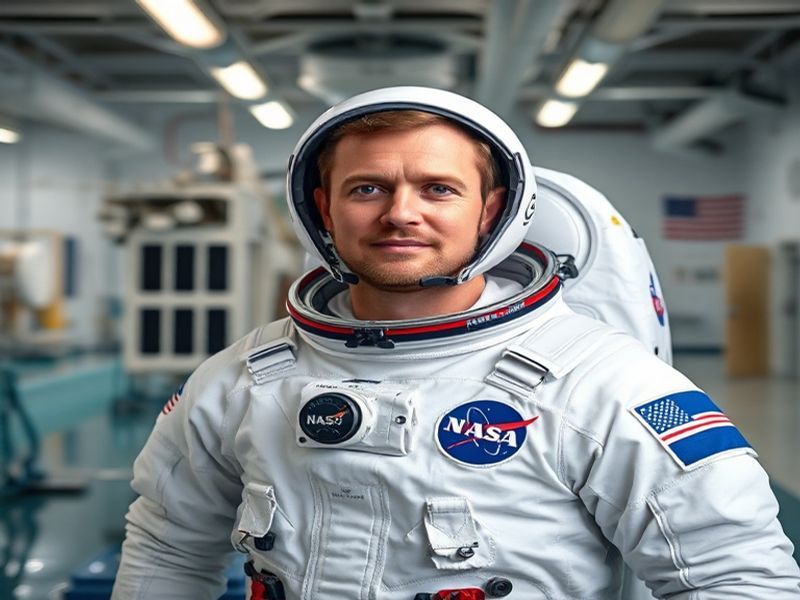
Reid Wiseman isn’t just another name in the vast roster of NASA astronauts—he’s a figure reshaping how humanity views space travel. With a career that blends military precision, scientific rigor, and an unmistakable ability to connect with the public, Wiseman has become one of the most influential astronauts of his generation. His work in low Earth orbit and beyond is setting new benchmarks for what’s possible in human spaceflight.
Wiseman’s journey from a naval aviator to a NASA leader reflects a broader shift in space exploration. The agency is moving toward longer missions, international collaboration, and a focus on sustainability. Wiseman’s role in these efforts underscores how astronauts today are not just explorers but also ambassadors for the future of humanity among the stars.
From Fighter Pilot to Astronaut
Born Gregory Reid Wiseman on November 11, 1975, in Baltimore, Maryland, Wiseman’s path to space began in the cockpit of a fighter jet. He graduated from the prestigious Rensselaer Polytechnic Institute with a degree in computer and systems engineering before commissioning as a naval officer. His military career saw him fly the F-14 Tomcat and F/A-18F Super Hornet, logging over 3,000 flight hours and completing deployments in the Middle East.
Wiseman’s transition from the military to NASA in 2009 was seamless. His engineering background and operational experience made him an ideal candidate for the astronaut corps. After rigorous training, he was selected for his first spaceflight in 2014 as part of Expedition 40/41 aboard the International Space Station (ISS). During that mission, he conducted hundreds of experiments, performed spacewalks, and even found time to share the experience with millions through social media.
A Mission That Captured the Public’s Imagination
Wiseman’s 165-day stay on the ISS was more than just a scientific endeavor—it was a public relations triumph for NASA. He and his crewmates, including German astronaut Alexander Gerst and Russian cosmonaut Maxim Suraev, became household names through their engaging social media presence. Wiseman’s Twitter feed, filled with stunning photos of Earth and candid insights into life in space, humanized the astronaut experience for a new generation.
His ability to communicate complex scientific concepts in accessible ways demonstrated a shift in how space agencies engage with the public. Wiseman’s mission proved that space exploration isn’t just for scientists and engineers—it’s for everyone. This approach has since become a model for NASA’s outreach efforts, particularly as the agency prepares for the Artemis missions and the eventual return to the Moon.
Leadership in a New Era of Spaceflight
In 2020, Wiseman took on a new role as NASA’s Chief of the Astronaut Office, a position that puts him at the forefront of the agency’s human spaceflight programs. His leadership comes at a critical juncture, as NASA transitions from the ISS to commercial space stations and prepares for crewed missions to the Moon and Mars. Wiseman’s background in both military aviation and spaceflight gives him a unique perspective on the challenges ahead.
Under his leadership, the Astronaut Office has emphasized adaptability and innovation. Wiseman has overseen the selection of the Artemis astronauts, a diverse group that includes the first woman and the first person of color slated to walk on the Moon. His focus on inclusivity and collaboration reflects NASA’s broader goals for the Artemis program, which aims to establish a sustainable human presence on the lunar surface.
Key Contributions to NASA’s Future
Wiseman’s influence extends beyond individual missions. His work has helped shape the development of the Orion spacecraft, the Space Launch System rocket, and the Lunar Gateway, a critical component of NASA’s Artemis architecture. Here are some of his most significant contributions:
- Artemis Astronaut Selection: Wiseman played a pivotal role in selecting the astronauts who will return humans to the Moon, emphasizing diversity and technical expertise.
- Commercial Crew Program: He has worked closely with private companies like SpaceX and Boeing to ensure the safety and reliability of their spacecraft for NASA missions.
- International Collaboration: Wiseman has fostered partnerships with international space agencies, including ESA, JAXA, and CSA, to ensure Artemis is a global effort.
- Public Engagement: His emphasis on transparency and outreach has made NASA more accessible, inspiring future generations of explorers.
The Broader Implications of Wiseman’s Work
Wiseman’s career reflects a broader evolution in space exploration. The days of solitary heroism are giving way to teamwork, international cooperation, and a focus on long-term sustainability. His leadership in the Astronaut Office is helping NASA navigate the complexities of this new era, where spaceflight is not just a national endeavor but a global one.
One of the most significant implications of Wiseman’s work is the democratization of space. By leveraging social media and emphasizing public engagement, he has made space exploration feel tangible to people around the world. This shift is critical as NASA and its partners prepare for even more ambitious missions, including crewed voyages to Mars.
Wiseman’s focus on inclusivity is also noteworthy. The Artemis program’s commitment to landing the first woman and the first person of color on the Moon sends a powerful message about the future of space exploration. It’s a reminder that space is for everyone, not just a select few. This approach could help inspire a new wave of diversity in STEM fields, ensuring that the next generation of explorers reflects the global population.
The Challenges Ahead
Despite the progress, challenges remain. The Artemis program faces technical hurdles, budget constraints, and geopolitical tensions that could complicate its timeline. Wiseman’s leadership will be tested as NASA works to balance these demands while maintaining its commitment to safety and innovation.
There’s also the question of how humanity will sustain a long-term presence on the Moon and eventually Mars. Wiseman’s background in engineering and operations positions him well to tackle these issues, but the solutions will require collaboration across disciplines and borders. His ability to navigate these complexities will be crucial in the years ahead.
A Legacy in the Making
Reid Wiseman’s career is still unfolding, but his impact is already undeniable. He represents the best of NASA’s tradition of exploration while embodying the agency’s forward-looking vision. As he leads the Astronaut Office into a new era, Wiseman is helping to redefine what it means to be an astronaut in the 21st century.
His work is a reminder that space exploration is not just about reaching new destinations—it’s about pushing the boundaries of human potential. Wiseman’s leadership, technical expertise, and commitment to public engagement are paving the way for a future where humanity is not just a visitor in space but a permanent resident. The journey ahead is long, but with leaders like Wiseman at the helm, the possibilities are limitless.
For those looking to learn more about NASA’s current initiatives and the future of space exploration, Dave’s Locker News and Dave’s Locker Science sections offer in-depth coverage and analysis.