In the world of professional wrestling, few careers have mirrored the highs and lows of Alberto Del Rio’s journey. Born José Alberto Rodríguez on May 25, 1977, in San Luis Potosí, Mexico, he rose from the competitive circuits of lucha libre to become one of WWE’s most compelling figures. His career spanned nearly two decades, marked by championship victories, cultural crossover appeal, and a series of controversies that kept him in the public eye long after his in-ring retirement.
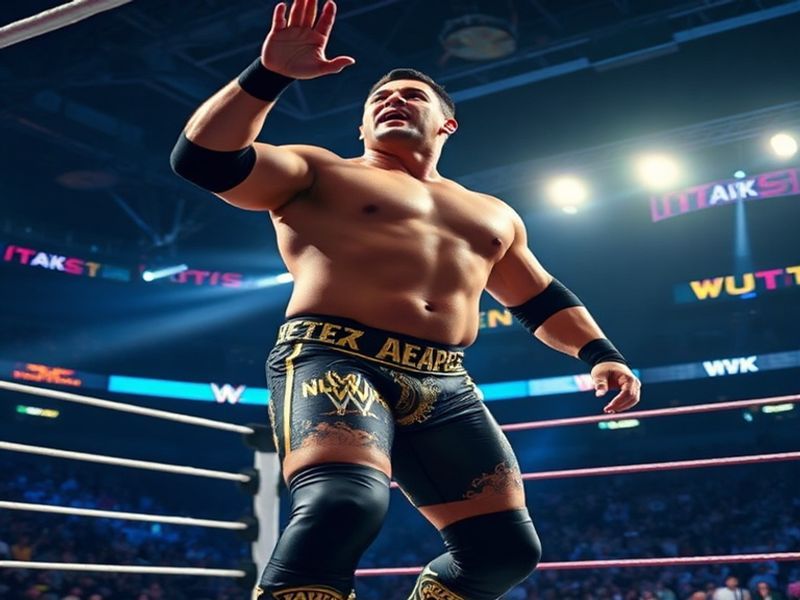
Del Rio’s wrestling pedigree was undeniable. The son of legendary luchador Dos Caras, he followed in his father’s footsteps, training under the tutelage of his uncle, Mil Máscaras, and later refining his craft in Japan’s New Japan Pro-Wrestling (NJPW) and Mexico’s Consejo Mundial de Lucha Libre (CMLL). His technical prowess and striking presence quickly set him apart, but it was his transition to WWE in 2009 that catapulted him to global stardom. With his aristocratic persona, impeccable ring attire, and a finisher called the Cross Armbreaker, he carved out a niche as a villain fans loved to hate—and later, as a hero they couldn’t help but cheer.
The Rise of a Global Star
Del Rio’s WWE debut in 2009 was met with curiosity. His character—a wealthy, aristocratic Mexican who spoke multiple languages and carried himself with an air of superiority—was a fresh take on the traditional wrestling heel. Unlike the cartoonish villains of the Attitude Era, Del Rio projected sophistication, which resonated with both English and Spanish-speaking audiences. His rivalry with Rey Mysterio, a fellow Mexican-American star, became a cultural touchstone, blending wrestling storytelling with real-world tensions between national identity and assimilation.
By 2010, Del Rio had already won his first WWE Championship at the Royal Rumble, defeating Rey Mysterio in a match that solidified his place as a top-tier performer. His reign was short but impactful, showcasing his ability to carry major storylines. The following year, he added the World Heavyweight Championship to his resume, proving he could dominate in WWE’s most prestigious divisions. What made Del Rio’s ascent remarkable was his crossover appeal. In an industry often criticized for its lack of diversity, he became one of the few Mexican wrestlers to achieve mainstream success in North America without compromising his cultural identity.
His in-ring work was complemented by his ability to connect with fans. Del Rio’s promos were delivered with a measured intensity, blending arrogance with charm. He spoke English with a crisp accent, yet never shied away from dropping Spanish phrases, appealing to a global fanbase. This duality made him a unique figure in wrestling, bridging gaps between audiences in the U.S., Mexico, and beyond.
Controversies and Career Setbacks
No discussion of Del Rio’s career would be complete without addressing the controversies that punctuated it. In 2014, he was released from WWE following a backstage incident involving an employee. The circumstances were murky, with reports suggesting tensions had been building for years. Some attributed his departure to creative differences, while others pointed to personal clashes within the locker room. Regardless of the cause, his exit was a turning point. WWE had invested heavily in him, and his sudden absence left a void that was never quite filled.
His return to WWE in 2016 was met with mixed reactions. Fans who had grown accustomed to his absence struggled to reconnect with the character, and his role was significantly diminished. While he won the United States Championship during this stint, it felt more like a nod to his past glory than a reinvention. The magic of his original run had faded, and by 2018, he was released again, this time seemingly for good.
Beyond WWE, Del Rio’s post-wrestling career has faced its own challenges. His foray into acting and commentary for Sports networks like Lucha Underground and AAA in Mexico kept him relevant, but the wrestling world’s changing landscape made it difficult for him to recapture his former prominence. The rise of AEW and other promotions in the 2010s created new opportunities, but Del Rio’s name never gained the same traction as younger stars. His legacy, however, remains undeniable—a testament to a time when wrestling was as much about global storytelling as it was about athleticism.
A Cultural Icon in Wrestling’s Global Landscape
Del Rio’s impact extends beyond his championship reigns. He was a symbol of wrestling’s globalization in the 2010s, a period when promotions like WWE and TNA actively sought international stars to expand their reach. His success helped pave the way for other Mexican wrestlers, such as Andrade, Andrade “El Idolo,” and even Rey Fénix, who have since achieved prominence in North American promotions.
His character’s aristocratic aesthetic also reflected broader cultural trends in wrestling. The early 2010s saw a shift toward more sophisticated heels, with figures like CM Punk and Alberto Del Rio embodying a kind of intellectual elitism that contrasted with the brawling style of earlier eras. Del Rio’s gimmick—a wealthy Mexican who embodied both pride in his heritage and disdain for those he deemed beneath him—was a nuanced take on villainy that resonated in an era where wrestling fans craved authenticity over caricature.
In Mexico, Del Rio’s legacy is perhaps even more significant. Lucha libre has always been a cultural institution, but stars who achieve global success while maintaining their roots are rare. Del Rio’s ability to straddle the line between Mexican wrestling tradition and American mainstream appeal made him a bridge between two worlds. His matches in CMLL and AAA, as well as his appearances in Japan, solidified his status as a global ambassador for lucha libre.
Where Does He Stand Now?
As of 2024, Alberto Del Rio’s involvement in wrestling has been sporadic. He has made occasional appearances on the independent circuit and in select international promotions, but his focus appears to have shifted toward other ventures. Reports suggest he has explored opportunities in commentary, acting, and even behind-the-scenes roles within wrestling organizations. While he may never return to the heights of his WWE career, his influence lingers in the careers of those he inspired.
For wrestling purists, Del Rio’s career is a case study in what could have been. With the right creative direction and a more stable personal life, he could have remained a top star for years. Instead, his legacy is one of “what if”—a reminder of how quickly fortunes can change in an industry where physicality and public perception are everything.
Key Takeaways from Alberto Del Rio’s Career
- Cultural Bridge: Del Rio’s ability to appeal to both English and Spanish-speaking audiences made him a rare figure in wrestling’s globalization era.
- Championship Pedigree: He held multiple world titles in WWE, proving his ability to carry major storylines.
- Controversial Exit: His backstage incidents and subsequent releases highlight the fragility of wrestling careers, even for top stars.
- Legacy in Lucha Libre: Beyond WWE, his contributions to Mexican wrestling and his global appeal cement his status as an icon.
Alberto Del Rio’s story is a microcosm of professional wrestling itself—glamorous yet precarious, celebrated yet unpredictable. His career reminds us that in an industry built on spectacle, the line between legend and forgotten is often thinner than it appears.