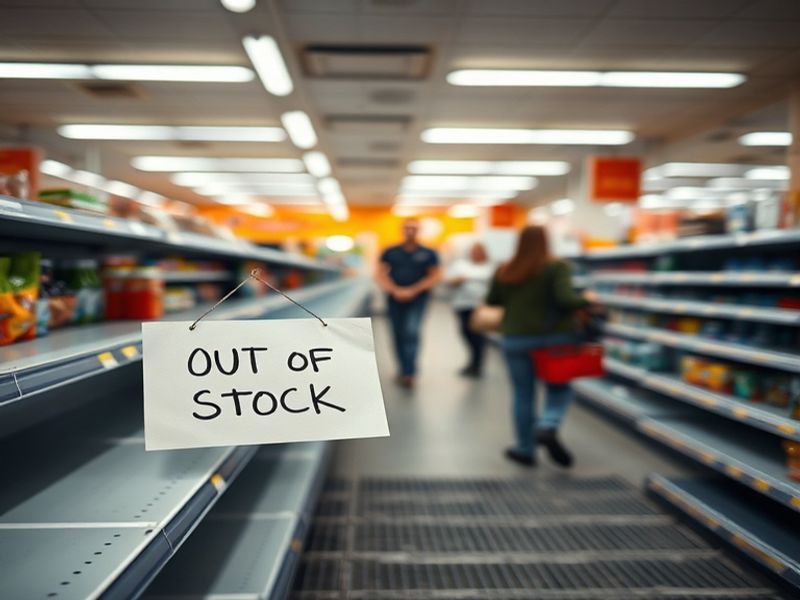
The term “shortage” has become a defining feature of modern economic discourse. From semiconductor chips powering devices to basic food staples, supply chain disruptions have exposed vulnerabilities in global production networks. These shortages are not isolated incidents but interconnected symptoms of broader systemic pressures.
The Many Faces of Shortages in 2024
Shortages manifest differently across industries, each with unique triggers and consequences. In the technology sector, the persistent chip shortage continues to delay production of everything from smartphones to electric vehicles. Automakers like Ford and GM have reported billions in losses due to halted assembly lines, while consumers face extended wait times for new cars.
Food shortages paint a different picture. Climate change-induced droughts and geopolitical conflicts have destabilized agricultural outputs. Wheat and cooking oil shortages in Africa and the Middle East have led to social unrest in countries like Egypt and Tunisia. Meanwhile, the dairy industry grapples with labor shortages that threaten milk and cheese production in the U.S. and Europe.
Key Sectors Facing Critical Shortages
- Semiconductors: A single missing chip can halt production across multiple industries, from consumer electronics to defense systems. The pandemic exposed reliance on a few key manufacturing hubs in Taiwan and South Korea.
- Healthcare: From basic medications like penicillin to life-saving cancer drugs, pharmaceutical shortages have become alarmingly common. Generic drug manufacturers cite thin profit margins and regulatory hurdles as primary causes.
- Energy: Natural gas and oil shortages in Europe during winter 2022-23 forced governments to ration energy, accelerating the push for renewable alternatives.
- Labor: The “Great Resignation” following COVID-19 left industries like hospitality and trucking scrambling for workers. Training gaps and aging populations exacerbate these challenges, particularly in Japan and Germany.
Root Causes: Why Shortages Persist
Shortages rarely stem from a single cause. Instead, they result from a convergence of factors that reveal deeper structural weaknesses. The COVID-19 pandemic acted as a stress test, exposing pre-existing fragilities in global supply chains designed for efficiency over resilience.
Globalization, while beneficial in many ways, has created dependencies that are difficult to unwind. Many industries rely on single-source suppliers or geographically concentrated production hubs. When a factory in China shutters due to a COVID lockdown or a conflict disrupts shipping lanes in the Red Sea, ripple effects spread worldwide within weeks.
Climate change compounds these issues. Extreme weather events—from floods in Bangladesh to wildfires in California—disrupt raw material extraction and transportation. Agriculture, already sensitive to temperature shifts, faces unpredictable growing seasons. The World Bank estimates that climate-related disruptions could reduce global GDP by 1.5% annually by 2050.
The Role of Policy and Decision-Making
Government policies often shape the severity of shortages. Trade restrictions, such as tariffs or export bans, can artificially constrict supply. In 2021, Indonesia’s ban on palm oil exports led to cooking oil shortages across Asia, prompting protests and price surges.
Similarly, subsidies and incentives can distort markets. The push for electric vehicles has led to a scramble for lithium and cobalt, with mining operations facing environmental and ethical scrutiny. Short-term gains in clean energy adoption may come at the cost of long-term supply stability.
Broader Implications: From Economies to Societies
The impact of shortages extends far beyond balance sheets. Inflation, already a persistent concern post-pandemic, is exacerbated by supply constraints. Central banks face a delicate balancing act: raising interest rates to curb inflation while risking economic slowdowns that deepen shortages through reduced investment.
Social consequences are equally stark. Food price inflation disproportionately affects low-income households, widening inequality. In some cases, shortages fuel migration crises. When young people in Central America cannot find stable work due to economic instability—partly driven by agricultural shortages—they are more likely to seek opportunities abroad.
Geopolitical tensions also intensify. Nations scramble to secure critical resources, leading to strategic competition. The U.S. and China’s rivalry over semiconductor supply chains is one example. Meanwhile, countries rich in natural resources face pressure to weaponize their exports, as seen with Russia’s manipulation of natural gas flows to Europe.
Environmental Trade-offs in the Search for Solutions
Efforts to address shortages often clash with sustainability goals. Reshoring production to reduce reliance on foreign suppliers can lower carbon footprints but may increase costs for consumers. Conversely, prioritizing affordability can lead to environmental degradation, as seen in the rush to extract critical minerals for green technology.
Innovation offers partial solutions. Synthetic biology is being explored to produce alternative proteins, reducing reliance on traditional farming. In the energy sector, grid-scale battery storage is improving reliability as renewable sources expand. However, these technologies remain in early stages and require significant investment to scale.
What’s Next? Navigating an Era of Persistent Scarcity
The shortages of today are likely to evolve rather than disappear. Demographic shifts, technological advancements, and climate change will continue reshaping supply and demand dynamics. The question is not whether shortages will occur, but how societies can adapt.
One strategy is diversification. Companies are increasingly adopting “China+1” strategies, expanding production to countries like Vietnam, India, or Mexico to mitigate risk. Governments are investing in strategic stockpiles for critical goods, from medical supplies to rare earth metals.
Another approach is circular economy principles: designing products for durability, repairability, and recyclability. The European Union’s Right to Repair laws aim to extend the lifespan of electronics, reducing the need for constant replacement and the associated strain on raw material supplies.
Education and workforce development also play a role. Programs that align vocational training with industry needs can address labor shortages more sustainably than temporary immigration policies. Germany’s dual education system, combining apprenticeships with classroom learning, offers a model for balancing supply and demand in skilled labor markets.
For consumers, the era of shortages may necessitate a shift in expectations. Just-in-time delivery, which minimized inventory costs, may give way to just-in-case models that prioritize resilience over efficiency. This could mean higher prices in the short term but greater stability in the long run.
Ultimately, addressing shortages requires a multifaceted approach that balances immediate needs with long-term sustainability. It demands cooperation between governments, businesses, and civil society to build systems that are both efficient and resilient. The goal is not to eliminate all scarcity but to manage it in ways that do not deepen inequality or undermine environmental health.
As we move forward, the lessons of recent shortages will shape policies and priorities. The challenge is to learn from these disruptions rather than merely endure them. The future of supply chains may be less about speed and more about adaptability, less about cost-cutting and more about foresight.
For further insights into how industries are adapting to these challenges, explore our coverage on Technology and Business pages. These sections delve into case studies and expert analyses on navigating supply chain complexities in an unpredictable world.