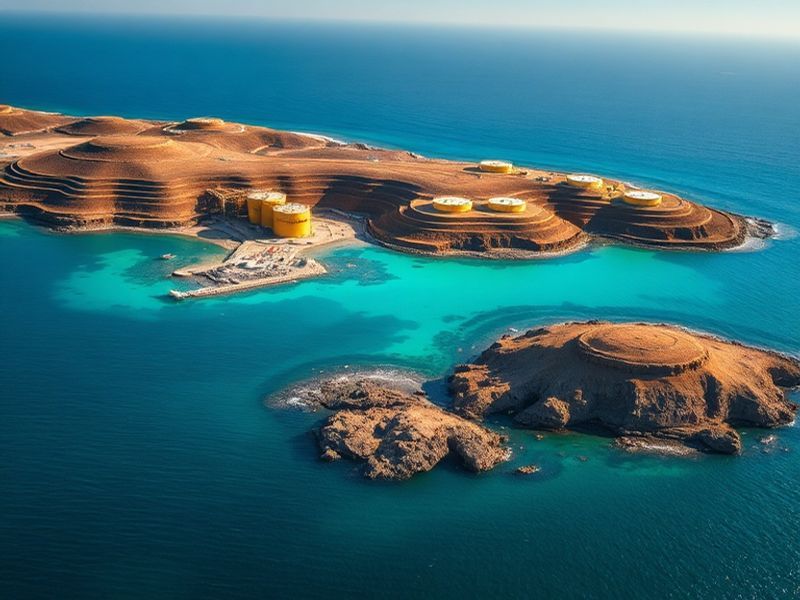
Kharg Island: Iran’s Strategic Oil Hub in the Persian Gulf
“`html
Kharg Island: Iran’s Strategic Oil Hub in the Persian Gulf
Nestled in the northern reaches of the Persian Gulf, Kharg Island stands as a critical node in Iran’s energy infrastructure. While often overshadowed by more prominent landmarks, this 20-square-kilometer landmass plays an outsized role in the global oil trade. Its deep-water port and proximity to major shipping lanes make it indispensable to Iran’s petroleum export operations.
The island’s significance stretches back decades. During the Iran-Iraq War in the 1980s, Kharg became a frequent target of Iraqi airstrikes due to its oil facilities. Today, despite sanctions and regional tensions, it remains operational, though its output has fluctuated alongside geopolitical developments. Understanding Kharg requires examining its geography, infrastructure, and the geopolitical chessboard that surrounds it.
The Geography and Infrastructure of Kharg Island
Kharg’s location—just 40 kilometers northwest of the Iranian port city of Bushehr—positions it strategically for oil exports. The island’s natural deep-water harbor eliminates the need for dredging, allowing for the docking of large oil tankers. Its topography is relatively flat, dominated by rocky terrain and sparse vegetation, though the presence of freshwater springs has supported limited agriculture and human settlement.
The island’s infrastructure is primarily centered around its oil terminal, which includes:
- Multiple loading jetties capable of handling Very Large Crude Carriers (VLCCs)
- A network of pipelines connecting to Iran’s mainland fields
- Storage tanks with a combined capacity exceeding 5 million barrels
- An airport servicing military and civilian flights
- A small civilian population primarily employed by the National Iranian Oil Company (NIOC)
Kharg’s isolation presents both challenges and advantages. The lack of a significant civilian population reduces the risk of collateral damage during conflicts, while the island’s remoteness complicates logistical operations. The Iranian government has invested in fortifying the island’s defenses, including missile systems and radar installations, to deter potential threats.
The Geopolitical Chessboard: Kharg in Regional Politics
Kharg’s role in Iran’s energy strategy cannot be separated from the broader geopolitical context of the Persian Gulf. The island sits within one of the world’s most contested maritime regions, where Iran, Saudi Arabia, and Western powers vie for influence. The Strait of Hormuz, just 100 kilometers east of Kharg, serves as a critical chokepoint for global oil shipments, with roughly 20% of the world’s petroleum passing through its waters daily.
For Iran, Kharg represents both a vulnerability and a lever of power. The island’s oil terminal has been targeted in past conflicts, most notably during the Tanker War of the 1980s, when Iraq’s attacks on Iranian and neutral shipping aimed to cripple Tehran’s economy. In response, Iran established a naval presence around Kharg and developed asymmetric tactics, including the use of fast-attack boats and anti-ship missiles, to protect its interests.
The island’s strategic value has also made it a bargaining chip in negotiations. During the 2015 nuclear deal negotiations, some analysts speculated that sanctions relief could lead to increased oil exports via Kharg. However, the Trump administration’s withdrawal from the Joint Comprehensive Plan of Action (JCPOA) in 2018 and the reimposition of sanctions once again limited the island’s role in global markets.
International Responses and Sanctions
Western sanctions have targeted Kharg’s oil infrastructure directly. The U.S. Treasury Department has imposed restrictions on entities involved in transactions with Iran’s oil sector, including those using Kharg as a loading point. These measures have forced Iran to adapt, with reports of oil shipments being rerouted to secondary ports or sold at steep discounts to bypass restrictions.
China and Syria have emerged as key partners in circumventing sanctions. Iranian oil tankers have been documented making deliveries to Chinese ports, often via indirect routes, while Syria has served as a transit hub for refined products. The resilience of Kharg’s operations underscores Iran’s ability to maintain a foothold in the global oil market despite external pressures.
Environmental and Economic Challenges
The environmental toll of Kharg’s oil operations is a growing concern. Spills and leaks from aging infrastructure have contaminated local waters, threatening marine ecosystems. The Persian Gulf’s delicate coral reefs, already stressed by climate change and industrial activity, face additional risks from potential accidents on the island.
Economically, Kharg’s reliance on oil exports makes it vulnerable to price fluctuations. The COVID-19 pandemic, which slashed global demand for oil in 2020, led to a temporary halt in shipments from Kharg. The subsequent recovery in prices has been uneven, with sanctions and regional instability keeping output below pre-2018 levels.
Diversification efforts have been slow. While Iran has explored tourism as an alternative revenue stream, Kharg’s remote location and lack of infrastructure make it an unlikely destination. The island’s civilian population remains small, with most residents employed directly or indirectly by the oil industry.
The Future of Kharg Island
The trajectory of Kharg Island will depend on several factors, including geopolitical developments, technological advancements, and Iran’s ability to adapt to sanctions. One potential game-changer could be the expansion of Iran’s petrochemical industry, which has seen growth in recent years as a way to bypass oil export restrictions. Facilities on Kharg could be repurposed to produce and export chemicals, reducing reliance on crude oil shipments.
Technological upgrades to the island’s infrastructure could also enhance its efficiency and safety. Modernizing pipelines, storage tanks, and loading facilities could reduce the risk of accidents while increasing export capacity. However, the cost of such upgrades remains a hurdle, particularly given the uncertainty surrounding sanctions.
For now, Kharg remains a symbol of Iran’s resilience in the face of adversity. Its ability to continue operating despite decades of conflict and sanctions speaks to the ingenuity of its engineers and the determination of its workforce. Yet the island’s future is far from certain, with geopolitical tensions and environmental concerns casting long shadows over its operations.
As the world transitions toward renewable energy, Kharg’s long-term viability as an oil export hub may be called into question. However, for the foreseeable future, the island will remain a critical component of Iran’s energy strategy and a flashpoint in regional politics.
Exploring Further
For those interested in Iran’s broader energy landscape, Dave’s Locker’s energy section offers deeper analysis on the country’s oil and gas sector. Additionally, our geopolitics coverage provides context on how regional tensions shape energy markets.