Paris Saint-Germain’s Rise in the Modern Era
Paris Saint-Germain transformed from a mid-table French club into a global football powerhouse within a single generation. Founded in 1970, PSG spent decades as a regional contender before Qatar Sports Investments took ownership in 2011. The injection of capital redefined the club’s ambitions, turning Parc des Princes into a stage for superstars rather than a home for local heroes.
The arrival of Zlatan Ibrahimović in 2012 marked the turning point. His dominance in Ligue 1—scoring 156 goals in 180 appearances—helped PSG secure four consecutive league titles between 2013 and 2016. Yet, the true shift came with the signing of Neymar in 2017 for a world-record €222 million. Combined with Kylian Mbappé’s emergence, PSG assembled a squad capable of challenging Europe’s elite. The club’s Champions League Final appearance in 2020, though ending in disappointment, proved their progress. Since then, PSG has remained a constant threat on the continent, blending financial power with tactical evolution under managers like Mauricio Pochettino and now Luis Enrique.
Liverpool’s Enduring European Dominance
Liverpool Football Club stands as English football’s most consistent representative in European competitions. While domestic success has fluctuated, the Reds’ pedigree in the Champions League remains unmatched in the Premier League era. The club’s philosophy, rooted in resilience and pressing football, traces back to Bill Shankly in the 1960s but reached its zenith under Jürgen Klopp. Since 2018, Liverpool has become synonymous with high-intensity football, capturing the Champions League in 2019 and the Premier League in 2020.
What makes Liverpool unique is their ability to compete with limited financial resources compared to state-backed clubs. The club’s transfer strategy—scouting undervalued talent like Mohamed Salah and Sadio Mané before selling them for staggering profits—has funded sustained success. Their 2018 Champions League run, culminating in a 3-1 comeback against Tottenham in the final, showcased their mental fortitude. Even in defeat, such as the 2022 final against Real Madrid, Liverpool’s fighting spirit has cemented their reputation as a side capable of defying expectations.
A Rivalry Defined by Tactical Nuance and Star Power
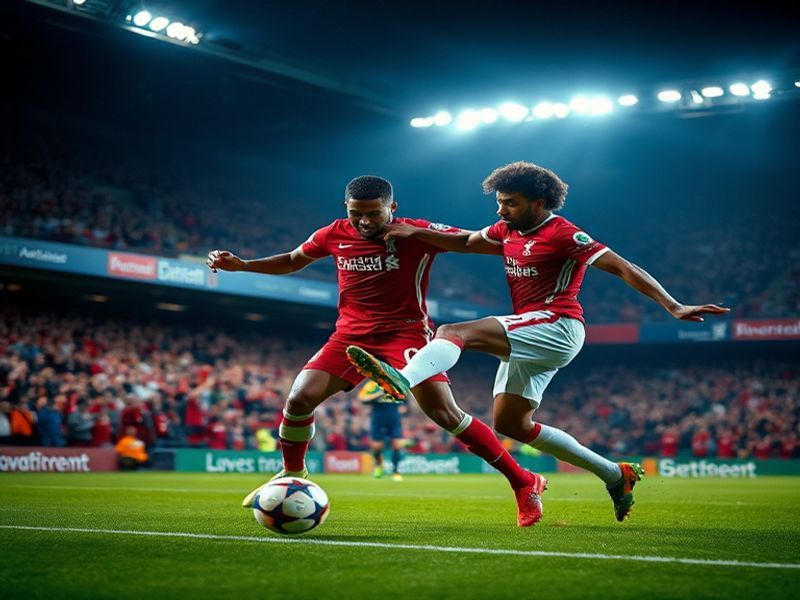
When PSG and Liverpool meet, the clash transcends sport. It represents a collision between two footballing philosophies: PSG’s star-studded, possession-based approach versus Liverpool’s high-pressing, transitional style. Historically, these teams have clashed in the Champions League group stages and knockout rounds, with each match carrying high stakes. The rivalry gained intensity during the 2017-18 season when Liverpool eliminated PSG 5-3 on aggregate in the Round of 16, a result that exposed PSG’s defensive frailties.
Key moments have shaped their encounters:
- 2017-18 Round of 16: Liverpool’s 3-1 win at Anfield, where Roberto Firmino’s brace and Mohamed Salah’s penalty set the tone for PSG’s elimination.
- 2018-19 Group Stage: A 2-1 PSG victory at Parc des Princes, featuring Neymar’s last-gasp winner, highlighted the unpredictability of their matches.
- 2020-21 Group Stage: A 1-1 draw at Anfield, where PSG’s defensive resilience matched Liverpool’s attacking prowess.
The tactical battle between managers has been equally compelling. Klopp’s gegenpressing system, which overwhelms opponents with relentless pressure, contrasts sharply with PSG’s structured buildup play under Enrique. When these styles collide, the result is often a tactical masterclass where individual brilliance—Mbappé’s speed, Salah’s precision—can decide the outcome.
The Global Cultural Impact of PSG vs Liverpool
The rivalry between PSG and Liverpool extends beyond the pitch, reflecting broader trends in football’s globalization. PSG embodies the rise of the “superclub”—a franchise built on celebrity, sponsorship, and digital engagement. Their matches are broadcast in over 200 countries, with viewership often surpassing domestic leagues. The club’s marketing strategy, leveraging stars like Mbappé and Messi, has turned Parc des Princes into a must-visit destination for football tourists.
Liverpool, meanwhile, represents the enduring appeal of tradition and community. Anfield’s “You’ll Never Walk Alone” anthem resonates globally, not as a corporate slogan but as a cultural touchstone. The club’s social media presence, with over 70 million followers, reflects a fanbase that values authenticity over commercialization. When these two clubs meet, they offer a clash of ideologies: one a product of modern capitalism, the other a testament to football’s soul.
Culturally, their matches have become events in their own right. PSG’s home games feature light shows and celebrity guests, while Liverpool’s European nights at Anfield evoke a cathedral-like atmosphere. The contrast highlights football’s dual identity in the 21st century—a sport both a spectacle and a passion.
What’s Next for Both Clubs?
As PSG and Liverpool look ahead, their trajectories diverge in intriguing ways. PSG’s next challenge is to finally secure the Champions League trophy, a failure that has haunted the club since its Qatari takeover. Luis Enrique’s appointment as manager signaled a shift toward pragmatism, balancing star power with defensive solidity. The signings of Vitinha and Manuel Ugarte in 2024 underscore their commitment to tactical discipline.
Liverpool, on the other hand, faces a period of transition. Klopp’s departure in 2024 left a void, with Arne Slot tasked with maintaining the club’s European competitiveness. The sale of key players like Virgil van Dijk and Alisson Becker in the coming years could reshape the squad, but Liverpool’s ability to develop young talent—such as Curtis Jones and Harvey Elliott—ensures they remain a force. The club’s focus on sustainability, both financially and environmentally, reflects a broader shift in football’s priorities.
The next chapter of the PSG-Liverpool rivalry will likely be defined by these transitions. Whether it’s Mbappé’s potential move to Real Madrid or Liverpool’s pursuit of a new generation of stars, the stakes remain high. One thing is certain: when these two teams meet, football’s global audience will be watching.
For fans of the game, the rivalry offers more than just entertainment—it’s a reflection of football’s evolving identity. PSG represents the future: a club built on spectacle and ambition. Liverpool embodies the past: a team rooted in history and tradition. Together, they create a narrative that transcends borders, languages, and cultures.