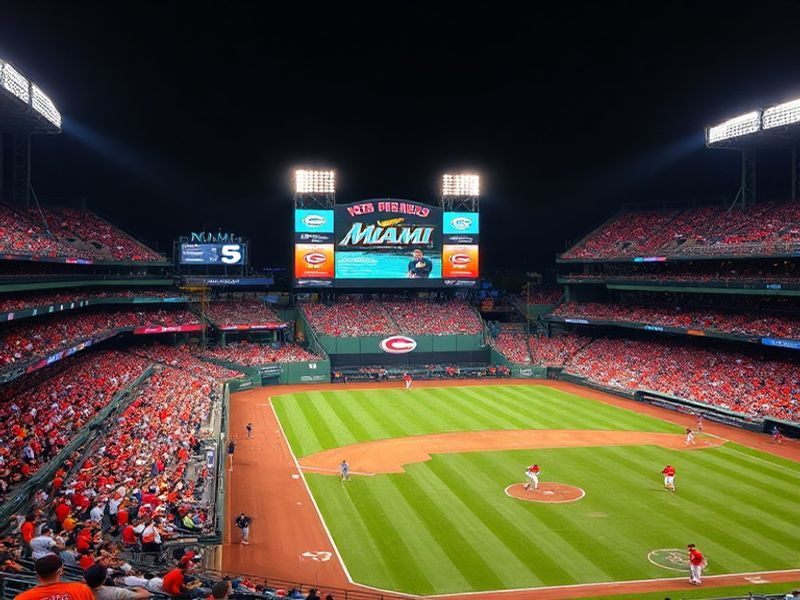
The Cincinnati Reds and Miami Marlins represent two distinct eras of Major League Baseball, yet their occasional clashes on the diamond carry more weight than simple wins and losses. This rivalry, though not as intense as others in the sport, offers a fascinating study in contrasts: tradition versus expansion, blue-collar grit versus sun-soaked modernity, and the evolution of baseball itself. While the Marlins have only been a franchise since 1993, the Reds trace their roots back to 1869, making them one of the oldest professional teams in any sport. Their rare meetings on the field become microcosms of baseball’s broader cultural and economic shifts.
The Marlins’ founding came during a period of aggressive MLB expansion, a response to the growing appetite for baseball in non-traditional markets. Miami, a vibrant multicultural hub, brought the game to a new audience. The Reds, rooted in the industrial Midwest, embodied baseball’s blue-collar identity. These differences aren’t just geographic—they reflect deeper narratives about how the sport adapts (or resists adaptation) to changing times. When these two teams meet, even in regular season play, they’re not just playing a game; they’re staging a quiet cultural dialogue.
Origins and Identity: Two Teams, Two Eras
The Cincinnati Red Stockings—precursors to today’s Reds—were the first fully professional baseball team, founded in the 19th century as the sport transitioned from amateur play to organized competition. Their legacy is one of consistency and tradition, anchored in the heartland of America. The Reds’ home, Great American Ball Park, sits along the Ohio River, a symbol of endurance and blue-collar pride. The franchise has seen dynasties, scandals, and reinventions, but its identity remains tied to Cincinnati’s working-class ethos and Midwestern values.
The Miami Marlins, by contrast, arrived in 1993 as an expansion team, born from the league’s desire to tap into the growing markets of the Sun Belt. Miami was not just a new city for baseball—it was a new kind of city. A global crossroads, where Spanish, English, and Creole blend on the streets and in the stands. The Marlins’ orange and black colors, their teal uniforms in early years, and their flashy, high-energy promotions reflected a break from tradition. They were designed to appeal to a younger, more diverse audience, one that viewed baseball not as a heritage sport but as entertainment.
This contrast in origins is evident in how each team markets itself. The Reds emphasize nostalgia, heritage games, and throwback uniforms. The Marlins lean into the vibrant, multicultural energy of Miami, with promotions aimed at Latino and Caribbean fans. When these teams meet, even in an interleague series, they bring these cultural identities onto the field with them.
Key Moments in Reds-Marlins History
While the Reds and Marlins have only met sporadically—due to their placement in different leagues—several games stand out as defining moments in their brief but intriguing rivalry.
- 1993: The Marlins’ First Visit to Cincinnati
The Marlins, in their inaugural season, faced the Reds in one of the most anticipated interleague matchups of the year. Though Cincinnati won the series, the games drew massive crowds, signaling the potential of Miami as a baseball market. The contrast between the old-school Reds and the upstart Marlins was on full display, both in the stands and on the field. - 2003: Florida’s World Series Run
The Marlins’ 2003 championship season included a pivotal series against the Reds in September. Florida’s young core, featuring Miguel Cabrera and Dontrelle Willis, dominated Cincinnati’s veteran lineup. The Marlins went on to win the World Series that year, while the Reds entered a prolonged rebuilding phase—a shift that mirrored the broader realignment of power in MLB. - 2012: A Rare Playoff Preview
Though it never materialized as a postseason matchup, the 2012 season saw both teams in playoff contention late in the year. Had the standings held, it would have marked the first time the Reds and Marlins faced off in the postseason. The moment never came, but the possibility highlighted how interleague play has blurred the lines between traditional rivalries.
Cultural and Economic Contrasts on the Field
The Reds and Marlins represent more than just different eras of baseball—they embody two distinct approaches to the game’s future. The Reds, with their historic ballpark and emphasis on player development, reflect a commitment to tradition. Their farm system has produced Hall of Famers like Barry Larkin and Ken Griffey Jr., and their fanbase remains deeply loyal, if occasionally frustrated by the team’s long championship drought.
The Marlins, meanwhile, have undergone multiple rebrandings and ownership changes, reflecting the volatility of modern sports franchises. Their stadium, LoanDepot Park, is a marvel of retractable roof design, catering to Miami’s tropical climate. The team’s approach to roster construction has often prioritized flexibility, with a willingness to trade stars for prospects—a strategy that has alienated some fans but kept the franchise competitive in a challenging market.
These differences extend beyond the diamond. The Reds’ broadcasts on Bally Sports Ohio emphasize analysis and history, while the Marlins’ broadcasts on Bally Sports Florida lean into the team’s multicultural appeal, often featuring Spanish-language commentary and cultural segments. When these teams meet, viewers aren’t just watching a game—they’re observing two philosophies of baseball collide.
The Future of the Reds-Marlins Rivalry
As MLB continues to realign its divisions and prioritize expanded playoffs, the likelihood of more frequent Reds-Marlins matchups increases. The introduction of the universal designated hitter and interleague play throughout the season means these teams could face each other annually, not just in sporadic interleague series.
For the Reds, the challenge is balancing tradition with modernization. The team’s recent investments in analytics and player development suggest a desire to remain competitive while honoring its heritage. For the Marlins, the task is building consistency in a market that demands both on-field success and off-field spectacle. Miami’s diverse fanbase expects a team that reflects its culture, while Cincinnati’s fans demand a team that reflects theirs.
If the rivalry deepens, it could become a fascinating case study in how baseball navigates its identity in the 21st century. Will the Reds’ blue-collar resilience win out? Or will the Marlins’ sun-soaked, multicultural approach define the future of the sport? One thing is certain: when these two teams meet, the game is never just about baseball.
As MLB continues to evolve, the Reds and Marlins may find themselves at the forefront of a new kind of rivalry—one that transcends geography and history, and instead reflects the broader cultural shifts reshaping the sport. Whether through the lens of economics, demographics, or pure entertainment, their matchups offer a window into where baseball has been and where it’s headed.