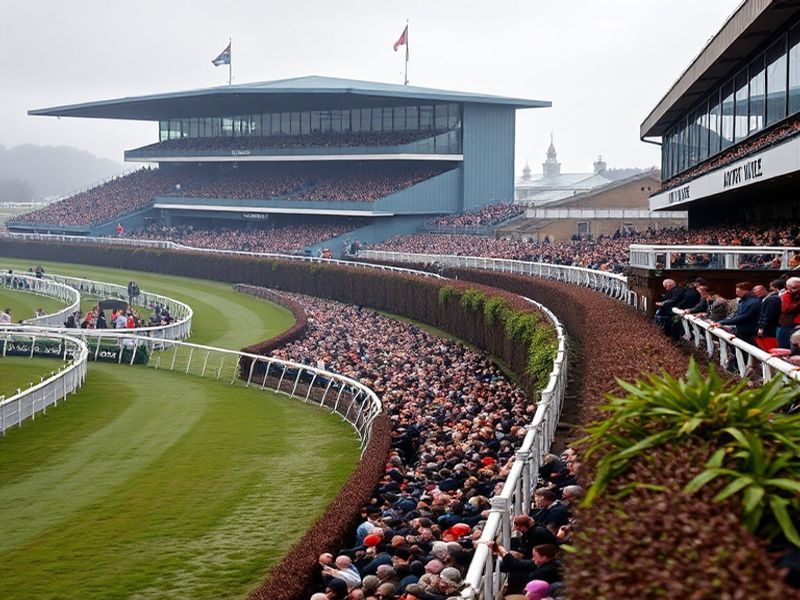
The Grand National is more than just a horse race; it is a cultural institution that has woven itself into the fabric of British identity while captivating audiences worldwide. Held annually at Aintree Racecourse near Liverpool, England, this grueling steeplechase has been a fixture on the sporting calendar since 1839. Its 4.5-mile course, featuring 30 formidable fences including the infamous Becher’s Brook and The Chair, tests both horse and rider to their absolute limits. Yet, beyond the sheer athleticism on display, the Grand National carries a legacy of drama, heartbreak, and triumph that resonates far beyond the confines of the racetrack.
What makes the Grand National unique is its blend of tradition and unpredictability. Unlike many sports where outcomes can be statistically analyzed, the Grand National thrives on chaos. Favorites often fall, long shots defy the odds, and underdogs become legends in a single afternoon. This unpredictability is part of its allure, drawing over 600 million viewers from more than 140 countries each year. It is a spectacle that unites families, friends, and even strangers, all united by the shared thrill of watching history unfold.
The History and Evolution of a Sporting Legend
The Grand National was first run in 1839, though its origins trace back to informal races held at Aintree as early as the late 18th century. The race was conceived by William Lynn, a hotel owner who leased the land for the course, and the first official running was won by a horse named Lottery. The early years were marked by rudimentary facilities and a far less structured approach to the sport, but the race quickly gained traction due to its daring jumps and the sheer difficulty of the course.
By the late 19th century, the Grand National had cemented its place in the public consciousness. It survived two World Wars, during which the race was temporarily relocated, and adapted to changing social attitudes, including the introduction of women as jockeys in the 1970s. The 20th century also saw technological advancements, from improved safety measures to the advent of television broadcasting, which transformed the race into a global event. Today, it stands as a testament to the endurance of tradition in an era of rapid change.
Defining Moments in Grand National History
The Grand National has produced countless unforgettable moments, but a few stand out as milestones in its storied history:
- Red Rum’s Triple Triumph (1973-1974-1977): No horse is more synonymous with the Grand National than Red Rum, the only three-time winner. Trained by Ginger McCain and ridden by jockey Brian Fletcher, Red Rum’s 1973 victory began a legend that endures to this day. His 1974 win, by 25 lengths, is often cited as one of the most dominant performances in steeplechasing history. Red Rum’s final victory in 1977, at the age of 12, cemented his status as an icon of the sport.
- Foinavon’s Unlikely Victory (1967): One of the greatest underdog stories in racing history, Foinavon won at odds of 100/1 after a pile-up at the 23rd fence left only a handful of horses in contention. Jockey John Buckingham and Foinavon, a 13.2-hand pony, navigated the chaos to claim an improbable victory.
- Arkle’s Dominance (1964-1966): Often regarded as one of the greatest steeplechasers of all time, Arkle won the Grand National three times in a row. His 1964 victory, where he carried top weight of 12 stone, was a display of sheer class and strength that set a new benchmark for the sport.
- Tiger Roll’s Back-to-Back Wins (2018-2019): In the modern era, Tiger Roll became the first horse since Red Rum to win back-to-back Grand Nationals. Trained by Gordon Elliott and ridden by Davy Russell, Tiger Roll’s victories were a nod to the enduring appeal of the race, proving that even in an age of data and analytics, heart and instinct still matter.
The Cultural Impact: More Than Just a Race
The Grand National’s influence extends far beyond the racetrack. It is a cultural touchstone that reflects broader societal trends and attitudes. For many in the UK, it is a day of national celebration, akin to the FA Cup Final or Wimbledon. Offices empty, pubs fill to capacity, and families gather around televisions to watch the race unfold. The event has even inspired its own lexicon, with phrases like “Becher’s Brook moment” entering everyday language to describe a sudden and unexpected turn of events.
Globally, the Grand National has become a symbol of British eccentricity and tradition. It is broadcast in over 140 countries, from the United States to Australia, and attracts a diverse audience that includes seasoned racing enthusiasts and casual viewers alike. The race’s international appeal is partly due to its accessibility—it is one of the few sporting events that can be enjoyed by both experts and novices. The drama of the jumps, the unpredictability of the outcome, and the sheer spectacle of the event make it a compelling watch for anyone, regardless of their familiarity with horse racing.
Yet, the Grand National is not without its controversies. Animal welfare concerns have long been a subject of debate, particularly regarding the safety of the fences and the welfare of the horses. In recent years, organizers have implemented stricter regulations, including modifications to the course and increased veterinary oversight, to address these concerns. The race’s organizers have also worked to promote responsible gambling and ensure that the event remains inclusive and family-friendly.
Why the Grand National Endures
The Grand National’s longevity can be attributed to several key factors. First, its unique blend of tradition and unpredictability sets it apart from other sporting events. Unlike many modern sports, which are increasingly dominated by analytics and strategy, the Grand National retains an element of pure chance. This unpredictability is what keeps fans on the edge of their seats, year after year.
Second, the race has successfully adapted to changing times. While it remains rooted in tradition, it has embraced modernity in ways that enhance rather than diminish its appeal. For example, the introduction of virtual reality experiences and interactive betting platforms has brought the race to new audiences. Social media, too, has played a role in keeping the Grand National relevant, with fans sharing their excitement and disappointment in real time.
Finally, the Grand National has a way of capturing the imagination in ways that few other events can. It is a race where underdogs can rise to the occasion, where history is made in an instant, and where the human spirit is tested alongside that of the horses. The stories that emerge from Aintree—of triumph, heartbreak, and sheer determination—are what make the Grand National more than just a sporting event. It is a narrative that resonates with people across generations and cultures.
As the Grand National continues to evolve, it faces both challenges and opportunities. The rise of esports and other digital entertainment options presents competition for traditional sports, but the Grand National’s unique blend of history, drama, and spectacle ensures that it remains a cornerstone of the sporting calendar. Whether you are a lifelong fan or a first-time viewer, the Grand National offers an experience that is as unforgettable as it is unpredictable.
For those looking to explore more about the world of horse racing and its cultural significance, our Sports section offers a deeper dive into the stories and trends shaping the industry today.