Fireball Meteor: Bright Streaks and Global Reactions Explained
“`html
Fireball Meteor: When the Sky Puts on a Show
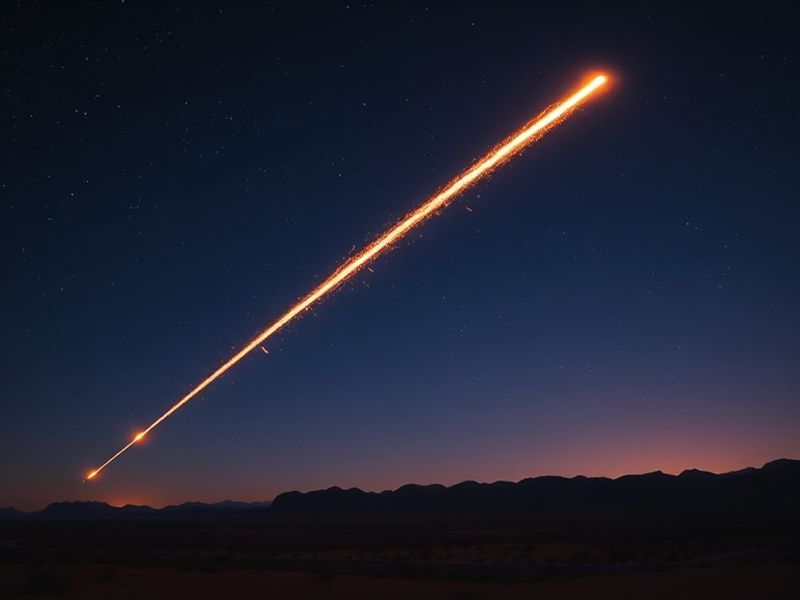
The night sky has always fascinated humanity, serving as a canvas for both natural wonders and imagined stories. Among these celestial events, fireball meteors stand out as brief but unforgettable performances. These bright, often colorful streaks of light occur when meteoroids—small space rocks—enter Earth’s atmosphere at high speeds, creating a dazzling display as they burn up.
Unlike ordinary shooting stars, fireball meteors shine brighter than Venus in the night sky. Their appearance can spark wonder, fear, or even scientific curiosity, depending on where and when they are seen. From remote deserts to bustling cities, these cosmic visitors remind us of the dynamic relationship between Earth and the universe beyond.
What Exactly Is a Fireball Meteor?
A fireball meteor is officially defined by the International Astronomical Union as a meteor brighter than magnitude -4, which is roughly the brightness of Venus as seen from Earth. These meteors are not uncommon, but their visibility depends on several factors, including size, speed, and the observer’s location.
Most fireball meteors originate from meteoroids no larger than a basketball, though some can be much bigger. When these objects enter the atmosphere at speeds exceeding 25 miles per second, friction causes them to heat up and glow intensely. This process often produces vibrant colors—green from magnesium, yellow from sodium, and red from nitrogen—painting the sky in fleeting strokes of light.
The study of fireball meteors falls under the broader field of meteoritics, a science that blends astronomy, geology, and atmospheric physics. Researchers track these events to learn more about the composition of our solar system and the origins of the materials that make up Earth. Organizations like the International Meteor Organization collect data from amateur astronomers worldwide to build a global database of fireball sightings.
Historical Sightings and Cultural Interpretations
Throughout history, fireball meteors have been interpreted through the lens of culture and myth. Ancient civilizations often saw these celestial events as omens or messages from the gods. In Chinese folklore, meteors were sometimes associated with dragons or divine interventions. Meanwhile, in medieval Europe, they were often seen as harbingers of war or natural disasters.
One of the most famous historical fireball events occurred in 1492 near the town of Ensisheim in modern-day France. A meteorite landed in a wheat field, and the local authorities interpreted it as a divine sign. The stone was taken to the church and displayed as a sacred object, drawing pilgrims from across the region. This event is one of the earliest documented cases of a meteorite being preserved and revered.
In more recent history, the 1908 Tunguska event in Siberia remains one of the most powerful fireball-related incidents. The explosion, which flattened over 800 square miles of forest, was likely caused by a meteoroid or comet fragment. The lack of an impact crater has fueled speculation and scientific debate for over a century. Some indigenous Evenki people in the region spoke of a “sky fire” that burned the land, embedding the event in local oral traditions.
Modern-Day Fireballs and the Age of Social Media
The digital age has transformed how we experience and document fireball meteors. In the past, sightings were often limited to individual accounts or local news reports. Today, smartphones and social media allow for real-time sharing of these events, turning fleeting moments into global phenomena.
Consider the case of the 2013 Chelyabinsk meteor, which exploded over Russia with a force equivalent to 30 Hiroshima-sized atomic bombs. The event was captured on countless dashcams and security cameras, making it one of the most documented fireballs in history. Videos of the meteor’s bright flash and subsequent shockwave spread rapidly online, sparking both awe and concern. The incident led to renewed interest in tracking near-Earth objects and assessing potential risks from space debris.
Social media platforms like Twitter and Reddit have become hubs for sharing fireball sightings. Amateur astronomers and casual observers alike post photos and videos, often tagging organizations like NASA or the American Meteor Society to help verify their observations. This crowdsourced approach has expanded the scientific community’s ability to monitor and study these events.
Where and When to Spot a Fireball Meteor
Fireball meteors can occur at any time, but certain conditions increase the chances of witnessing one. The best opportunities arise during meteor showers, such as the Perseids in August or the Geminids in December. During these events, Earth passes through debris trails left by comets, resulting in higher meteor activity. While most meteors during these showers are faint, fireballs can still appear and create stunning visuals.
Location plays a crucial role in visibility. Urban areas with high light pollution often obscure meteor sightings, so rural or remote locations provide the clearest views. High-altitude regions, such as the Atacama Desert in Chile or the mountains of Colorado, are prime spots for stargazing and meteor watching. Clear, moonless nights also enhance the experience, as the dark sky allows fainter meteors to stand out.
For those eager to track fireballs, several tools and resources are available. Websites like NASA’s Fireball Network provide real-time data on recent sightings. Mobile apps, such as SkySafari or Star Walk, can alert users to upcoming meteor showers or fireball events based on their location. Joining local astronomy clubs or attending star parties can also offer guidance and camaraderie for enthusiasts.
Fireballs and Scientific Research
Beyond their visual appeal, fireball meteors contribute valuable data to scientific research. When a fireball is bright enough and its trajectory is well-documented, researchers can attempt to recover any surviving meteorites. These space rocks provide direct samples of other worlds, offering clues about the formation of the solar system and the potential for life elsewhere.
The process of recovering meteorites from fireballs involves a combination of luck and precision. Networks of all-sky cameras, such as the one operated by the SETI Institute, track fireballs in real time. By triangulating the meteor’s path, scientists can predict where any surviving fragments might land. Expeditions to these “strewn fields” often involve meticulous searches through terrain like deserts or frozen landscapes, where meteorites are easier to spot.
One notable example is the recovery of the Sutter’s Mill meteorite in California in 2012. This carbonaceous chondrite, which contained organic compounds, provided insights into the chemistry of the early solar system. Such discoveries highlight the importance of fireballs not just as spectacles, but as windows into the past.
Conclusion: A Reminder of Our Place in the Universe
Fireball meteors are fleeting reminders of the dynamic and sometimes unpredictable nature of our universe. They connect us to ancient traditions of stargazing while also pushing the boundaries of modern science. Whether viewed as omens, scientific curiosities, or simply breathtaking displays, these celestial events continue to captivate people around the world.
As technology advances and our understanding of space deepens, the study of fireball meteors will likely yield even more discoveries. From the recovery of meteorites to the tracking of near-Earth objects, each event offers a chance to learn more about the cosmos and our place within it. So the next time you gaze at the night sky, remember: the universe is always putting on a show, and sometimes it’s as close as your own backyard.