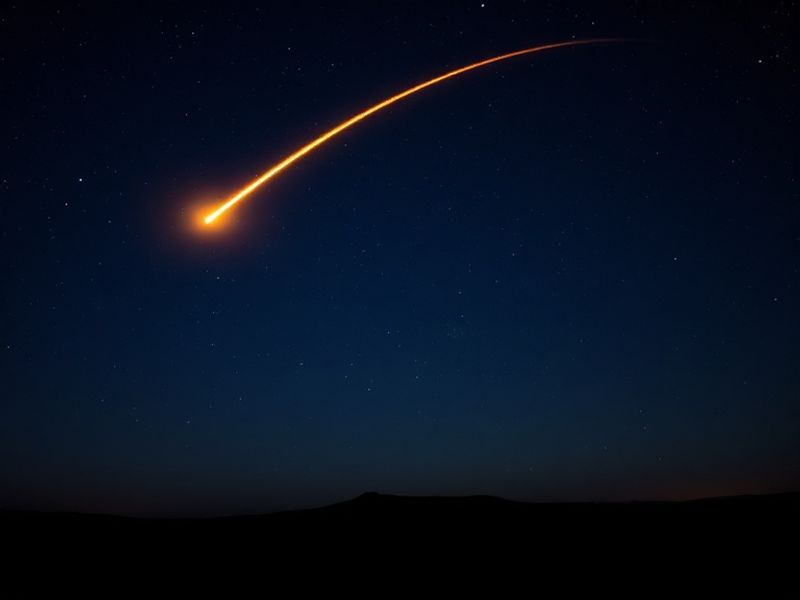
Fireball Meteor Explained: What You Need to Know About These Spectacular Sky Events
“`html
Fireball Meteor: What Happens When Space Rocks Light Up the Sky
The universe has a way of reminding us how small we are. A fireball meteor streaking across the night sky is one of those moments—an unexpected, dazzling display that can turn an ordinary evening into something unforgettable. These celestial visitors aren’t just beautiful; they carry stories of the early solar system, clues about Earth’s formation, and sometimes even fragments that survive the journey to the ground.
Unlike the faint streaks of regular meteors, fireballs are brighter, often rivaling the moon in luminosity. They captivate astronomers and casual stargazers alike, sparking both scientific curiosity and public wonder. But what exactly turns a space rock into a fireball? And why do some of them survive the plunge through Earth’s atmosphere?
The Science Behind Fireball Meteors: Why Some Rocks Burn Brighter
A fireball meteor occurs when a meteoroid—typically a fragment of an asteroid or comet—enters Earth’s atmosphere at high velocity. The intense friction and pressure cause the rock to heat up rapidly, glowing white-hot as it burns through the sky. The brightness threshold for a meteor to be classified as a fireball is magnitude -4, which means it must shine at least as brightly as Venus in the night sky.
Several factors influence whether a meteor becomes a fireball:
- Size and composition: Larger meteoroids, typically over a meter in diameter, are more likely to produce fireballs. Dense, metallic meteoroids survive longer in the atmosphere, creating longer-lasting trails.
- Entry velocity: Meteors traveling faster than 20 kilometers per second generate more heat and light, increasing the chances of a fireball event.
- Angle of entry: Steeper angles cause more rapid deceleration and heating, while shallower angles may allow the meteoroid to skip off the atmosphere—if it survives.
- Atmospheric density: Higher altitudes with thinner air reduce drag, allowing the meteoroid to maintain speed and generate more heat.
When conditions align, the result is a breathtaking spectacle—a sudden, brilliant flare that can cast shadows and leave a glowing trail that lingers for seconds or even minutes. Some fireballs even produce sonic booms, a rare but unmistakable sign that a piece of space rock has reached lower altitudes.
From Sky to Ground: When Fireballs Deliver Meteorites
Not all fireballs are fleeting. Some survive the fiery descent and land on Earth’s surface as meteorites. These remnants are invaluable to scientists, offering pristine samples of material from the early solar system. The survival of a meteoroid depends largely on its size, structure, and composition.
Smaller meteoroids often disintegrate completely, leaving behind only dust and faint ionization trails. Larger, more cohesive rocks, particularly those made of dense metals like iron and nickel, have a better chance of reaching the ground. The famous Chelyabinsk meteor, which exploded over Russia in 2013, was a fireball so powerful it released energy equivalent to 30 Hiroshima atomic bombs. While most of its mass burned up, shockwaves shattered windows and injured over 1,000 people. Yet, fragments of the original meteoroid were later recovered, providing scientists with critical data.
Recovering meteorites is no simple task. Search teams often rely on eyewitness reports, weather radar data, and even crowdsourced footage to triangulate potential landing sites. The All-sky camera networks operated by organizations like NASA’s Meteoroid Environment Office track fireballs across the globe, helping scientists predict where debris might land.
The Broader Implications: Fireballs as Windows into the Cosmos
Fireball meteors are more than just visual marvels; they are scientific goldmines. Each event offers a glimpse into the dynamic processes shaping our solar system. By analyzing the light spectra of fireballs, researchers can determine the chemical composition of distant asteroids without ever leaving Earth. This data helps refine models of planetary formation and migration, including theories about how water and organic molecules—key ingredients for life—may have arrived on early Earth.
The study of fireballs also plays a role in planetary defense. Objects capable of producing fireballs large enough to survive atmospheric entry pose potential impact risks. While the odds of a catastrophic event are low, organizations like NASA’s Planetary Defense Coordination Office monitor near-Earth objects (NEOs) to assess threats. Fireballs serve as real-world tests of detection systems, allowing scientists to calibrate instruments designed to spot incoming threats.
Beyond their scientific value, fireballs foster public engagement with astronomy. Viral videos of fireball sightings often spark renewed interest in space exploration, inspiring people to learn more about the cosmos. This cultural connection is vital in an era where space science can sometimes feel distant or abstract. Fireballs remind us that the universe is not a static backdrop but an active, ever-changing environment.
How to Observe and Report Fireball Meteors
For those eager to witness a fireball firsthand, timing and location are key. Fireballs are most frequently observed during major meteor showers like the Perseids in August or the Geminids in December, when Earth passes through dense streams of cometary debris. However, sporadic fireballs—random meteors not associated with any shower—can occur at any time.
If you spot a fireball, here’s what you can do to contribute to science:
- Note the time and location: Record the exact date, time, and your geographic coordinates. Even approximate details can help researchers.
- Observe the path: Try to trace the fireball’s trajectory across the sky. Was it moving from north to south? Did it break apart?
- Estimate brightness: Compare the fireball’s brightness to known objects, like the moon or Venus, to give researchers a sense of its magnitude.
- Check for sounds: Did you hear a rumble or explosion? Sonic booms often follow large fireballs.
- Report it: Submit your observations to organizations like the American Meteor Society or the International Meteor Organization (IMO). Many countries also have dedicated fireball reporting networks.
Smartphone apps and dashcams have made fireball reporting more accessible than ever. A well-placed security camera or dashcam footage can provide crucial data, including the fireball’s precise trajectory and fragmentation points. These amateur contributions have led to the recovery of several meteorites in recent years.
Conclusion: A Reminder of Our Place in the Universe
Fireball meteors are fleeting but profound. They connect us to the ancient past, offering tangible links to the materials that built our solar system. They challenge our understanding of planetary dynamics and inspire future generations of scientists and explorers. And perhaps most importantly, they remind us of the beauty and unpredictability of the cosmos—a universe that continues to surprise, even in our modern age.
Next time you look up at the night sky, remember that space is not as far away as it seems. It’s right here, burning brightly in our atmosphere, if only for a moment. Keep your eyes peeled. You never know when the next fireball will light up the sky.