Fireball Meteor: Science, History, and Global Reactions
“`html
Fireball Meteor: Celestial Spectacles and Global Reactions
The night sky has long captivated human imagination, serving as a canvas for stories, myths, and scientific inquiry. Among the most dramatic celestial events is the fireball meteor—a phenomenon that transforms a fleeting streak of light into a moment of collective awe. These fiery visitors from space, often called bolides when they explode in the atmosphere, have left their mark on cultures worldwide, blending science with legend.
Fireball meteors are not merely scientific curiosities; they are cultural touchstones. Ancient civilizations interpreted these dazzling displays as omens, divine messages, or battles between celestial beings. In modern times, they remind us of the universe’s vastness and our place within it. This article explores the science behind fireball meteors, their historical significance, and how they continue to inspire global fascination.
The Science Behind Fireball Meteors
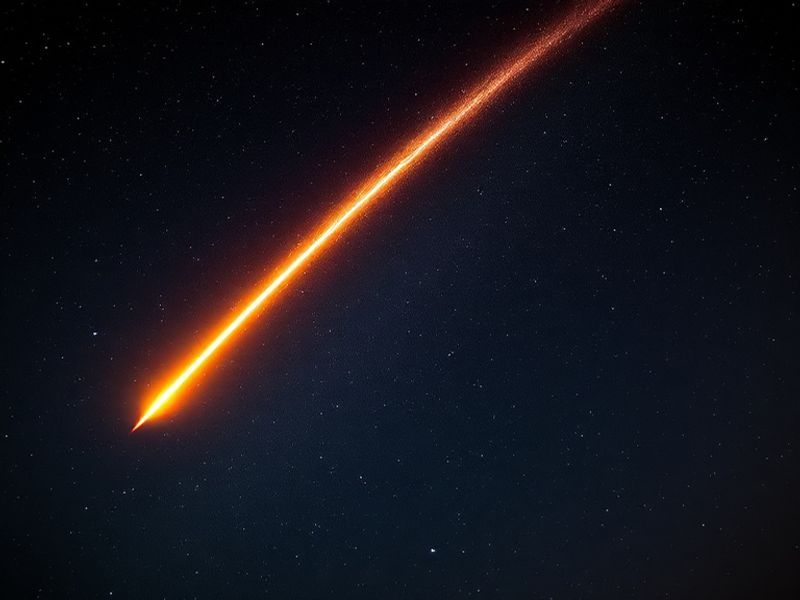
A fireball meteor is a particularly bright meteor, typically brighter than the planet Venus as seen in the night sky. These meteors originate from space debris—often fragments of asteroids or comets—that enter Earth’s atmosphere at high velocities. As they plummet through the air, friction heats them to thousands of degrees, causing them to glow intensely before either burning up or, in some cases, exploding in a dramatic burst known as a bolide.
The speed of these meteors can reach up to 71 kilometers (44 miles) per second, making them one of the fastest natural phenomena on Earth. Most fireballs disintegrate high in the atmosphere, but occasionally, larger fragments survive the journey and reach the ground as meteorites. These remnants provide scientists with invaluable samples of extraterrestrial material, offering clues about the early solar system.
According to NASA’s Center for Near Earth Object Studies, fireball events occur almost daily, though many go unnoticed. The agency operates a network of cameras to track these events, helping researchers understand their frequency and trajectory. For instance, the All-sky Fireball Network records hundreds of fireballs each year, contributing to a growing database of celestial activity.
Notable Fireball Events in Recent History
Some fireball meteors have left an indelible mark on history due to their size, brightness, or impact. One of the most famous recent events occurred over Chelyabinsk, Russia, in February 2013. The meteor, estimated to be about 20 meters (65 feet) in diameter, exploded in the atmosphere with the force of approximately 500,000 tons of TNT. The blast shattered windows across the region and injured over 1,500 people, primarily from flying glass. The Chelyabinsk event was a stark reminder of the potential hazards posed by near-Earth objects.
Another significant event took place over the Pacific Ocean in December 2018. A fireball meteor exploded with an energy release equivalent to 173 kilotons of TNT, making it one of the largest such events in the past three decades. Unlike Chelyabinsk, this meteor detonated over open water, minimizing its impact on human populations but highlighting the frequency of such occurrences.
In 1908, the Tunguska event in Siberia remains one of the most mysterious fireball-related incidents. A massive explosion, likely caused by a comet or asteroid fragment, flattened over 2,000 square kilometers (770 square miles) of forest. The lack of a crater has fueled speculation and scientific debate for over a century, adding to the event’s enigmatic legacy.
Cultural Interpretations of Fireball Meteors
Before the advent of modern astronomy, fireball meteors were often shrouded in myth and superstition. Many cultures viewed them as omens, either benevolent or ominous. In ancient China, for example, meteors were sometimes seen as celestial arrows shot by gods to punish wrongdoers. The Book of Song, a historical text from the 5th century, describes meteors as “stars falling like rain,” a phenomenon believed to foretell significant political changes.
In Norse mythology, fireballs were associated with the god Thor, who wielded lightning and thunder. The Vikings interpreted these fiery streaks as Thor’s chariot racing across the sky, a sign of his power and protection. Similarly, in Hindu tradition, meteors are sometimes linked to the god Indra, who wields a thunderbolt known as the Vajra.
Indigenous cultures around the world also developed their own interpretations. The Aboriginal people of Australia, for instance, saw fireballs as the torches of ancestral beings traversing the night sky. In Native American traditions, some tribes viewed meteors as the souls of the deceased, while others saw them as messages from the spirit world.
Modern Myths and Pop Culture
In contemporary times, fireball meteors have transitioned from supernatural phenomena to subjects of scientific study—and pop culture fascination. Movies like Armageddon and Deep Impact have dramatized the threat of asteroid impacts, while television shows and documentaries often feature fireballs as key plot points or educational segments.
Social media has amplified the public’s engagement with fireball events. When a bright meteor streaks across the sky, eyewitnesses often share videos and photos online, creating a global conversation. In 2021, a fireball over Norway was captured by multiple cameras, sparking widespread discussion and even tourist interest in the area where fragments might have landed.
Fireball Meteors and Scientific Research
Fireball meteors are more than just dazzling spectacles; they are windows into the early solar system. Most meteoroids originate from the asteroid belt between Mars and Jupiter, where collisions between space rocks create fragments that eventually find their way to Earth. By studying these fragments, scientists can learn about the composition of asteroids and the conditions that prevailed during the solar system’s formation.
NASA and other space agencies actively monitor near-Earth objects (NEOs) to assess potential threats. Fireball events provide real-time data on the frequency and size of meteoroids entering Earth’s atmosphere. For example, the Planetary Defense Coordination Office uses this information to refine models of asteroid impacts and develop strategies for planetary defense.
The study of fireball meteors also contributes to our understanding of Earth’s atmosphere. When a meteoroid enters the atmosphere, it heats up and ionizes the air around it, creating a trail of glowing plasma. This trail can be analyzed to study atmospheric conditions at high altitudes, including wind patterns and chemical composition.
How to Observe Fireball Meteors
For amateur astronomers and skywatchers, fireball meteors offer an accessible way to engage with astronomy. Unlike deep-sky objects that require telescopes, fireballs are visible to the naked eye. Here are some tips for observing these celestial events:
- Find a dark sky location: Light pollution from cities can obscure meteors, so head to rural areas or designated dark sky parks.
- Check the weather: Clear skies are essential for meteor watching. Use weather apps or websites to plan your observation.
- Use a meteor tracking app: Apps like SkyView or Star Walk can help you identify constellations and predict meteor showers.
- Be patient: Fireballs are unpredictable, so allow time for your eyes to adjust to the darkness and keep an eye on the sky.
- Report sightings: Organizations like the American Meteor Society (AMS) collect reports from eyewitnesses to improve tracking and research.
The Future of Fireball Meteor Research
As technology advances, so too does our ability to study fireball meteors. New detection methods, including satellite-based sensors and ground-based radar systems, are enhancing our understanding of these events. For example, the European Space Agency’s (ESA) Fireball Recovery and InterPlanetary Observation Network (FRIPON) uses a network of cameras across Europe to track fireballs and recover meteorites.
Looking ahead, missions like NASA’s Double Asteroid Redirection Test (DART) aim to test technologies for deflecting asteroids that pose a threat to Earth. While DART’s primary target is the asteroid Didymos, the insights gained could inform future strategies for mitigating the risks posed by fireball meteors and larger impactors.
The study of fireball meteors also intersects with the search for extraterrestrial life. Meteorites found on Earth sometimes contain organic compounds, including amino acids, the building blocks of life. By analyzing these compounds, scientists hope to uncover clues about the origins of life on Earth and the potential for life elsewhere in the universe.
Fireball meteors remind us that Earth is part of a dynamic and ever-changing cosmos. They bridge the gap between ancient myths and modern science, between awe-inspiring spectacle and rigorous research. As we continue to explore the night sky, these fiery visitors will undoubtedly inspire future generations to look up and wonder.