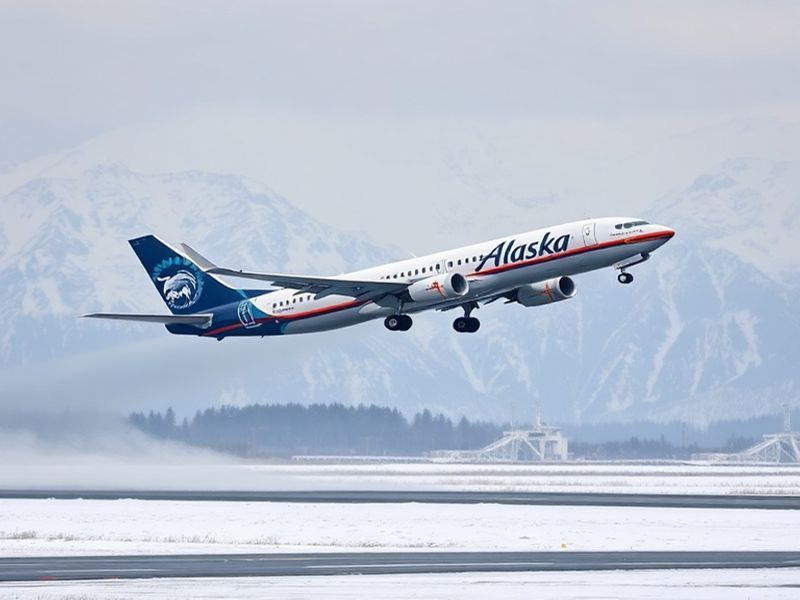
How Alaska Air Group Balances Growth and Customer Service in Aviation
“`html
Alaska Air Group: A Steady Climb in the Global Aviation Landscape
For decades, Alaska Air Group has carved out a reputation as a resilient and customer-focused airline, operating under two distinct brands: Alaska Airlines and Horizon Air. While its footprint is strongest in the western United States, the company’s influence extends far beyond regional travel, reflecting broader trends in airline consolidation, customer service innovation, and sustainable aviation. In an industry often marked by volatility, Alaska Air Group has maintained a steady trajectory, earning recognition for operational reliability and employee engagement.
Founded in 1932 as McGee Airways in Anchorage, Alaska, the airline began as a small bush operation serving remote communities. Over time, it evolved into a major carrier, merging with other regional airlines and expanding its network across North America. Today, Alaska Airlines flies to more than 120 destinations, including international routes to Mexico, Canada, and Costa Rica, positioning itself as both a domestic powerhouse and a gateway to cross-border travel.
Beyond the Flight Path: The Culture of Customer Care
What sets Alaska Air Group apart is not just its route map, but its long-standing commitment to customer experience. In an era where airline loyalty often hinges on price and convenience, Alaska has prioritized service quality, earning top rankings in industry surveys. A 2023 J.D. Power study ranked Alaska Airlines highest in customer satisfaction among traditional carriers in North America for the 16th consecutive year. This achievement reflects a corporate culture that values frontline employees as much as financial performance.
The airline’s approach to customer care is deeply embedded in its operational philosophy. Flight attendants and ground crews receive extensive training not only in safety protocols but also in conflict resolution and personalized service. This investment in human capital has translated into tangible results. According to internal reports, the airline’s Net Promoter Score—a key metric of customer loyalty—consistently outpaces industry averages. Such consistency builds trust, a rare commodity in an industry plagued by delays and cancellations.
Alaska’s reputation for service extends to its digital platforms as well. The airline’s mobile app is frequently cited for its intuitive design and functionality, allowing travelers to manage bookings, check flight statuses, and even access real-time updates via SMS. In an increasingly digital travel ecosystem, this focus on user experience has helped Alaska maintain relevance among younger, tech-savvy passengers who prioritize seamless interactions over legacy brand loyalty.
A Strategic Balance: Growth and Sustainability
Alaska Air Group’s growth strategy has been deliberate, avoiding the aggressive expansion seen at some larger competitors. Instead, it has focused on strengthening its core network while selectively adding international routes. A notable example is its partnership with American Airlines, which allows passengers to book connecting flights under a single ticket, enhancing convenience for travelers moving between the U.S. and Latin America.
The airline’s fleet modernization efforts further underscore its commitment to sustainability and efficiency. Alaska Airlines was an early adopter of Boeing’s 737 MAX, a next-generation aircraft designed to reduce fuel consumption and emissions. By 2026, the airline plans to operate a fleet composed entirely of Boeing 737s, streamlining maintenance and training while lowering its carbon footprint. This transition aligns with global aviation trends, as airlines face increasing pressure to adopt greener practices.
Yet, growth has not come without challenges. Like many carriers, Alaska has navigated labor shortages, rising fuel costs, and supply chain disruptions. The airline responded by investing in pilot and technician training programs, ensuring a steady pipeline of skilled workers. It also implemented dynamic pricing models to offset fuel price volatility, a strategy that has helped stabilize revenue streams.
The Human Factor: Employees as the Backbone of Success
Behind every successful airline is a workforce that operates with pride and purpose. Alaska Air Group’s employee retention rates are notably high, a testament to its inclusive culture and competitive benefits. The company offers profit-sharing programs, comprehensive healthcare, and retirement plans, fostering loyalty among its 22,000 employees. This approach contrasts with the industry norm, where turnover rates can exceed 10% annually.
Union relations have also played a pivotal role in the airline’s stability. Alaska Airlines has maintained constructive partnerships with unions representing pilots, flight attendants, and mechanics. These collaborations have resulted in mutually beneficial agreements that prioritize both worker well-being and operational efficiency. For instance, the airline’s pilot union ratified a contract in 2022 that included wage increases and improved work-life balance provisions, reflecting a shared commitment to long-term sustainability.
Employee engagement extends to community outreach. Alaska Airlines actively participates in local and global initiatives, from supporting food banks in its home state to partnering with organizations like the Make-A-Wish Foundation. These efforts not only enhance the airline’s public image but also reinforce a sense of purpose among its workforce. In a labor market where purpose-driven employment is increasingly valued, this alignment between corporate values and social responsibility sets Alaska apart.
Looking Ahead: Navigating the Future of Aviation
As Alaska Air Group charts its course for the next decade, several key trends will shape its trajectory. The first is the rise of sustainable aviation fuels (SAFs). The airline has committed to reducing its carbon emissions by 50% by 2050, a goal that will require significant investment in SAFs and other green technologies. While SAFs remain costly, government incentives and industry collaborations are gradually making them more accessible.
Another trend is the evolving role of regional carriers like Horizon Air. As major airlines focus on long-haul routes, regional partners play a crucial role in connecting smaller cities to global hubs. Horizon Air, with its fleet of turboprop aircraft, serves destinations that might otherwise lack direct service, ensuring that rural communities remain connected to broader economic networks.
The final trend is the increasing importance of digital transformation. Alaska Airlines has already made strides in automation, AI-driven customer service, and data analytics to personalize travel experiences. Moving forward, the airline is exploring the use of blockchain for secure and transparent ticketing systems, as well as augmented reality for maintenance training. These innovations could redefine the passenger experience while improving operational efficiency.
Despite these opportunities, challenges loom large. Geopolitical tensions, fluctuating oil prices, and regulatory changes all pose risks to the airline’s growth. Yet, Alaska Air Group’s history of resilience suggests it is well-equipped to adapt. By balancing tradition with innovation, the airline has positioned itself not just as a regional carrier, but as a global player in the aviation industry.
For travelers, Alaska Airlines offers more than just transportation—it provides a model of how consistency, care, and strategic foresight can create lasting value. As the world continues to shrink through air travel, companies like Alaska Air Group remind us that the most successful journeys are those built on solid foundations, not fleeting trends.
Key Takeaways
- Customer-Centric Approach: Alaska Airlines has maintained top rankings in customer satisfaction through a focus on service quality and employee training.
- Strategic Growth: The airline’s deliberate expansion and fleet modernization efforts align with global trends in sustainability and efficiency.
- Employee Engagement: High retention rates and strong union relations highlight the airline’s commitment to its workforce.
- Future Challenges: Adapting to sustainable aviation fuels, digital transformation, and geopolitical risks will define the airline’s next chapter.
For those interested in exploring how airlines like Alaska adapt to global trends, our travel section offers deeper insights into aviation’s evolving landscape. Additionally, our business coverage examines the financial strategies that underpin industry resilience.