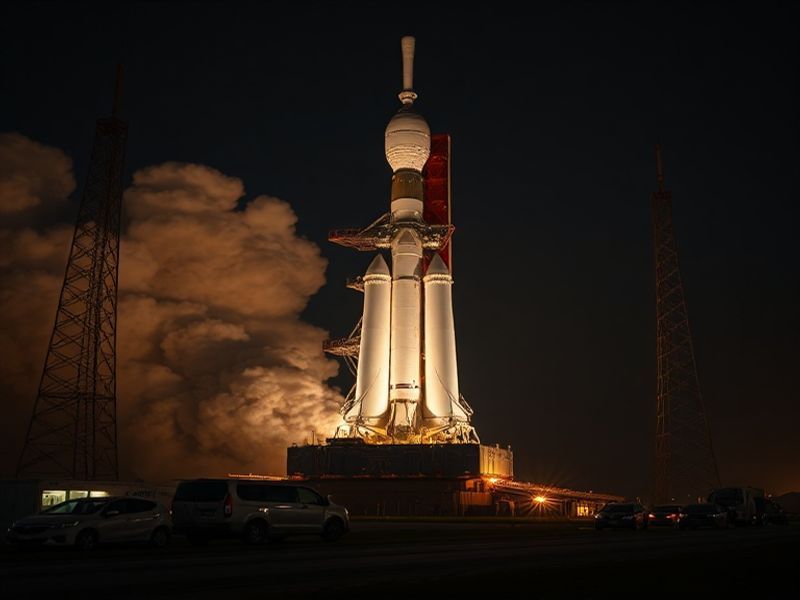
Latest Updates on NASA’s Artemis II Mission
Navigating the Future: NASA Artemis II Updates
The Artemis II mission is a crucial stepping stone in NASA’s ambitious plan to return humans to the Moon and eventually send astronauts to Mars. With the success of Artemis I, which tested the Space Launch System (SLS) and the Orion spacecraft, Artemis II aims to build on that momentum. This crewed mission will be the first to take astronauts around the Moon since the Apollo program. As updates continue to emerge, they provide insight into the mission’s progress and implications for space exploration.
Key Objectives of Artemis II
Artemis II is set to achieve several significant objectives. The mission will not only demonstrate the capabilities of the SLS and Orion but also pave the way for future lunar exploration. Here are some of the key points regarding the mission:
- Crewed Lunar Flyby: Artemis II will carry astronauts on a flyby mission around the Moon, testing life support systems and crew safety protocols.
- Testing Technology: The mission will evaluate critical technologies that will be essential for future lunar landings and Mars missions.
- International Collaboration: Artemis II highlights NASA’s partnerships with other space agencies and private entities, fostering a global approach to space exploration.
- Public Engagement: The mission aims to inspire a new generation of scientists and engineers, showcasing the possibilities of human spaceflight.
Recent Developments and Timeline
As of late 2023, NASA has made significant strides in preparing for Artemis II. The agency has been focused on astronaut training, mission simulations, and hardware testing. The following timeline outlines the upcoming milestones:
- Astronaut Selection: The crew for Artemis II was announced, featuring a diverse group of experienced astronauts.
- Mission Simulations: Ongoing simulations are designed to prepare the crew for various scenarios they may encounter during the mission.
- Launch Date: The targeted launch window is set for late 2024, depending on the readiness of the spacecraft and the SLS.
- Pre-Launch Testing: Extensive testing of the Orion spacecraft and SLS will take place leading up to the launch.
Broader Implications for Space Exploration
The Artemis II mission carries profound implications for the future of space exploration. By returning humans to the Moon, NASA aims to establish a sustainable presence that could serve as a stepping stone for Mars missions. The lessons learned from Artemis II will be vital for understanding the challenges of long-duration space travel and life on other planetary bodies.
Moreover, this mission signifies a renewed interest in lunar exploration from various countries and private companies. As nations like China and India ramp up their space programs, the competition for lunar resources and exploration capabilities intensifies. The Artemis program not only reaffirms U.S. leadership in space but also fosters international collaboration that could lead to shared technologies and missions.
Conclusion
NASA’s Artemis II mission represents a pivotal moment in the journey toward sustainable human presence on the Moon and beyond. As updates continue to unfold, the implications for science, technology, and global collaboration become increasingly clear. The mission stands as a testament to human ingenuity and the relentless pursuit of knowledge beyond our planet.
For further insights on space exploration and related topics, visit our Science and Technology categories.