Spitfire Flight Today: Where to Experience WWII Icon in the Skies
“`html
Spitfire Flight Today: Where to Experience WWII Icon in the Skies
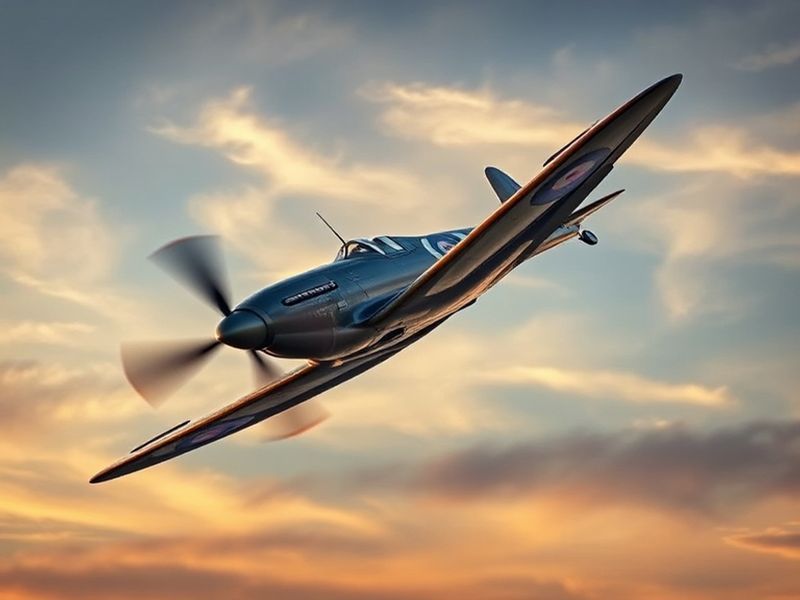
The Supermarine Spitfire, a symbol of British resilience during World War II, remains one of the most celebrated fighter aircraft in aviation history. Its elliptical wings and distinctive roar continue to captivate enthusiasts decades after its final combat mission. Today, the Spitfire is not just a museum piece; it still takes to the skies, offering rare opportunities for pilots and passengers alike to experience its legendary performance firsthand.
While the majority of Spitfires produced during the war were scrapped or relegated to static displays, a small number were preserved, restored, and maintained in flying condition. These aircraft represent a direct link to the past, allowing modern pilots to fly the same machine that defended British airspace during the Battle of Britain. The experience of piloting or riding in a Spitfire offers an unparalleled connection to aviation history.
The Rarity of Flying Spitfires Today
Flying Spitfires today is an exclusive experience, limited by the scarcity of airworthy examples. According to the Royal Air Force Museum, fewer than 70 Spitfires remain in airworthy condition worldwide. This rarity is due to the aircraft’s age, the high cost of restoration and maintenance, and the logistical challenges of keeping such a complex machine operational.
The Spitfire’s Merlin engine, a marvel of engineering in its time, requires meticulous care from specialized mechanics. Many of these engines are original or restored components from the 1940s, meaning that each flight involves a team of experts ensuring the aircraft’s airworthiness. The fuel used in these aircraft is also specialized, often a high-octane leaded aviation gasoline known as Avgas 100LL, which is becoming increasingly difficult to source as global supplies dwindle.
For those interested in flying a Spitfire, the process is rigorous. Most operators require pilots to have significant flight experience, often in vintage or warbird aircraft. Some organizations offer training programs specifically for Spitfire flights, ensuring that participants are prepared for the unique handling characteristics of this historic fighter. These programs typically include ground school sessions, simulator training, and supervised flights in dual-control Spitfires where available.
Where to Book a Spitfire Flight
Several organizations around the world offer Spitfire flights, each providing a different experience. Below is a list of some of the most reputable operators:
- The Spitfire Company (Duxford, UK) – Based at Imperial War Museum Duxford, this organization offers Spitfire experiences in a two-seat Mk.IX, allowing passengers to share the cockpit with a pilot. Flights typically include a briefing on the aircraft’s history and a 30-minute flight.
- Hangar 11 Collection (North Weald, UK) – Home to one of the largest collections of flying Spitfires, Hangar 11 offers flights in a variety of Spitfire models, including the Mk.V and Mk.XVI. Their “Spitfire Pilot Experience” includes a full day of training and a 45-minute flight.
- The Fighter Collection (Duxford, UK) – This organization operates a Spitfire Mk.XVI and offers flights as part of their “Vintage Wings” program. Participants can choose between a passenger flight or a full pilot experience with hands-on controls.
- Warbird Adventures (Kissimmee, Florida, USA) – While primarily known for their P-51 Mustang experiences, Warbird Adventures occasionally offers Spitfire flights in collaboration with other operators. Their programs include ground school and a 30-minute flight.
- The Temora Aviation Museum (New South Wales, Australia) – This museum offers Spitfire flights in a Mk.VIII, providing a unique opportunity for enthusiasts in the Asia-Pacific region. Flights include a briefing and a 30-minute aerial display.
Pricing for Spitfire flights varies depending on the operator and the type of experience. Passenger flights typically range from £1,500 to £2,500 per person, while full pilot experiences can exceed £5,000. These costs reflect the rarity of the aircraft, the expertise required to operate them, and the logistical challenges of maintaining such historic machines.
The Spitfire’s Legacy in Modern Aviation
The Spitfire’s influence extends far beyond its wartime service. Its design principles, particularly its elliptical wing planform, have been studied and replicated in modern aircraft. The wing design was revolutionary for its time, offering an optimal balance between lift, speed, and maneuverability. While modern aircraft often prioritize stealth or fuel efficiency over aerobatic performance, the Spitfire’s wing remains a benchmark for aerodynamic efficiency.
In addition to its aerodynamic legacy, the Spitfire has inspired generations of aircraft enthusiasts and engineers. Many modern warbirds, such as the P-51 Mustang and the Hawker Hurricane, share the Spitfire’s emphasis on pilot experience and performance. The aircraft’s role in shaping post-war aviation is also significant. After the war, many Spitfires were converted for civilian use, including photo-reconnaissance and air racing, further cementing their place in aviation history.
The Spitfire’s cultural impact is equally profound. It has been featured in countless films, documentaries, and books, often symbolizing courage and technological innovation. Its distinctive silhouette is instantly recognizable, even to those with no prior knowledge of aviation history. This cultural resonance has helped keep the Spitfire relevant in the public imagination, ensuring that new generations continue to appreciate its significance.
Spitfire Flights as a Historical Experience
For many, a Spitfire flight is not just about the thrill of piloting a historic aircraft—it’s about connecting with a pivotal moment in history. The Spitfire was more than just a machine; it was a symbol of British defiance during the darkest days of World War II. Pilots who flew the Spitfire during the Battle of Britain often spoke of its responsiveness and agility, qualities that made it a formidable opponent for the Luftwaffe’s Messerschmitt Bf 109s.
Today, flying a Spitfire offers a tangible link to that era. The aircraft’s controls, while primitive by modern standards, require a pilot’s full attention and skill. The Merlin engine’s roar, the vibration of the airframe, and the G-forces during maneuvers all contribute to an immersive experience that transcends the typical warbird flight. For aviation historians, the Spitfire flight is a rare opportunity to engage with history in a way that few other experiences can match.
The Future of Spitfire Flights
The future of Spitfire flights is uncertain but cautiously optimistic. While the number of airworthy Spitfires remains limited, ongoing restoration projects continue to bring more aircraft back to flying condition. Organizations like the Dave’s Locker Restoration team are at the forefront of these efforts, working to preserve and maintain these iconic aircraft for future generations.
However, challenges remain. The scarcity of Avgas 100LL, the high cost of maintenance, and the aging population of Spitfire pilots and mechanics all pose risks to the long-term viability of these flights. Some organizations are exploring alternative fuels, such as synthetic aviation gasoline, to ensure that Spitfires can continue to fly in the coming decades. Others are investing in digital preservation, creating virtual reality experiences that allow users to “fly” a Spitfire without the logistical challenges of a real flight.
Despite these challenges, the demand for Spitfire flights shows no signs of waning. For many enthusiasts, the opportunity to fly a Spitfire is a once-in-a-lifetime experience, a chance to connect with history in a way that few other activities can match. As long as there are pilots willing to fly these aircraft and passengers willing to pay for the experience, the Spitfire will continue to grace the skies for years to come.
Why the Spitfire Still Matters
The Spitfire’s enduring appeal lies in its combination of beauty, performance, and historical significance. It is a machine that transcends its role as a weapon of war, becoming instead a symbol of human ingenuity and resilience. Flying a Spitfire today is not just about the thrill of piloting a historic aircraft—it’s about experiencing a piece of living history, a connection to the past that few other experiences can provide.
For those who have had the opportunity to fly a Spitfire, the experience is often described as transformative. The aircraft’s responsiveness, the Merlin engine’s power, and the sheer joy of flying a machine that played such a crucial role in history combine to create an unforgettable moment. Whether as a passenger or a pilot, the Spitfire flight offers a unique perspective on aviation history, one that is as relevant today as it was in the 1940s.
As we look to the future, the Spitfire’s legacy will continue to inspire new generations of pilots, engineers, and aviation enthusiasts. Its story is one of innovation, courage, and perseverance—a reminder that even in the darkest of times, human creativity and determination can prevail. The Spitfire flight is more than just an experience; it is a tribute to the men and women who flew these aircraft in defense of freedom, and a testament to the enduring power of aviation history.