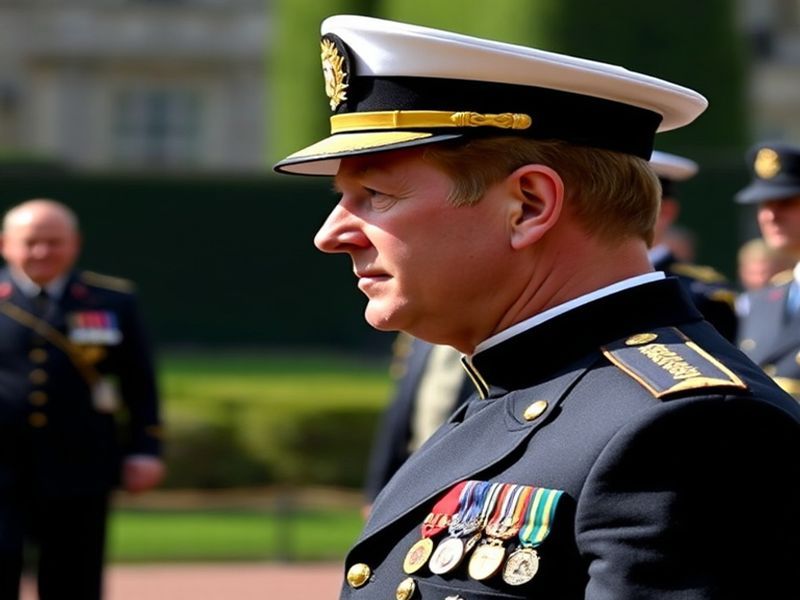
Prince Andrew, Duke of York, has spent decades in the public eye, yet his role within the British monarchy has often been overshadowed by controversy and personal challenges. As the third child of Queen Elizabeth II and Prince Philip, his position has evolved from a promising naval career to a figure navigating complex personal and professional landscapes. His life story reflects broader themes of duty, resilience, and the shifting expectations of modern royalty.
The Early Years: A Prince Shaped by Duty and Discipline
Born on February 19, 1960, Prince Andrew grew up under the weight of royal expectations. His father, Prince Philip, instilled in him a sense of discipline rooted in military service, a value that would define much of his early adulthood. After attending Gordonstoun School—a choice made by his father—Andrew followed in Philip’s footsteps by joining the Royal Navy in 1978. His naval career, which included active service during the Falklands War, became a defining aspect of his public identity.
His marriage to Sarah Ferguson in 1986 further cemented his place in the monarchy’s public narrative. The union, however, was marked by personal struggles, culminating in an acrimonious divorce in 1996. Despite these challenges, Andrew remained a visible figure, representing the Crown at international events and performing royal duties with a level of consistency that often went unnoticed.
The Controversies: A Fall from Public Grace
The past decade has seen Prince Andrew’s reputation significantly tested. His association with Jeffrey Epstein, the convicted sex offender, led to a series of scandals that tarnished his standing. In 2019, a BBC interview in which he failed to express remorse for his past connections to Epstein drew widespread criticism. The interview’s tone—often described as defensive and evasive—further eroded public trust in his ability to serve as a representative of the monarchy.
Legal battles followed. In 2021, Andrew settled a civil lawsuit brought by Virginia Giuffre, one of Epstein’s accusers, agreeing to pay an undisclosed sum while denying any wrongdoing. The settlement, though avoiding a public trial, did little to restore his reputation. The same year, Queen Elizabeth II stripped him of his military affiliations and royal patronages, signaling a clear distancing from the monarchy’s official functions.
These events raise broader questions about accountability within institutions of power. Prince Andrew’s case is not isolated; it reflects a growing demand for transparency and ethical conduct among public figures. The monarchy, an institution often shielded by tradition, has been forced to confront these issues head-on, reshaping how it engages with modern expectations of behavior and responsibility.
Life Beyond the Scandals: A Quiet Reevaluation
Since stepping back from public duties, Prince Andrew has largely retreated from the spotlight. Reports suggest he has focused on personal projects, including charitable work and occasional appearances at low-profile events. His reduced role within the royal family marks a stark contrast to his earlier years, when he was often seen as a key figure in the monarchy’s outreach efforts.
Yet, his story is not one of complete obscurity. In 2023, he made headlines again when he was spotted at a private event in London, sparking speculation about a potential return to public life. While such appearances remain rare, they underscore the ongoing tension between tradition and reform within the monarchy. The institution must balance its historical obligations with the realities of a changing world, where personal conduct carries far greater consequences than in previous generations.
The broader implications of Prince Andrew’s journey extend beyond his individual case. His experiences highlight the vulnerabilities of institutions built on legacy rather than adaptability. For the monarchy, the challenge lies in reconciling its ceremonial role with the demands of a society that increasingly values accountability and moral integrity. Prince Andrew’s story serves as a cautionary tale about the fragility of public trust and the consequences of failing to meet modern standards.
Key Takeaways: What Prince Andrew’s Story Reveals
Prince Andrew’s life and career offer several critical lessons about power, duty, and reform. Below are the most significant takeaways from his journey:
- Military Service as a Foundation: His naval career provided him with discipline and purpose, shaping his early public image. However, military service alone could not shield him from the consequences of personal missteps.
- The Fragility of Public Trust: His association with Epstein and subsequent legal battles demonstrate how quickly reputations can crumble in an era of heightened scrutiny. The monarchy, like other institutions, is not immune to public backlash.
- The Limits of Tradition: His case exposes the tension between hereditary privilege and modern expectations of accountability. The monarchy’s survival may depend on its ability to adapt without losing its core identity.
- Reinvention in Retirement: His reduced public role reflects a broader trend among aging royals who step back from official duties. The monarchy’s future may lie in a more decentralized approach, with younger generations taking on greater responsibilities.
Prince Andrew’s story is not just about one man’s fall from grace; it is about the evolving nature of power in the 21st century. The monarchy must navigate these changes carefully, ensuring that its traditions do not become liabilities in an increasingly transparent world. For those watching from the outside, his journey serves as a reminder that no institution—or individual—is above the scrutiny of the modern age.
A Legacy Still Unwritten
As Prince Andrew enters the later stages of his life, his legacy remains uncertain. Will he be remembered primarily for his naval service and early promise, or will his later years be defined by the controversies that overshadowed his later career? The answer may depend on how the monarchy chooses to frame its own future in the decades to come.
One thing is clear: the era of unquestioned privilege is fading. Institutions like the monarchy must evolve or risk becoming relics of a bygone age. Prince Andrew’s story is a microcosm of this larger shift, a case study in the challenges of maintaining relevance in a world that demands more than tradition alone.
For now, he remains a figure caught between past and present, a prince whose life reflects the contradictions of a modern monarchy. His story is far from over, but its next chapters may be written not by him, but by the institution he once served.
For further reading on the evolving role of modern royalty, explore our Royalty section, where we analyze how tradition and change intersect in today’s institutions. Alternatively, dive into our Culture category for broader insights into how public figures navigate legacy and scandal in the public eye.