Donald Trump’s Stance on NATO: A Four-Year Policy Overhaul
During his presidency, Donald Trump repeatedly challenged the foundation of NATO, the 30-nation military alliance formed after World War II to counter Soviet influence. His criticism was not merely rhetorical; it translated into policy shifts that reshaped transatlantic relations. While previous U.S. leaders had emphasized NATO’s collective defense principle—Article 5, which deems an attack on one member an attack on all—Trump questioned the alliance’s fairness and financial burden.
His administration pushed European allies to increase defense spending, arguing that the U.S. shouldered an unfair share of the alliance’s costs. This pressure led to measurable increases in defense budgets across Europe, particularly in Eastern European nations wary of Russian aggression. Yet, the approach also sowed uncertainty about America’s long-term commitment to NATO, a cornerstone of post-war European security.
The 2018 Brussels Summit: Tensions Erupt in Public
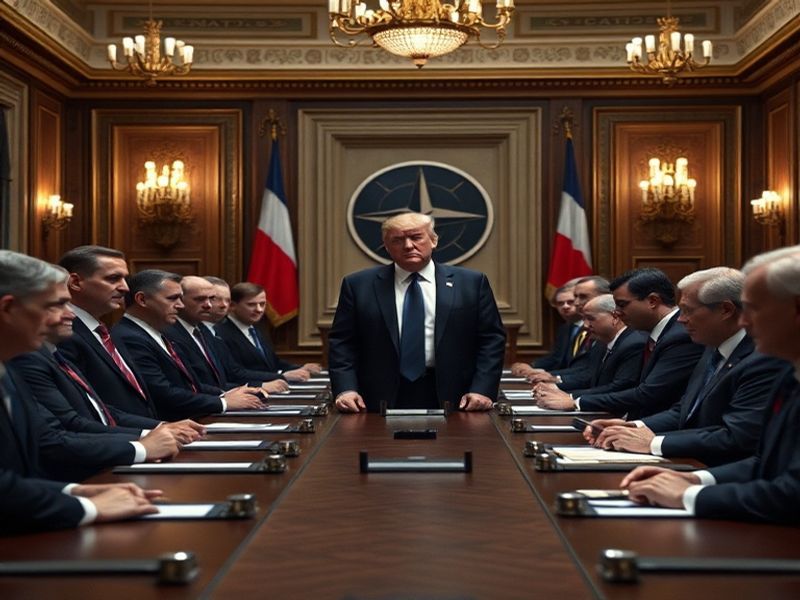
The most visible moment of Trump’s NATO skepticism came during the 2018 summit in Brussels, where he clashed openly with European leaders. In a private meeting, he reportedly called Germany a “captive of Russia” due to its energy dependence on Moscow. The comment underscored his broader critique: that some NATO members were not only failing to meet spending targets but were also economically aligned with adversaries.
At a press conference the next day, Trump refused to endorse Article 5 publicly, breaking from decades of precedent. Though he later reaffirmed the U.S. commitment in writing, the moment exposed deep rifts. The episode was not just diplomatic theater; it reflected a fundamental disagreement over the alliance’s purpose and America’s role within it.
European leaders responded with measured concern. German Chancellor Angela Merkel, typically diplomatic, stated that Europe could no longer rely solely on others for its defense—a clear reference to U.S. reliability. Meanwhile, leaders in Poland and the Baltics, who viewed NATO as a bulwark against Russia, doubled down on their own military investments.
Trump’s NATO Rhetoric: From Campaign Trail to Policy
Trump’s skepticism of NATO predated his presidency. During the 2016 campaign, he called the alliance “obsolete” and suggested the U.S. might not defend NATO members who failed to meet spending guidelines. This stance alarmed diplomats and defense experts, who warned it could embolden adversaries like Russia and weaken the alliance’s deterrent effect.
His administration’s National Defense Strategy in 2018 reframed NATO not as a mutual defense pact but as a transactional arrangement. The U.S., the strategy argued, would prioritize allies who contributed their “fair share.” This transactional view clashed with the alliance’s traditional ethos of shared values and collective security.
Under Trump, the U.S. also withdrew from key arms control treaties and reduced its diplomatic presence in Europe. While not directly NATO-related, these actions contributed to a perception of American retreat from global leadership—a shift that raised questions about long-term commitment to European security.
Key Policy Changes Under Trump
- Spending Demands: Trump pressured NATO members to increase defense spending to at least 2% of GDP, a target many had previously ignored.
- Withdrawal from Treaties: The U.S. exited the Intermediate-Range Nuclear Forces Treaty and the Open Skies Treaty, undermining arms control frameworks.
- Reduced Diplomacy: The administration slashed funding for State Department programs in Europe and reduced U.S. military presence in some areas.
- Selective Alliances: Trump praised NATO’s newer members in Eastern Europe for their spending but criticized older members like Germany for their reliance on Russian energy.
Global Reactions: From Alarm to Adaptation
Trump’s approach to NATO sent shockwaves through global capitals. In Moscow, officials celebrated what they saw as a weakening of Western unity. Russian President Vladimir Putin had long criticized NATO as a Cold War relic, and Trump’s rhetoric provided rhetorical ammunition. Meanwhile, in Beijing, China watched closely, noting that U.S. focus on Europe could shift attention away from Asia.
European responses varied. France and Germany sought to preserve NATO’s institutional integrity, while smaller nations in Eastern Europe accelerated their military modernization. The U.K., though a strong supporter of NATO, faced its own post-Brexit identity crisis, raising questions about its role in European security.
Canada, another key NATO member, found itself caught in the middle. While it increased defense spending under Trump, it also faced criticism for not meeting the 2% target. The episode highlighted the delicate balance between alliance solidarity and domestic political pressures.
Biden’s Reversal: A Return to Traditional NATO Support
Upon taking office in 2021, President Joe Biden moved quickly to restore NATO’s centrality in U.S. foreign policy. His first foreign trip was to Brussels for a NATO summit, where he reaffirmed America’s commitment to Article 5 and praised the alliance as “sacred.” This shift reassured European allies, particularly after the chaotic withdrawal from Afghanistan, which had strained transatlantic relations.
Biden’s approach contrasted sharply with Trump’s. While he acknowledged the need for European burden-sharing, he framed it as a shared responsibility rather than a demand. His administration also worked to rebuild trust through diplomatic engagement and military cooperation, particularly in response to Russia’s 2022 invasion of Ukraine.
Yet, the damage of Trump’s tenure lingered. Polls showed lingering doubts among European publics about U.S. reliability. The question remained: Could NATO fully recover from the uncertainty of the Trump years?
Cultural and Historical Context: NATO’s Enduring Role
Founded in 1949, NATO was designed to deter Soviet expansion and anchor the U.S. in Europe. For decades, it served as a stabilizing force, even after the Cold War’s end. The alliance expanded to include former Warsaw Pact nations, signaling a new era of European integration.
Yet, NATO has always been more than a military pact. It embodies a set of shared values—democracy, rule of law, and collective defense. Trump’s transactional view challenged this ethos, reducing the alliance to a cost-benefit analysis. This perspective resonated with his political base but alarmed traditionalists in both parties.
Historically, U.S. leadership in NATO has been a bipartisan commitment. Even during the Iraq War, when allies like France and Germany opposed the invasion, the alliance remained intact. Trump’s presidency tested this bipartisan consensus, raising questions about America’s role as a global leader.
Conclusion: What’s Next for NATO and the U.S.?
Donald Trump’s presidency forced a reckoning within NATO. His skepticism exposed vulnerabilities in the alliance’s structure and highlighted the need for European strategic autonomy. While Biden’s administration has sought to repair the damage, the legacy of Trump’s tenure lingers in the form of lingering doubts about U.S. commitment.
For NATO, the challenge is clear: adapt to a world where U.S. leadership is no longer guaranteed. European nations must invest in their own defense capabilities, while also maintaining the alliance’s cohesion. For the U.S., the question is whether it can balance its global responsibilities with domestic priorities without repeating the divisions of the Trump era.
One thing is certain: NATO’s future will be shaped by how well it navigates the tensions between transactional politics and shared values. The alliance has survived crises before, but the Trump years tested its resilience like never before.
As Europe grapples with the war in Ukraine and rising tensions with China, the stakes could not be higher. NATO’s ability to adapt will determine whether it remains a cornerstone of global security—or a relic of a bygone era.
Further Reading
- Explore more on U.S. foreign policy and its global impact.
- Stay updated on NATO’s evolving role in international affairs.